
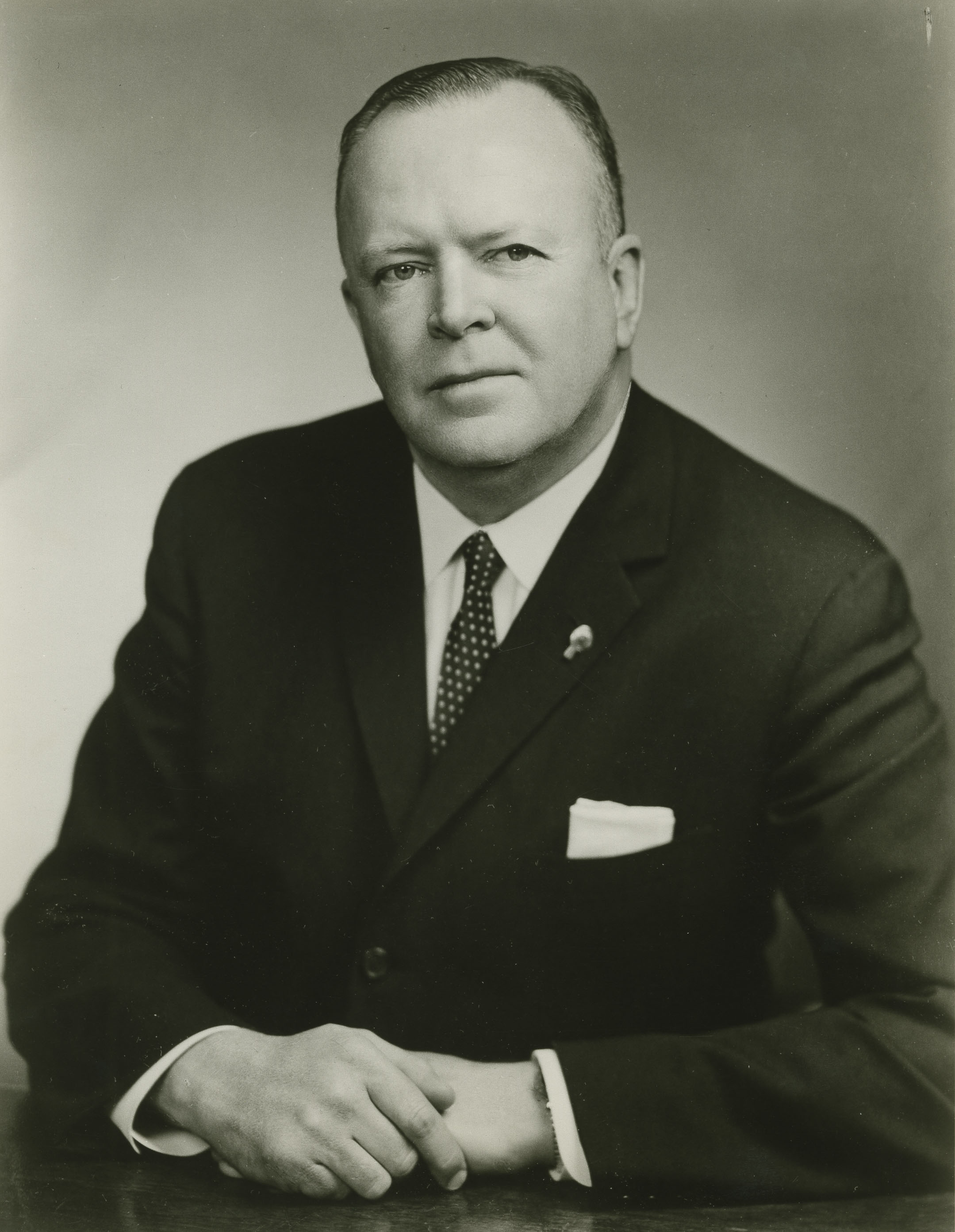
Historical · U.S. House · South Carolina · District 5
Robert Hemphill
Former U.S. Representative · South Carolina District 5 · 1957–1965 · Democratic
Robert Hemphill represented South Carolina's District 5 in the United States House of Representatives (1957–1965) for the Democratic party. The page below collects sourced biographical facts, term history, committee roles, and provenance for Hemphill.
Bioguide ID: H000471
Key facts
- Full name
- Robert Hemphill
- State
- South Carolina
- District
- District 5
- Party
- Democratic
- House service
- 1957–1965
- First House term
- 1957
- Status
- Left office
- Current term ends
- —
- Born
- 1915
- Bioguide ID
- H000471
- Committee assignments
- —
- Dataset version
- 1.20260605
Biographical narrative
934 words · sourced from the Wikipedia REST extract
Robert Hemphill was a prominent American politician and lawyer who served as a U.S. Representative for South Carolina's 5th congressional district from 1957 until 1964. A member of the Democratic Party, Hemphill's political career was marked by his commitment to public service, which began in the state legislature and culminated in his appointment as a federal judge. His tenure in Congress was characterized by his involvement in various legislative matters and his participation in international diplomatic efforts. Hemphill's legacy extends beyond his congressional service, as he later served as a district judge, contributing to the judicial landscape of South Carolina.
Early life and career
Robert Witherspoon Hemphill was born on May 10, 1915, in Chester, South Carolina. He grew up in a community that valued education, which laid the foundation for his future endeavors. Hemphill attended local public schools before pursuing higher education at the University of South Carolina. He graduated with a degree in Artium Baccalaureus in 1936, followed by a Bachelor of Laws from the University of South Carolina School of Law in 1938. During his time at the university, he was an active member of the Euphradian Society, which fostered debate and discussion among students.
After being admitted to the bar in 1938, Hemphill began practicing law in Chester, where he established a legal career that would span several decades. His legal practice was complemented by a commitment to public service, which became evident when he volunteered for military service in 1941. Hemphill joined the United States Army Air Corps as a flying cadet and served as a bomber pilot during World War II until December 1945. His military service not only showcased his dedication to his country but also provided him with experiences that would inform his later political career.
Following the war, Hemphill returned to Chester and became actively involved in local politics. He served as chairman of Chester County Democratic conventions in 1946 and 1947, demonstrating his leadership within the party. His political career took a significant step forward when he was elected to the South Carolina House of Representatives in 1946, where he served from 1947 to 1948. Hemphill's legislative experience in the state assembly paved the way for his subsequent role as solicitor of the Sixth South Carolina Judicial Circuit, a position he held from 1950 to 1956. This role further solidified his reputation as a dedicated public servant and legal professional.
House tenure
Hemphill's congressional career began when he was elected as a Democrat to the Eighty-fifth Congress, which commenced on January 3, 1957. He was subsequently re-elected to three additional terms in the House of Representatives, serving until his resignation on May 1, 1964, to accept a federal judicial appointment. Throughout his time in Congress, Hemphill was known for his active participation in legislative matters and his engagement with constituents in South Carolina's 5th district.
During his tenure, Hemphill was a delegate to the North Atlantic Treaty Organization (NATO) Congress held in London in 1959. This experience highlighted his involvement in international affairs and underscored the importance of diplomacy in his legislative work. Hemphill's congressional service coincided with a period of significant social and political change in the United States, including the civil rights movement and various domestic policy debates. Observers noted that he was one of the more liberal members of South Carolina's congressional delegation, reflecting a commitment to progressive values and policies during a time of considerable national discourse.
Hemphill's legislative focus included a range of issues pertinent to his constituents and the broader national landscape. His work in Congress was characterized by a dedication to addressing the needs of his district while also engaging with larger national and international challenges. His ability to navigate complex political environments and build coalitions was instrumental in his effectiveness as a legislator.
Legislative focus and committees
Throughout his time in the House of Representatives, Hemphill served on various committees that shaped his legislative priorities and allowed him to influence key policy areas. While specific committee assignments during his tenure are not detailed, it is common for members of Congress to engage in committees that align with their interests and the needs of their constituents. Hemphill's background in law and his experience as a solicitor likely informed his contributions to committees dealing with legal and judicial matters, as well as those focused on public policy and governance.
His legislative focus was reflective of the broader Democratic agenda during the 1950s and early 1960s, which included civil rights, economic development, and social welfare programs. Hemphill's participation in the NATO Congress indicated his interest in foreign policy and defense issues, which were particularly salient during the Cold War era. His engagement with international diplomacy also showcased his understanding of the interconnectedness of domestic and global challenges.
After resigning from Congress in 1964, Hemphill transitioned to a judicial role, having been nominated by President Lyndon B. Johnson to a joint seat on the United States District Court for the Eastern and Western Districts of South Carolina. His confirmation and subsequent judicial service marked a new chapter in his career, allowing him to continue his commitment to public service in a different capacity.
In summary, Robert Hemphill's career as a U.S. Representative was marked by his dedication to public service, legal expertise, and engagement with both domestic and international issues. His contributions to Congress and later to the federal judiciary reflect a life committed to the principles of democracy and justice. Hemphill's legacy continues to be felt in South Carolina and beyond, as he navigated the complexities of political life during a transformative period in American history.
Notable legislation
Sponsored and co-sponsored legislation for Robert Hemphill is pending operator curation. The biographical narrative above carries the same provenance trail until per-bill rows are written.
Sources
- [1]https://en.wikipedia.org/wiki/Robert_W._HemphillWikipedia · retrieved 2026-06-05
Notable quotes
Sourced quotes for Robert Hemphill are pending operator curation. Narrative-scope provenance remains attached below.
Sources
- [1]https://en.wikipedia.org/wiki/Robert_W._HemphillWikipedia · retrieved 2026-06-05
Key positions
Curated policy positions for Robert Hemphill are pending operator review. The biographical narrative above carries the same provenance trail until per-topic positions are written.
Sources
- [1]https://en.wikipedia.org/wiki/Robert_W._HemphillWikipedia · retrieved 2026-06-05
Terms served
- 1957–1959U.S. House · Term 1 · Democratic
- 1959–1961U.S. House · Term 2 · Democratic
- 1961–1963U.S. House · Term 3 · Democratic
- 1963–1965U.S. House · Term 4 · Democratic
Sources & provenance
Every attributable claim above carries a per-section [N] marker that resolves to the corresponding URL below. Each entry records the upstream provider, the canonical URL, and the timestamp at which the source was retrieved by the ingest pipeline.
Key facts
- https://bioguide.congress.gov/search/bio/H000471bioguide · retrieved 2026-06-05
- https://www.govtrack.us/congress/members/405334govtrack · retrieved 2026-06-05
Biographical narrative
- https://en.wikipedia.org/wiki/Robert_W._Hemphillwikipedia · retrieved 2026-06-05
Find your representative
Every U.S. state elects representatives by district. Browse South Carolina’s delegation, the full former-representative roster, or explore the role and term length.
Related on The Candidate
- Preceded by James RichardsEarlier holder of the South Carolina District 5 House seat · Democratic.Open
- Succeeded by Kenneth HollandLater holder of the South Carolina District 5 House seat · Democratic.Open
- Arthur Ravenel Jr.Former U.S. Representative · South Carolina District 1 · RepublicanOpen
- Benjamin WhittemoreFormer U.S. Representative · South Carolina District 1 · RepublicanOpen
- Clara McMillanFormer U.S. Representative · South Carolina District 1 · DemocraticOpen
- Daniel WallaceFormer U.S. Representative · South Carolina District 1 · DemocraticOpen