
Historical · U.S. House · South Carolina · District 5
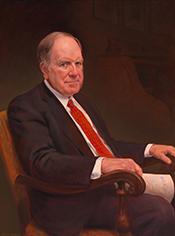
John Spratt Jr.
Former U.S. Representative · South Carolina District 5 · 1983–2011 · Democratic
John Spratt Jr. represented South Carolina's District 5 in the United States House of Representatives (1983–2011) for the Democratic party. The page below collects sourced biographical facts, term history, committee roles, and provenance for Jr..
Bioguide ID: S000749
Key facts
- Full name
- John Spratt Jr.
- State
- South Carolina
- District
- District 5
- Party
- Democratic
- House service
- 1983–2011
- First House term
- 1983
- Status
- Left office
- Current term ends
- —
- Born
- 1942
- Bioguide ID
- S000749
- Committee assignments
- —
- Dataset version
- 1.20260605
Biographical narrative
993 words · sourced from the Wikipedia REST extract
John M. Spratt, Jr. was an American politician and attorney who served as the U.S. Representative for South Carolina's 5th congressional district from 1983 until 2011. A member of the Democratic Party, Spratt's tenure in the House of Representatives spanned 14 terms, during which he became a prominent figure in Congress, particularly in budgetary and defense matters. His district encompassed a significant portion of north-central South Carolina, including major cities such as Rock Hill and Sumter. Known for his legislative acumen, Spratt held several key positions, including chairman of the House Budget Committee and a senior member of the House Armed Services Committee.
Early life and career
John McKee Spratt Jr. was born on November 1, 1942, in Charlotte, North Carolina. He grew up in York, South Carolina, where he was influenced by his family's involvement in local business and law. His father was the founder of the Bank of Fort Mill and a partner in a law firm in York, where Spratt would later practice law. He has one sibling, Jane Bratton Spratt McColl, who is married to Hugh McColl, a notable figure in the banking sector as the former chairman and CEO of Bank of America Corporation.
Spratt attended York High School, where he demonstrated leadership skills by serving as student body president. He went on to earn a bachelor's degree in history from Davidson College in 1964, where he also held the position of student body president. Following his undergraduate studies, Spratt received a Marshall Scholarship to study at Oxford University, where he earned a Master of Arts degree in philosophy, politics, and economics from Corpus Christi College in 1966. He later attended Yale Law School, obtaining his Bachelor of Laws (LLB) degree in 1969.
After completing his education, Spratt served as a captain in the United States Army from 1969 to 1971. He was assigned to the Operations Analysis Group in the office of the Assistant Secretary of Defense (Comptroller) at the Pentagon, where he was awarded the Meritorious Service Medal for his service. Upon returning to York in 1971, Spratt began his legal career at the law firm of Spratt, McKeown, and Spratt. He also took on various roles in the community, serving as county attorney and school board attorney, and presiding over the Bank of Fort Mill. Additionally, he operated a small insurance agency and owned a farm in Fort Mill.
House tenure
Spratt's political career began in earnest when he became active in the Democratic Party, culminating in his election as a delegate to the 1964 Democratic National Convention at the age of 22. He was first elected to the U.S. House of Representatives in 1982, succeeding fellow Democrat Kenneth Holland. Over the course of his 14 terms, Spratt became a significant figure in South Carolina politics, particularly as the dean of the state's congressional delegation.
During his time in Congress, Spratt faced varying levels of electoral competition. Initially, he encountered little resistance from Republican challengers, winning easily in most elections from 1984 to 1992. However, the political landscape began to shift in the mid-1990s, and in 1994, he narrowly survived a challenge from Republican Larry Bigham, winning by a margin of approximately 6,300 votes. Spratt managed to defeat Bigham again in 1996, but from 1998 to 2008, he generally won re-election with relative ease, attributed to his popularity and effective campaigning.
Despite his Democratic affiliation, Spratt often distanced himself from national party politics, particularly during presidential elections, as the Democratic Party was less popular in his district. He refrained from endorsing candidates during the 2008 Democratic primaries, although he was rumored to be a potential candidate for a position in President Obama's administration, which ultimately did not materialize.
In 2010, Spratt's re-election campaign faced significant challenges. He was viewed as vulnerable due to his connections with Democratic leadership, the economic climate characterized by high unemployment rates in his district, and the national political environment that favored Republican candidates. Ultimately, he lost his seat to Republican challenger Mick Mulvaney in the November elections.
Legislative focus and committees
Throughout his congressional career, Spratt was known for his legislative expertise and his ability to work across party lines. He served as chairman of the House Budget Committee, where he played a crucial role in shaping federal budget policy. One of his notable achievements was co-authoring the Balanced Budget Act of 1997, which resulted in the federal budget achieving a surplus for the first time in three decades. His work on the budget earned him recognition as a key figure in fiscal policy among his peers.
In addition to his budgetary responsibilities, Spratt was the second-ranking Democrat on the House Armed Services Committee. He participated in several subcommittees, including Oversight and Investigations, Strategic Forces, and Air and Land Forces. His involvement in defense matters was significant, as he worked on various initiatives related to military funding and national security.
Spratt was also active in several caucuses, co-chairing the Textile Caucus, the Bearing Caucus, and the Nuclear Energy Caucus. His legislative agenda included a wide range of issues, from economic recovery efforts to health care reform. He supported the American Recovery and Reinvestment Act of 2009, which aimed to address the economic downturn, and advocated for increased funding for infrastructure, labor, and education.
In 2010, Spratt played a pivotal role in the passage of the Patient Protection and Affordable Care Act, serving as chairman of the House Budget Committee and facilitating the legislative process that led to the vote on the health care reform bill. He was appointed to the president's National Commission on Fiscal Responsibility and Reform, where he contributed to discussions on addressing the national deficit.
Spratt's legislative career concluded when he left office on January 3, 2011, after losing his re-election bid. His tenure in the House was marked by a commitment to fiscal responsibility, defense issues, and a willingness to engage in bipartisan dialogue, leaving a lasting impact on South Carolina's political landscape.
Notable legislation
Sponsored and co-sponsored legislation for John Spratt Jr. is pending operator curation. The biographical narrative above carries the same provenance trail until per-bill rows are written.
Sources
- [1]https://en.wikipedia.org/wiki/John_SprattWikipedia · retrieved 2026-06-05
Notable quotes
Sourced quotes for John Spratt Jr. are pending operator curation. Narrative-scope provenance remains attached below.
Sources
- [1]https://en.wikipedia.org/wiki/John_SprattWikipedia · retrieved 2026-06-05
Key positions
Curated policy positions for John Spratt Jr. are pending operator review. The biographical narrative above carries the same provenance trail until per-topic positions are written.
Sources
- [1]https://en.wikipedia.org/wiki/John_SprattWikipedia · retrieved 2026-06-05
Terms served
- 1983–1985U.S. House · Term 1 · Democratic
- 1985–1987U.S. House · Term 2 · Democratic
- 1987–1989U.S. House · Term 3 · Democratic
- 1989–1991U.S. House · Term 4 · Democratic
- 1991–1993U.S. House · Term 5 · Democratic
- 1993–1995U.S. House · Term 6 · Democratic
- 1995–1997U.S. House · Term 7 · Democratic
- 1997–1999U.S. House · Term 8 · Democratic
- 1999–2001U.S. House · Term 9 · Democratic
- 2001–2003U.S. House · Term 10 · Democratic
- 2003–2005U.S. House · Term 11 · Democratic
- 2005–2007U.S. House · Term 12 · Democratic
- 2007–2009U.S. House · Term 13 · Democratic
- 2009–2011U.S. House · Term 14 · Democratic
Sources & provenance
Every attributable claim above carries a per-section [N] marker that resolves to the corresponding URL below. Each entry records the upstream provider, the canonical URL, and the timestamp at which the source was retrieved by the ingest pipeline.
Key facts
- https://bioguide.congress.gov/search/bio/S000749bioguide · retrieved 2026-06-05
- http://www.house.gov/spratthouse.gov · retrieved 2026-06-05
Biographical narrative
- https://en.wikipedia.org/wiki/John_Sprattwikipedia · retrieved 2026-06-05
Find your representative
Every U.S. state elects representatives by district. Browse South Carolina’s delegation, the full former-representative roster, or explore the role and term length.
Related on The Candidate
- Preceded by Kenneth HollandEarlier holder of the South Carolina District 5 House seat · Democratic.Open
- Succeeded by Mick MulvaneyLater holder of the South Carolina District 5 House seat · Republican.Open
- Arthur Ravenel Jr.Former U.S. Representative · South Carolina District 1 · RepublicanOpen
- Benjamin WhittemoreFormer U.S. Representative · South Carolina District 1 · RepublicanOpen
- Clara McMillanFormer U.S. Representative · South Carolina District 1 · DemocraticOpen
- Daniel WallaceFormer U.S. Representative · South Carolina District 1 · DemocraticOpen