
Historical · U.S. House · South Carolina · District 5
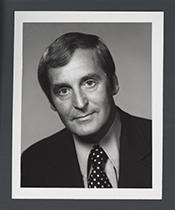
Kenneth Holland
Former U.S. Representative · South Carolina District 5 · 1975–1983 · Democratic
Kenneth Holland represented South Carolina's District 5 in the United States House of Representatives (1975–1983) for the Democratic party. The page below collects sourced biographical facts, term history, committee roles, and provenance for Holland.
Bioguide ID: H000719
Key facts
- Full name
- Kenneth Holland
- State
- South Carolina
- District
- District 5
- Party
- Democratic
- House service
- 1975–1983
- First House term
- 1975
- Status
- Left office
- Current term ends
- —
- Born
- 1934
- Bioguide ID
- H000719
- Committee assignments
- —
- Dataset version
- 1.20260605
Biographical narrative
1,078 words · sourced from the Wikipedia REST extract
Kenneth L. Holland was an American attorney and politician who served as a Democratic member of the United States House of Representatives, representing South Carolina's Fifth Congressional District from 1975 until 1983. His political career spanned four terms in Congress, during which he engaged in various legislative activities and served on important committees. Holland's background as an attorney and his involvement in local and state politics laid the groundwork for his congressional career, where he focused on issues pertinent to his constituents and the broader South Carolina community.
Early life and career
Kenneth Lamar Holland was born on November 24, 1934, in Hickory, North Carolina. His early life was marked by a commitment to education and public service. Holland attended public schools in Gaffney, South Carolina, where he likely developed a sense of community and civic responsibility. His dedication to service continued as he joined the National Guard, serving from 1952 to 1959. This experience may have influenced his later political career and his understanding of the needs of veterans and military families.
Holland pursued higher education at the University of South Carolina, where he earned a Bachelor of Arts degree in 1960, followed by a Bachelor of Laws degree in 1963. His time at the university was notable for his involvement in the Euphradian Society, a literary and debate organization that likely honed his skills in public speaking and critical thinking. After completing his education, Holland was admitted to the South Carolina bar in 1963, marking the beginning of his legal career in Camden, South Carolina. His work as an attorney provided him with valuable insights into the legal and regulatory frameworks that would later inform his legislative priorities.
In addition to his legal practice, Holland became actively involved in the Democratic Party at both the state and national levels. He served as a delegate to the South Carolina State Democratic conventions from 1968 to 1972, which allowed him to engage with party leadership and grassroots activists. His participation in the 1968 Democratic National Convention further solidified his commitment to the party and its platform. Holland's early political involvement also included a role on the State Board of Municipal Canvassers from 1971 to 1973, where he served as chairman. This position provided him with experience in the electoral process and the administration of elections.
Holland's public service continued as he was appointed to the South Carolina Highway Commission from 1972 to 1975. This role involved overseeing the state's transportation infrastructure, which is a critical aspect of economic development and public safety. His experiences in these various capacities prepared him for a successful run for Congress, where he would advocate for policies that addressed the needs of his constituents.
House tenure
Kenneth Holland was elected to the United States House of Representatives as a Democratic candidate from South Carolina's Fifth Congressional District in 1974. His first term began on January 3, 1975, and he was subsequently re-elected for three additional terms, serving until January 3, 1983. During his time in Congress, Holland was known for his active participation in legislative debates and his commitment to representing the interests of his district.
In the 1976 election, Holland faced a competitive race against the Republican candidate Bobby Richardson, who was not only a prominent figure in South Carolina as a baseball coach but also a former Major League Baseball player. Holland won the election by a narrow margin, reflecting the competitive political landscape of the time. His ability to secure re-election demonstrated his connection to the electorate and his effectiveness in addressing local issues.
Throughout his congressional tenure, Holland was involved in various legislative initiatives and worked on issues that were significant to his constituents. His experience as an attorney likely informed his approach to legislation, as he sought to navigate the complexities of federal law and advocate for policies that would benefit South Carolina. Although specific details of his legislative accomplishments are not provided, it is common for members of Congress to engage in a range of activities, including sponsoring bills, serving on committees, and participating in debates on key issues.
Holland chose not to seek re-election in 1982, opting to return to his legal career. His decision to step away from Congress marked the end of a significant chapter in his life, during which he had the opportunity to influence policy and represent the interests of his constituents at the federal level. He was succeeded in Congress by John M. Spratt, Jr., who continued the Democratic representation of the district.
Legislative focus and committees
During his time in the House of Representatives, Kenneth Holland's legislative focus was likely shaped by the needs of his constituents in South Carolina's Fifth Congressional District. While specific legislative initiatives and committee assignments are not detailed in the provided information, it is common for members of Congress to align their work with the interests and concerns of the communities they represent.
Holland's background as an attorney may have influenced his approach to legislative matters, particularly in areas related to law, justice, and public policy. Members of Congress often serve on committees that align with their expertise and the needs of their districts. These committees play a crucial role in shaping legislation, conducting hearings, and overseeing federal programs. Holland's participation in such committees would have allowed him to advocate for policies that addressed local issues, such as infrastructure development, education, healthcare, and economic growth.
In addition to his committee work, Holland's engagement with his constituents would have been an essential aspect of his legislative focus. Members of Congress typically hold town hall meetings, engage with local organizations, and communicate with constituents to understand their concerns and priorities. This direct interaction helps inform legislative decisions and ensures that representatives remain accountable to the people they serve.
Although Holland's congressional career concluded in 1983, his contributions to South Carolina and his involvement in the Democratic Party continued to resonate in the political landscape. After leaving Congress, he expressed interest in returning to public service by considering a run for governor in 2006, although he ultimately withdrew from the race. His decision to return to law practice reflects a commitment to his professional career while remaining engaged in the political process.
Kenneth L. Holland passed away on February 27, 2021, in Richmond, Virginia, at the age of 86. His legacy as a public servant and attorney is marked by his dedication to his constituents and his contributions to the political landscape of South Carolina.
Notable legislation
Sponsored and co-sponsored legislation for Kenneth Holland is pending operator curation. The biographical narrative above carries the same provenance trail until per-bill rows are written.
Sources
- [1]https://en.wikipedia.org/wiki/Kenneth_Lamar_HollandWikipedia · retrieved 2026-06-05
Notable quotes
Sourced quotes for Kenneth Holland are pending operator curation. Narrative-scope provenance remains attached below.
Sources
- [1]https://en.wikipedia.org/wiki/Kenneth_Lamar_HollandWikipedia · retrieved 2026-06-05
Key positions
Curated policy positions for Kenneth Holland are pending operator review. The biographical narrative above carries the same provenance trail until per-topic positions are written.
Sources
- [1]https://en.wikipedia.org/wiki/Kenneth_Lamar_HollandWikipedia · retrieved 2026-06-05
Terms served
- 1975–1977U.S. House · Term 1 · Democratic
- 1977–1979U.S. House · Term 2 · Democratic
- 1979–1981U.S. House · Term 3 · Democratic
- 1981–1983U.S. House · Term 4 · Democratic
Sources & provenance
Every attributable claim above carries a per-section [N] marker that resolves to the corresponding URL below. Each entry records the upstream provider, the canonical URL, and the timestamp at which the source was retrieved by the ingest pipeline.
Key facts
- https://bioguide.congress.gov/search/bio/H000719bioguide · retrieved 2026-06-05
- https://www.govtrack.us/congress/members/405571govtrack · retrieved 2026-06-05
Biographical narrative
- https://en.wikipedia.org/wiki/Kenneth_Lamar_Hollandwikipedia · retrieved 2026-06-05
Find your representative
Every U.S. state elects representatives by district. Browse South Carolina’s delegation, the full former-representative roster, or explore the role and term length.
Related on The Candidate
- Preceded by Thomas GettysEarlier holder of the South Carolina District 5 House seat · Democratic.Open
- Succeeded by John Spratt Jr.Later holder of the South Carolina District 5 House seat · Democratic.Open
- Arthur Ravenel Jr.Former U.S. Representative · South Carolina District 1 · RepublicanOpen
- Benjamin WhittemoreFormer U.S. Representative · South Carolina District 1 · RepublicanOpen
- Clara McMillanFormer U.S. Representative · South Carolina District 1 · DemocraticOpen
- Daniel WallaceFormer U.S. Representative · South Carolina District 1 · DemocraticOpen