
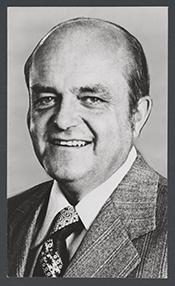
Historical · U.S. House · South Carolina · District 6
Edward Young
Former U.S. Representative · South Carolina District 6 · 1973–1975 · Republican
Edward Young represented South Carolina's District 6 in the United States House of Representatives (1973–1975) for the Republican party. The page below collects sourced biographical facts, term history, committee roles, and provenance for Young.
Bioguide ID: Y000035
Key facts
- Full name
- Edward Young
- State
- South Carolina
- District
- District 6
- Party
- Republican
- House service
- 1973–1975
- First House term
- 1973
- Status
- Left office
- Current term ends
- —
- Born
- 1920
- Bioguide ID
- Y000035
- Committee assignments
- —
- Dataset version
- 1.20260605
Biographical narrative
973 words · sourced from the Wikipedia REST extract
Edward Young was an American politician who served as a U.S. Representative for South Carolina's 6th congressional district from 1973 to 1975. Initially a member of the Democratic Party, he later transitioned to the Republican Party, reflecting the shifting political landscape of the South during the latter half of the 20th century. Young's political career was marked by a significant electoral victory that made him the first Republican to represent his district, but it was also characterized by a relatively brief tenure in Congress due to changing political dynamics.
Early life and career
Edward Lunn Young was born on September 7, 1920, in Florence, South Carolina. His early education culminated in a degree from Clemson College, which is now known as Clemson University, in 1941. Following his graduation, Young joined the United States Army Air Forces during World War II, where he served as a fighter pilot in the Pacific Theater. His military service was distinguished; he received the Distinguished Flying Cross and the Air Medal, which he earned with nine oak leaf clusters, recognizing his bravery and skill in combat. After the war, Young remained in the reserves for a year before being discharged with the rank of major.
Upon returning to Florence, Young engaged in various professional pursuits, including farming, real estate brokerage, and business. His involvement in local affairs laid the groundwork for his entry into politics. In 1958, he was elected to the South Carolina House of Representatives, representing Florence County as a member of the Democratic Party. His term in the state legislature lasted until 1960, during which he contributed to the political discourse of the time. However, by the early 1960s, Young had switched his political allegiance to the Republican Party, a move that reflected both his personal convictions and the broader political realignment occurring in the South.
Young's shift to the Republican Party was part of a larger trend in which many Southern politicians began to embrace Republican ideals, particularly in response to the Democratic Party's civil rights initiatives. He became actively involved in state Republican politics, attending the state Republican conventions in 1968 and 1970. His political engagement culminated in his role as a delegate to the 1968 Republican National Convention, where he participated in the nomination process for presidential candidates.
House tenure
In 1972, Edward Young sought to expand his political career by running for a seat in the U.S. House of Representatives, specifically targeting South Carolina's 6th congressional district. He won the Republican primary nomination, positioning himself against the long-serving Democratic incumbent, John L. McMillan. McMillan was a significant figure in South Carolina politics, having served for 17 terms and holding the distinction of being the longest-serving congressman in the state's history. However, in a surprising turn of events, McMillan was defeated in the Democratic primary by a more liberal candidate, State Representative John Jenrette, which altered the expected dynamics of the general election.
The 1972 general election was characterized by a substantial Republican wave, which contributed to Young's victory. He won the election by a margin of over nine points, marking a historic moment as he became the first Republican to represent this part of South Carolina. Young's election was emblematic of the changing political landscape in the South, where Republican candidates began to gain footholds in traditionally Democratic strongholds.
Despite his historic election, Young's tenure in Congress was relatively short-lived. The Republican Party's presence in South Carolina was still developing, and Young faced significant challenges in the 1974 elections. This election cycle was marked by a nationwide backlash against Republicans, largely due to the Watergate scandal, which had eroded public trust in the party. Jenrette, the Democratic candidate, sought a rematch against Young, and in this election, he managed to reclaim the seat, defeating Young by a margin of four points.
Following his defeat in 1974, Young attempted to regain his congressional seat in a rematch in 1976. However, he was soundly defeated, which marked the end of his congressional career. In 1978, Young sought to further his political ambitions by running for governor of South Carolina. He faced Democratic State Senator Richard Riley in this election but was again unsuccessful.
In 1980, when Jenrette became embroiled in the Abscam scandal, Young attempted to re-enter the political arena by running in the Republican primary. However, he was defeated by John Light Napier, who subsequently won the general election against Jenrette. After this defeat, Young chose to retire from politics, stepping away from the public eye.
Legislative focus and committees
During his time in the U.S. House of Representatives, Edward Young served on various committees, although specific details regarding his committee assignments are not extensively documented. His legislative focus likely reflected the interests and concerns of his constituents in South Carolina's 6th congressional district, which included a mix of urban and rural areas.
Young's political career unfolded during a period of significant change in American politics, particularly in the South, where issues such as civil rights, economic development, and the role of government were hotly debated. As a member of the Republican Party, Young would have been expected to engage with the party's platform, which emphasized limited government, fiscal conservatism, and a strong national defense, among other priorities.
The political landscape of the 1970s was complex, with the Republican Party working to establish itself in regions that had historically leaned Democratic. Young's election and subsequent tenure were part of this broader narrative, as he navigated the challenges of representing a district that was not firmly entrenched in Republican ideology at the time.
After leaving Congress, Young's involvement in politics diminished, and he ultimately retired from public life. He passed away on May 9, 2017, leaving behind a legacy that reflects the evolving nature of political affiliations and the shifting dynamics within South Carolina and the broader Southern United States.
Notable legislation
Sponsored and co-sponsored legislation for Edward Young is pending operator curation. The biographical narrative above carries the same provenance trail until per-bill rows are written.
Sources
- [1]https://en.wikipedia.org/wiki/Edward_Lunn_YoungWikipedia · retrieved 2026-06-05
Notable quotes
Sourced quotes for Edward Young are pending operator curation. Narrative-scope provenance remains attached below.
Sources
- [1]https://en.wikipedia.org/wiki/Edward_Lunn_YoungWikipedia · retrieved 2026-06-05
Key positions
Curated policy positions for Edward Young are pending operator review. The biographical narrative above carries the same provenance trail until per-topic positions are written.
Sources
- [1]https://en.wikipedia.org/wiki/Edward_Lunn_YoungWikipedia · retrieved 2026-06-05
Terms served
- 1973–1975U.S. House · Term 1 · Republican
Sources & provenance
Every attributable claim above carries a per-section [N] marker that resolves to the corresponding URL below. Each entry records the upstream provider, the canonical URL, and the timestamp at which the source was retrieved by the ingest pipeline.
Key facts
- https://bioguide.congress.gov/search/bio/Y000035bioguide · retrieved 2026-06-05
- https://www.govtrack.us/congress/members/411967govtrack · retrieved 2026-06-05
Biographical narrative
- https://en.wikipedia.org/wiki/Edward_Lunn_Youngwikipedia · retrieved 2026-06-05
Find your representative
Every U.S. state elects representatives by district. Browse South Carolina’s delegation, the full former-representative roster, or explore the role and term length.
Related on The Candidate
- Preceded by John McMillanEarlier holder of the South Carolina District 6 House seat · Democratic.Open
- Succeeded by John Jenrette Jr.Later holder of the South Carolina District 6 House seat · Democratic.Open
- Arthur Ravenel Jr.Former U.S. Representative · South Carolina District 1 · RepublicanOpen
- Benjamin WhittemoreFormer U.S. Representative · South Carolina District 1 · RepublicanOpen
- Clara McMillanFormer U.S. Representative · South Carolina District 1 · DemocraticOpen
- Daniel WallaceFormer U.S. Representative · South Carolina District 1 · DemocraticOpen