
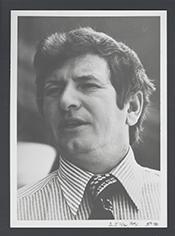
Historical · U.S. House · South Carolina · District 6
John Jenrette Jr.
Former U.S. Representative · South Carolina District 6 · 1975–1981 · Democratic
John Jenrette Jr. represented South Carolina's District 6 in the United States House of Representatives (1975–1981) for the Democratic party. The page below collects sourced biographical facts, term history, committee roles, and provenance for Jr..
Bioguide ID: J000099
Key facts
- Full name
- John Jenrette Jr.
- State
- South Carolina
- District
- District 6
- Party
- Democratic
- House service
- 1975–1981
- First House term
- 1975
- Status
- Left office
- Current term ends
- —
- Born
- 1936
- Bioguide ID
- J000099
- Committee assignments
- —
- Dataset version
- 1.20260605
Biographical narrative
917 words · sourced from the Wikipedia REST extract
John W. Jenrette Jr. was an American lawyer, businessman, and politician who served as a Democratic U.S. Representative for South Carolina's 6th congressional district from January 1975 until January 1981. His tenure in Congress was marked by significant legislative activity and a high-profile scandal that ultimately led to his conviction for bribery. Jenrette's political career was characterized by his liberal stance in a predominantly conservative district, as well as his notable efforts in constituent services and local development initiatives.
Early life and career
John W. Jenrette Jr. was born on May 19, 1936, in Conway, South Carolina. He was the son of Mary Herring and John Wilson Jenrette and grew up in Loris, South Carolina. Jenrette's ancestry included French Huguenot refugees who had settled in the region during the 1700s. He demonstrated athletic prowess during his youth, excelling in multiple sports at Loris High School, where he graduated in 1954. Following high school, he pursued higher education at Wofford College, earning a Bachelor of Arts degree in 1958.
After completing his undergraduate studies, Jenrette served on active duty as an officer in the U.S. Army, followed by several years in the South Carolina National Guard. He furthered his education by attending law school at the University of South Carolina, graduating in 1962. Shortly thereafter, he established a law firm in Ocean Drive, which later became part of the newly incorporated City of North Myrtle Beach.
Jenrette's political career began in 1964 when he was elected to the South Carolina House of Representatives as a Democrat, representing Horry County, which includes the popular tourist destination of Myrtle Beach. During his time in the state legislature, he played a pivotal role in several key initiatives. Notably, he was instrumental in transforming a small two-year branch of the University of South Carolina into a full-service four-year institution, which is now known as Coastal Carolina University. Additionally, he advocated for the conversion of an old post office building in Columbia into a facility for the South Carolina Supreme Court and successfully lobbied the U.S. Air Force to permit commercial air traffic at the Myrtle Beach Air Force Base, laying the groundwork for what would become Myrtle Beach International Airport.
House tenure
In 1972, Jenrette sought a seat in the U.S. House of Representatives, where he faced off against the long-serving incumbent, Congressman John L. McMillan. Although he won the primary election, he ultimately lost in the general election to Republican Edward Lunn Young. Undeterred, Jenrette ran again in 1974 and secured victory, aided in part by the unpopularity of then-President Richard Nixon and the fallout from the Watergate scandal.
Jenrette's political ideology was relatively liberal for the region, which was predominantly conservative and rural. Despite this, he garnered significant support from local constituents, particularly within the African American community. His initial years in Congress were marked by effective representation, leading to his re-election in 1976 and 1978 with minimal opposition.
Upon entering Congress, Jenrette was appointed as a Deputy Whip, a role he maintained throughout his six-year tenure. He served on the House Agriculture Committee and later on the House Appropriations Committee, which is one of the most influential committees in Congress. Additionally, he founded and chaired the Congressional Travel and Tourism Caucus, reflecting his commitment to promoting tourism, which is vital to South Carolina's economy.
Jenrette's approach to constituent services was particularly noteworthy; he and his staff were recognized for their responsiveness and dedication to the needs of the Sixth District. Among his achievements was securing federal funding for a high-span bridge over the Sampit River in Georgetown, South Carolina, which facilitated navigation for sea-going vessels.
Jenrette was also a prominent supporter of Jimmy Carter during the latter's presidential campaign. He was the first member of Congress to endorse Carter, and the two collaborated closely during the campaign, with Carter visiting South Carolina to support Jenrette's re-election efforts.
Legislative focus and committees
Throughout his congressional career, Jenrette's legislative focus included issues pertinent to his district, such as agriculture, tourism, and infrastructure development. His role on the House Appropriations Committee allowed him to influence federal funding allocations that directly benefited South Carolina, particularly in areas related to economic development and public works.
Despite his successes, Jenrette's time in Congress was overshadowed by personal controversies and legal troubles. He became widely known for an incident involving his then-wife, actress and model Rita Jenrette, which garnered significant media attention. This incident, along with his involvement in the FBI's Abscam sting operation, ultimately led to his downfall. In 1980, he was charged and convicted of accepting a bribe, resulting in a prison sentence of two years, of which he served approximately 13 months.
Following his resignation from Congress in December 1980, Jenrette transitioned into the private sector, where he established a public relations firm and engaged in property development in North Myrtle Beach. His personal life also underwent significant changes, as he and Rita Jenrette separated shortly after his conviction, leading to their divorce later that year.
In the years following his departure from Congress, Jenrette explored various business ventures, including marketing a flotation device, managing a national chain of timeshares, and engaging in real estate development. He also imported wine and antique furniture from Eastern Europe, reflecting a diverse range of interests and activities.
John W. Jenrette Jr. passed away on March 17, 2023, at the age of 86. His legacy in South Carolina politics is marked by both his legislative contributions and the controversies that defined his later years.
Notable legislation
Sponsored and co-sponsored legislation for John Jenrette Jr. is pending operator curation. The biographical narrative above carries the same provenance trail until per-bill rows are written.
Sources
- [1]https://en.wikipedia.org/wiki/John_JenretteWikipedia · retrieved 2026-06-05
Notable quotes
Sourced quotes for John Jenrette Jr. are pending operator curation. Narrative-scope provenance remains attached below.
Sources
- [1]https://en.wikipedia.org/wiki/John_JenretteWikipedia · retrieved 2026-06-05
Key positions
Curated policy positions for John Jenrette Jr. are pending operator review. The biographical narrative above carries the same provenance trail until per-topic positions are written.
Sources
- [1]https://en.wikipedia.org/wiki/John_JenretteWikipedia · retrieved 2026-06-05
Terms served
- 1975–1977U.S. House · Term 1 · Democratic
- 1977–1979U.S. House · Term 2 · Democratic
- 1979–1981U.S. House · Term 3 · Democratic
Sources & provenance
Every attributable claim above carries a per-section [N] marker that resolves to the corresponding URL below. Each entry records the upstream provider, the canonical URL, and the timestamp at which the source was retrieved by the ingest pipeline.
Key facts
- https://bioguide.congress.gov/search/bio/J000099bioguide · retrieved 2026-06-05
- https://www.govtrack.us/congress/members/406001govtrack · retrieved 2026-06-05
Biographical narrative
- https://en.wikipedia.org/wiki/John_Jenrettewikipedia · retrieved 2026-06-05
Find your representative
Every U.S. state elects representatives by district. Browse South Carolina’s delegation, the full former-representative roster, or explore the role and term length.
Related on The Candidate
- Preceded by Edward YoungEarlier holder of the South Carolina District 6 House seat · Republican.Open
- Succeeded by John NapierLater holder of the South Carolina District 6 House seat · Republican.Open
- Arthur Ravenel Jr.Former U.S. Representative · South Carolina District 1 · RepublicanOpen
- Benjamin WhittemoreFormer U.S. Representative · South Carolina District 1 · RepublicanOpen
- Clara McMillanFormer U.S. Representative · South Carolina District 1 · DemocraticOpen
- Daniel WallaceFormer U.S. Representative · South Carolina District 1 · DemocraticOpen