
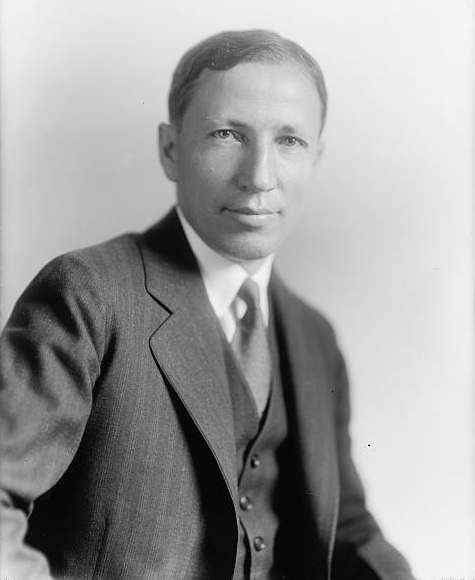
Historical · U.S. House · Tennessee · District 1
Brazilla Reece
Former U.S. Representative · Tennessee District 1 · 1921–1963 · Republican
Brazilla Reece represented Tennessee's District 1 in the United States House of Representatives (1921–1963) for the Republican party. The page below collects sourced biographical facts, term history, committee roles, and provenance for Reece.
Bioguide ID: R000108
Key facts
- Full name
- Brazilla Reece
- State
- Tennessee
- District
- District 1
- Party
- Republican
- House service
- 1921–1963
- First House term
- 1921
- Status
- Left office
- Current term ends
- —
- Born
- 1889
- Bioguide ID
- R000108
- Committee assignments
- —
- Dataset version
- 1.20260605
Biographical narrative
945 words · sourced from the Wikipedia REST extract
Brazilla Reece was a prominent American politician who served as a U.S. Representative for Tennessee's 1st congressional district from 1921 until 1963, with a brief interruption in the early 1930s. A member of the Republican Party, Reece was known for his conservative views and his leadership within the party, particularly as the Chair of the Republican National Committee from 1946 to 1948. His lengthy congressional career was marked by a focus on anti-communism and opposition to progressive policies, as well as significant involvement in various legislative committees.
Early life and career
Brazilla Reece was born on December 22, 1889, on a farm near Butler, Tennessee. He was one of thirteen children born to John Isaac Reece and Sarah Maples Reece. His full name was derived from an ancestor, Brazilla Carroll McBride, who had served in the War of 1812, although he did not commonly use his first name. Reece's family background included a brother, Raleigh Valentine Reece, who was a journalist and educator known for succeeding John Thomas Scopes at Rhea County High School after the famous Scopes Trial.
Reece received his early education at Watauga Academy in Butler before attending Carson-Newman College in Jefferson City, Tennessee. At Carson-Newman, he excelled academically, graduating as the class valedictorian in 1914. He also participated in athletics, playing basketball and football. Following his undergraduate studies, Reece worked as a high school principal for a year before pursuing further education at New York University, where he earned a master's degree in economics and finance in 1916. He also studied at the University of London.
His early career included roles as an assistant secretary and instructor at New York University during 1916 and 1917. In April 1917, Reece enlisted in the military to serve in World War I. He attended officer training in Plattsburgh, New York, and served in the 166th Infantry Regiment of the 42nd Infantry Division before transferring to the 102nd Infantry Regiment of the 26th Infantry Division. Throughout the war, he rose to the rank of captain and commanded a company and later the regiment's 3rd Battalion. He was discharged in 1919, having received several military honors, including the Distinguished Service Cross, the Distinguished Service Medal, the Purple Heart, and the French Croix de Guerre with Palm.
After the war, Reece returned to New York University, where he directed the School of Business Administration in 1919 and 1920 while also studying law. He passed the bar exam and established a successful law practice in Johnson City, Tennessee, where he also engaged in banking and publishing. Reece married Louise Goff, the daughter of U.S. Senator Guy Despard Goff from West Virginia.
House tenure
Reece's political career began with his election to the U.S. House of Representatives in 1920, where he successfully challenged incumbent Republican Sam R. Sells. Initially dismissed by Sells's supporters, Reece's campaign focused on his military service and a promise to limit his congressional tenure to ten years, a commitment he ultimately did not uphold. He criticized Sells for alleged conflicts of interest and for his voting record, particularly regarding tax exemptions for corporations. Reece's grassroots campaign strategy involved visiting all counties in the district, which helped him secure the GOP nomination and win the general election.
Once in office, Reece quickly established a reputation for being attentive to the needs of his constituents, addressing both significant and minor issues. His approach set a precedent for future Republican representatives from Eastern Tennessee. In 1922, he voted in favor of the Dyer Anti-Lynching Bill, reflecting his engagement with civil rights issues, albeit in a limited context.
Reece was re-elected four times following his initial victory, but his tenure faced challenges. In the 1930 midterm elections, he lost to Independent Republican Oscar Lovette, a defeat attributed to backlash from constituents over the Muscle Shoals controversy. However, Reece made a political comeback in 1932, regaining his seat and continuing his long service in the House.
Throughout his congressional career, Reece was a delegate to multiple Republican National Conventions, participating in the party's decision-making processes during pivotal elections. He served on the Board of Regents of the Smithsonian Institution in 1945 and 1946, further demonstrating his involvement in national affairs beyond his congressional duties.
Legislative focus and committees
Reece's legislative focus was characterized by his conservative ideology and opposition to what he viewed as excessive government intervention. He was a prominent figure within the Republican Party's Old Right faction, advocating against interventionism and communism, particularly during the post-World War II era. His leadership role as Chair of the Republican National Committee from 1946 to 1948 positioned him as a key player in shaping the party's direction during a time of significant political change in the United States.
In 1953, Reece chaired the House Select Committee to Investigate Tax-Exempt Foundations and Comparable Organizations, commonly referred to as the Reece Committee. This committee conducted investigations into the activities of non-profit organizations, particularly focusing on allegations of communist influence within educational institutions and charitable foundations. The committee's findings suggested that these organizations were involved in promoting socialist and collectivist ideologies, reflecting Reece's commitment to combating perceived threats to American values.
Throughout his lengthy congressional career, Reece maintained a consistent focus on issues related to taxation, government spending, and national security. His conservative stance resonated with many constituents in his district, which had a long history of Republican representation. Reece's tenure in the House of Representatives lasted until January 3, 1963, marking a significant chapter in the political landscape of Tennessee and the broader Republican Party during the mid-20th century. After leaving office, he continued to be recognized for his contributions to American politics until his passing on March 19, 1961.
Notable legislation
Sponsored and co-sponsored legislation for Brazilla Reece is pending operator curation. The biographical narrative above carries the same provenance trail until per-bill rows are written.
Sources
- [1]https://en.wikipedia.org/wiki/B._Carroll_ReeceWikipedia · retrieved 2026-06-05
Notable quotes
Sourced quotes for Brazilla Reece are pending operator curation. Narrative-scope provenance remains attached below.
Sources
- [1]https://en.wikipedia.org/wiki/B._Carroll_ReeceWikipedia · retrieved 2026-06-05
Key positions
Curated policy positions for Brazilla Reece are pending operator review. The biographical narrative above carries the same provenance trail until per-topic positions are written.
Sources
- [1]https://en.wikipedia.org/wiki/B._Carroll_ReeceWikipedia · retrieved 2026-06-05
Terms served
- 1921–1923U.S. House · Term 1 · Republican
- 1923–1925U.S. House · Term 2 · Republican
- 1925–1927U.S. House · Term 3 · Republican
- 1927–1929U.S. House · Term 4 · Republican
- 1929–1931U.S. House · Term 5 · Republican
- 1933–1935U.S. House · Term 6 · Republican
- 1935–1937U.S. House · Term 7 · Republican
- 1937–1939U.S. House · Term 8 · Republican
- 1939–1941U.S. House · Term 9 · Republican
- 1941–1943U.S. House · Term 10 · Republican
- 1943–1945U.S. House · Term 11 · Republican
- 1945–1947U.S. House · Term 12 · Republican
- 1951–1953U.S. House · Term 13 · Republican
- 1953–1955U.S. House · Term 14 · Republican
- 1955–1957U.S. House · Term 15 · Republican
- 1957–1959U.S. House · Term 16 · Republican
- 1959–1961U.S. House · Term 17 · Republican
- 1961–1963U.S. House · Term 18 · Republican
Sources & provenance
Every attributable claim above carries a per-section [N] marker that resolves to the corresponding URL below. Each entry records the upstream provider, the canonical URL, and the timestamp at which the source was retrieved by the ingest pipeline.
Key facts
- https://bioguide.congress.gov/search/bio/R000108bioguide · retrieved 2026-06-05
- https://www.govtrack.us/congress/members/409088govtrack · retrieved 2026-06-05
Biographical narrative
- https://en.wikipedia.org/wiki/B._Carroll_Reecewikipedia · retrieved 2026-06-05
Find your representative
Every U.S. state elects representatives by district. Browse Tennessee’s delegation, the full former-representative roster, or explore the role and term length.
Related on The Candidate
- Preceded by Sam SellsEarlier holder of the Tennessee District 1 House seat · Republican.Open
- Succeeded by James QuillenLater holder of the Tennessee District 1 House seat · Republican.Open
- Albert WatkinsFormer U.S. Representative · Tennessee District 1 · DemocraticOpen
- Alfred TaylorFormer U.S. Representative · Tennessee District 1 · RepublicanOpen
- Augustus PettiboneFormer U.S. Representative · Tennessee District 1 · RepublicanOpen
- Bill JenkinsFormer U.S. Representative · Tennessee District 1 · RepublicanOpen