
Historical · U.S. House · Tennessee · District 1
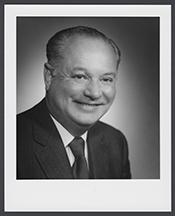
James Quillen
Former U.S. Representative · Tennessee District 1 · 1963–1997 · Republican
James Quillen represented Tennessee's District 1 in the United States House of Representatives (1963–1997) for the Republican party. The page below collects sourced biographical facts, term history, committee roles, and provenance for Quillen.
Bioguide ID: Q000013
Key facts
- Full name
- James Quillen
- State
- Tennessee
- District
- District 1
- Party
- Republican
- House service
- 1963–1997
- First House term
- 1963
- Status
- Left office
- Current term ends
- —
- Born
- 1916
- Bioguide ID
- Q000013
- Committee assignments
- —
- Dataset version
- 1.20260605
Biographical narrative
907 words · sourced from the Wikipedia REST extract
James H. (Jimmy) Quillen was an American politician who served as a Republican member of the United States House of Representatives from Tennessee's 1st congressional district from 1963 until 1997. Quillen's tenure in Congress spanned over three decades, during which he became a prominent figure in Tennessee politics, particularly in the northeastern region of the state, which includes the Tri-Cities area. His long career in public service was marked by a strong focus on constituent service, though his legislative output was relatively modest.
Early life and career
James Henry Quillen was born on January 11, 1916, in Scott County, Virginia. He was the fifth of ten children born to John A. and Hannah Quillen. Growing up near the Tennessee border, Quillen later moved to Kingsport, Tennessee, where he graduated from Dobyns-Bennett High School in 1934. His early work experiences included various positions such as a kitchen prep worker in a restaurant, a grocery store clerk, and a copy boy. Quillen eventually transitioned into the field of journalism and advertising, becoming an advertising salesman for a local newspaper.
In 1936, Quillen took a significant step in his career by investing his savings to establish The Kingsport Mirror, a weekly newspaper in Kingsport. He operated this publication until 1939, when he sold it to start another weekly newspaper, The Johnson City Times, in Johnson City, Tennessee. His entrepreneurial spirit in the media industry laid the groundwork for his later ventures in real estate and insurance.
With the onset of World War II, Quillen received a two-year draft deferment before serving in the United States Navy as a public information officer from late 1942 to 1946. He was assigned to the USS Antietam, an aircraft carrier that entered the Pacific theater towards the end of the war. Although the ship arrived too late to participate in combat operations, Quillen's military service contributed to his experience and public profile.
After the war, Quillen became involved in real estate development and insurance, founding Kingsport Development Company, Inc. He also took on roles as a bank executive. His political career began in earnest when he was elected to the Tennessee House of Representatives as a Republican in 1954, serving four terms representing a district in Sullivan County. Quillen's involvement in state politics included serving as a delegate to the Republican National Convention in 1956, 1964, and 1968, further solidifying his standing within the party.
House tenure
Quillen's journey to the U.S. Congress began in 1961 when he decided to seek the Republican nomination for Tennessee's 1st congressional district after the death of long-serving Congressman B. Carroll Reece. Quillen won a competitive five-way primary with a plurality of the vote and subsequently secured the general election with a significant majority. His victory marked the beginning of a lengthy congressional career that would last for 34 years.
Throughout his time in the House of Representatives, Quillen was re-elected 16 times, demonstrating a strong hold on his constituency. His electoral success can be attributed to both the Republican leanings of the district and his commitment to constituent services, which resonated with voters. Notably, Quillen faced only one closely contested election during his tenure, in 1976, when he received 57 percent of the vote. He enjoyed periods of unopposed candidacies in several election cycles, reflecting his dominance in local politics.
Quillen's political influence extended beyond his district as he emerged as a key figure in the Republican Party in East Tennessee. His leadership and connections within the party made him a significant player in state-level politics. Despite his electoral success and popularity, Quillen's legislative record was characterized by a limited number of original bills, with only three pieces of legislation sponsored during his time in Congress.
Legislative focus and committees
Quillen's legislative focus was primarily on issues pertinent to his constituents, emphasizing strong constituent service rather than a broad legislative agenda. His most notable legislative efforts included addressing the concerns of Social Security beneficiaries, particularly those referred to as "notch babies." This group included individuals born between 1910 and 1916 who experienced disparities in Social Security benefits due to changes in the indexing system. Quillen's advocacy for adjustments to these benefits reflected his responsiveness to the needs of his constituents.
In addition to his work on Social Security issues, Quillen was known for his support of an anti-flag desecration amendment to the U.S. Constitution. However, his overall legislative output was modest compared to his lengthy tenure, with critics noting that he sponsored few original bills.
Quillen's political career was not without controversy. He faced scrutiny for his campaign financing practices, which included significant contributions from political action committees (PACs) representing the beverage industry. His fundraising efforts were noted for their effectiveness, contributing to his electoral success in a predominantly Republican district.
Quillen's voting record included notable decisions, including his opposition to the Civil Rights Act of 1964, a landmark piece of legislation aimed at ending discrimination based on race, color, religion, sex, or national origin. His stance on this and other issues reflected the political climate of his time and the views of his constituents.
After serving 17 terms in the House of Representatives, Quillen's congressional career concluded on January 3, 1997. His legacy includes a long-standing commitment to his constituents and a significant role in the Republican Party in Tennessee. Quillen passed away on November 2, 2003, leaving behind a complex political legacy shaped by both his electoral success and his legislative record.
Notable legislation
Sponsored and co-sponsored legislation for James Quillen is pending operator curation. The biographical narrative above carries the same provenance trail until per-bill rows are written.
Sources
- [1]https://en.wikipedia.org/wiki/Jimmy_QuillenWikipedia · retrieved 2026-06-05
Notable quotes
Sourced quotes for James Quillen are pending operator curation. Narrative-scope provenance remains attached below.
Sources
- [1]https://en.wikipedia.org/wiki/Jimmy_QuillenWikipedia · retrieved 2026-06-05
Key positions
Curated policy positions for James Quillen are pending operator review. The biographical narrative above carries the same provenance trail until per-topic positions are written.
Sources
- [1]https://en.wikipedia.org/wiki/Jimmy_QuillenWikipedia · retrieved 2026-06-05
Terms served
- 1963–1965U.S. House · Term 1 · Republican
- 1965–1967U.S. House · Term 2 · Republican
- 1967–1969U.S. House · Term 3 · Republican
- 1969–1971U.S. House · Term 4 · Republican
- 1971–1973U.S. House · Term 5 · Republican
- 1973–1975U.S. House · Term 6 · Republican
- 1975–1977U.S. House · Term 7 · Republican
- 1977–1979U.S. House · Term 8 · Republican
- 1979–1981U.S. House · Term 9 · Republican
- 1981–1983U.S. House · Term 10 · Republican
- 1983–1985U.S. House · Term 11 · Republican
- 1985–1987U.S. House · Term 12 · Republican
- 1987–1989U.S. House · Term 13 · Republican
- 1989–1991U.S. House · Term 14 · Republican
- 1991–1993U.S. House · Term 15 · Republican
- 1993–1995U.S. House · Term 16 · Republican
- 1995–1997U.S. House · Term 17 · Republican
Sources & provenance
Every attributable claim above carries a per-section [N] marker that resolves to the corresponding URL below. Each entry records the upstream provider, the canonical URL, and the timestamp at which the source was retrieved by the ingest pipeline.
Key facts
- https://bioguide.congress.gov/search/bio/Q000013bioguide · retrieved 2026-06-05
- https://www.govtrack.us/congress/members/408976govtrack · retrieved 2026-06-05
Biographical narrative
- https://en.wikipedia.org/wiki/Jimmy_Quillenwikipedia · retrieved 2026-06-05
Find your representative
Every U.S. state elects representatives by district. Browse Tennessee’s delegation, the full former-representative roster, or explore the role and term length.
Related on The Candidate
- Preceded by Brazilla ReeceEarlier holder of the Tennessee District 1 House seat · Republican.Open
- Succeeded by Bill JenkinsLater holder of the Tennessee District 1 House seat · Republican.Open
- Albert WatkinsFormer U.S. Representative · Tennessee District 1 · DemocraticOpen
- Alfred TaylorFormer U.S. Representative · Tennessee District 1 · RepublicanOpen
- Augustus PettiboneFormer U.S. Representative · Tennessee District 1 · RepublicanOpen
- Republican PartyFederal candidates and office holders on the Republican line.Open