
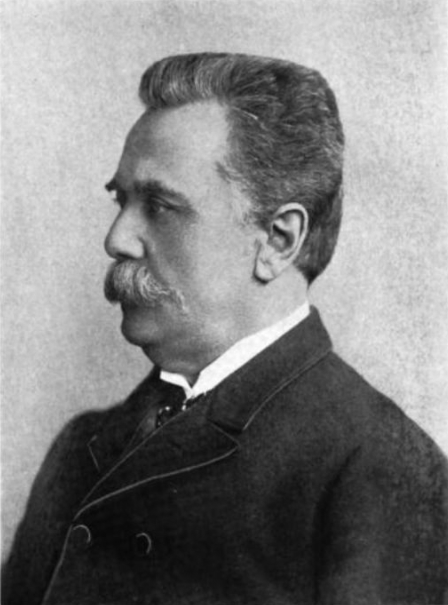
Historical · U.S. House · Tennessee · District 10
William Moore
Former U.S. Representative · Tennessee District 10 · 1881–1883 · Republican
William Moore represented Tennessee's District 10 in the United States House of Representatives (1881–1883) for the Republican party. The page below collects sourced biographical facts, term history, committee roles, and provenance for Moore.
Bioguide ID: M000924
Key facts
- Full name
- William Moore
- State
- Tennessee
- District
- District 10
- Party
- Republican
- House service
- 1881–1883
- First House term
- 1881
- Status
- Left office
- Current term ends
- —
- Born
- 1830
- Bioguide ID
- M000924
- Committee assignments
- —
- Dataset version
- 1.20260606
Biographical narrative
935 words · sourced from the Wikipedia REST extract
William Moore was a U.S. Representative from Tennessee, serving in the Forty-seventh Congress as a member of the Republican Party. His tenure in the House of Representatives lasted from March 4, 1881, until March 3, 1883. Known for his conservative voting record, Moore was a prominent figure in his district during a time of significant political and social change in the United States. After completing his term, he returned to his business pursuits and later contributed to education through the establishment of a technical college.
Early life and career
William Moore was born on March 28, 1830, in the hills near Huntsville, Alabama, to Robert Cleveland Moore and Mary F. Lingow Moore. His family was considered aristocratic, with his father's lineage tracing back to Oliver Cromwell. However, tragedy struck when Moore's father passed away just six months after his birth, leaving the family in a precarious financial situation. As a result, they turned to farming and moved frequently, eventually settling in Beech Grove, Tennessee.
At the age of six, Moore's family established their home in Fosterville, located in Rutherford County, Tennessee. He received his early education at local district schools but was forced to leave school at the age of twelve to support his family. He began working as a farmhand, earning a modest wage of $24 per year, which included room and board. After a year, he had saved $12, which marked the beginning of his early work experience.
By the age of fifteen, Moore transitioned to a position as a clerk in a dry-goods store in Beech Grove. He later worked as a clerk in Nashville, Tennessee, and subsequently engaged in the wholesale dry-goods business in New York City from 1856 to 1859. In 1859, he relocated to Memphis, Tennessee, where he established his own wholesale dry-goods store, Wm. R. Moore, Inc. This business would later be recognized as a historic site, listed on the National Register of Historic Places.
Moore's time in Memphis was marked by significant social and political challenges. He was a vocal opponent of secession during the Civil War and supported Republican President Abraham Lincoln, which led to public scorn and hostility from his peers. Despite the backlash, he maintained a low profile during the war, making strategic business decisions that ultimately benefited him. He anticipated the devaluation of Confederate currency and invested in real estate, becoming a wealthy landowner after the war concluded.
In addition to his business endeavors, Moore was active in civic matters. During the yellow fever epidemic of 1879, he played a key role in advocating for improved sanitation measures in Memphis, which helped to enhance the city's drinking water system and reduce the spread of the disease.
House tenure
William Moore was elected as a Republican to represent Tennessee's 10th Congressional District in the Forty-seventh Congress, serving from March 4, 1881, to March 3, 1883. His election came during a period of significant political realignment in the United States, as the Republican Party was solidifying its influence in the post-Civil War era.
During his time in Congress, Moore held a conservative voting record. He was assessed using the DW-NOMINATE system, which indicated that he was more conservative than 90% of his fellow House members and more conservative than 81% of Republicans overall. His legislative actions reflected the values and priorities of the Republican Party at the time, although specific details about the bills he supported or opposed are limited.
One notable aspect of Moore's congressional tenure was his opposition to the Pendleton Civil Service Reform Act, a significant piece of legislation aimed at establishing a merit-based system for federal employment. He was one of only seven House Republicans to vote against the act during the lame duck session preceding the 48th Congress. This opposition was indicative of the broader tensions within the Republican Party regarding civil service reform, particularly among conservative factions.
Moore chose not to seek re-election in 1882, opting instead to return to his business activities after completing his single term in office. He was succeeded by Young, marking the end of his congressional career.
Legislative focus and committees
While specific details about the committees on which Moore served during his time in Congress are not extensively documented, his overall legislative focus aligned with the conservative principles of the Republican Party during the late 19th century. His voting record suggests a commitment to traditional Republican values, particularly in relation to issues of governance and civil service.
Moore's opposition to the Pendleton Act highlights a significant ideological divide within the party at the time, as many Republicans were beginning to embrace reformist ideas aimed at reducing corruption and patronage in government. However, Moore's conservative stance placed him in opposition to these emerging trends.
After leaving Congress, Moore continued to be involved in public service. He served in the Tennessee state House of Representatives from 1889 to 1891, further contributing to the political landscape of his state. His later career included a tribute to President William McKinley following the latter's assassination in 1891, reflecting his ongoing engagement with national issues.
Moore passed away on June 12, 1909, in Memphis, Tennessee. He was interred at Forest Hill Cemetery, where his epitaph reads, "He did the best he could." His legacy includes a significant financial contribution to education, as he left approximately $500,000 to establish a college. This investment was managed by trustees, ultimately leading to the establishment of the William R. Moore School of Technology in 1939. The institution was designed to provide vocational training, emphasizing practical skills over traditional academic subjects, which may have reflected Moore's own educational experiences and values.
Notable legislation
Sponsored and co-sponsored legislation for William Moore is pending operator curation. The biographical narrative above carries the same provenance trail until per-bill rows are written.
Sources
- [1]https://en.wikipedia.org/wiki/William_Robert_MooreWikipedia · retrieved 2026-06-06
Notable quotes
Sourced quotes for William Moore are pending operator curation. Narrative-scope provenance remains attached below.
Sources
- [1]https://en.wikipedia.org/wiki/William_Robert_MooreWikipedia · retrieved 2026-06-06
Key positions
Curated policy positions for William Moore are pending operator review. The biographical narrative above carries the same provenance trail until per-topic positions are written.
Sources
- [1]https://en.wikipedia.org/wiki/William_Robert_MooreWikipedia · retrieved 2026-06-06
Terms served
- 1881–1883U.S. House · Term 1 · Republican
Sources & provenance
Every attributable claim above carries a per-section [N] marker that resolves to the corresponding URL below. Each entry records the upstream provider, the canonical URL, and the timestamp at which the source was retrieved by the ingest pipeline.
Key facts
- https://bioguide.congress.gov/search/bio/M000924bioguide · retrieved 2026-06-06
- https://www.govtrack.us/congress/members/407895govtrack · retrieved 2026-06-06
Biographical narrative
- https://en.wikipedia.org/wiki/William_Robert_Moorewikipedia · retrieved 2026-06-06
Find your representative
Every U.S. state elects representatives by district. Browse Tennessee’s delegation, the full former-representative roster, or explore the role and term length.
Related on The Candidate
- Preceded by William AveryEarlier holder of the Tennessee District 10 House seat · Democratic.Open
- Succeeded by Zachary TaylorLater holder of the Tennessee District 10 House seat · Republican.Open
- Albert WatkinsFormer U.S. Representative · Tennessee District 1 · DemocraticOpen
- Alfred TaylorFormer U.S. Representative · Tennessee District 1 · RepublicanOpen
- Augustus PettiboneFormer U.S. Representative · Tennessee District 1 · RepublicanOpen
- Bill JenkinsFormer U.S. Representative · Tennessee District 1 · RepublicanOpen