
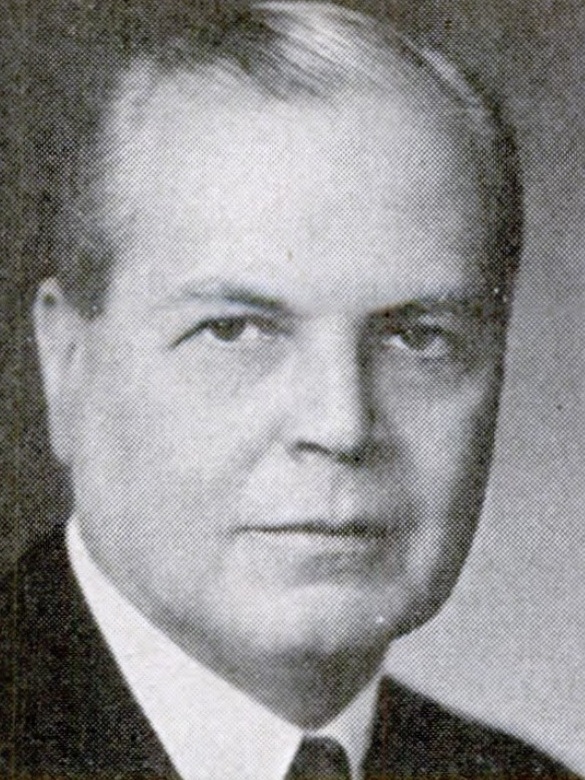
Historical · U.S. House · Tennessee · District 3
James Frazier Jr.
Former U.S. Representative · Tennessee District 3 · 1949–1963 · Democratic
James Frazier Jr. represented Tennessee's District 3 in the United States House of Representatives (1949–1963) for the Democratic party. The page below collects sourced biographical facts, term history, committee roles, and provenance for Jr..
Bioguide ID: F000353
Key facts
- Full name
- James Frazier Jr.
- State
- Tennessee
- District
- District 3
- Party
- Democratic
- House service
- 1949–1963
- First House term
- 1949
- Status
- Left office
- Current term ends
- —
- Born
- 1890
- Bioguide ID
- F000353
- Committee assignments
- —
- Dataset version
- 1.20260605
Biographical narrative
887 words · sourced from the Wikipedia REST extract
James Frazier Jr. was a prominent Democratic politician who served as a U.S. Representative for Tennessee's 3rd congressional district from 1949 until 1963. Born into a politically active family, Frazier's career spanned significant periods in American history, including the aftermath of World War II and the civil rights movement. His tenure in the House of Representatives was marked by his involvement in various legislative issues and his alignment with the political sentiments of his time.
Early life and career
James Frazier Jr. was born on June 23, 1890, in Chattanooga, Tennessee. He was the son of James B. Frazier, who held notable political positions, including Governor of Tennessee from 1903 to 1905 and later as a U.S. Senator from 1905 to 1911. His mother, Louise Douglas (Keith) Frazier, contributed to his upbringing in a family deeply engaged in public service and law. Growing up in Chattanooga, Frazier received his education through the public school system and attended Baylor Preparatory School, which provided him with a solid academic foundation.
Frazier pursued higher education at the University of Virginia in Charlottesville, where he studied law. He graduated from Chattanooga College of Law in 1914, marking the beginning of his legal career. Shortly after his graduation, he was admitted to the bar and began practicing law in his hometown of Chattanooga. His legal career was interrupted by World War I, during which he volunteered for military service. Frazier enlisted in the United States Army on April 21, 1917, and served with distinction, ultimately achieving the rank of major before his discharge in March 1919.
Following the war, Frazier returned to his legal practice and continued to build his career. In 1933, he was appointed as the United States Attorney for the Eastern District of Tennessee, a position he held until his resignation in 1948. This role allowed him to gain significant experience in federal law and the workings of the judicial system, further solidifying his reputation in the legal community. In his personal life, Frazier married Elizabeth Hope on March 30, 1939, and the couple had one daughter, Elizabeth Hope Frazier.
House tenure
Frazier's political career took a significant turn when he was elected to the United States House of Representatives as a Democrat in 1948. He officially took office on January 3, 1949, representing Tennessee's 3rd congressional district. His election came during a period of considerable change in American politics, as the nation was transitioning from the post-war era into a time of social and political upheaval. Frazier was re-elected multiple times, serving a total of seven terms in the House.
During his tenure, Frazier was involved in various legislative initiatives and discussions that reflected the priorities and challenges of his constituents. His time in office coincided with significant national events, including the civil rights movement, the Cold War, and the expansion of social programs. Frazier's alignment with the Democratic Party placed him in a position to engage with key issues of the day, although specific details about his legislative actions and positions during this time are not extensively documented.
Frazier's congressional career came to an end when he was not renominated in 1962 for the Eighty-eighth Congress. Following his departure from the House, he returned to Chattanooga, where he resumed his legal practice. His post-congressional career allowed him to continue contributing to the legal field and engaging with his community.
Legislative focus and committees
Throughout his time in the House of Representatives, Frazier's legislative focus was shaped by the political climate of the era and the needs of his constituents. As a member of the Democratic Party, he was part of a larger coalition that sought to address various social and economic issues facing the nation. Although specific legislative achievements are not detailed in the available records, Frazier's involvement in Congress would have included participation in discussions and votes on key legislation impacting his district and the country.
One notable aspect of Frazier's political stance was his signature on the 1956 Southern Manifesto, a document that opposed the Supreme Court's decision in Brown v. Board of Education, which mandated the desegregation of public schools. This action reflected the prevailing attitudes of some Southern politicians during the civil rights movement, as they sought to resist federal mandates regarding racial integration. Frazier's alignment with the Southern Manifesto indicates his commitment to the political and social views held by many in his region at that time.
Frazier's committee assignments during his congressional tenure would have further defined his legislative focus, although specific committees are not listed in the available records. Typically, members of Congress serve on committees that align with their interests and the needs of their constituents, allowing them to influence legislation in areas such as education, labor, and civil rights.
After leaving Congress, Frazier continued to be active in the legal field until his retirement. He passed away on October 30, 1978, in Chattanooga, Tennessee, at the age of 88. His contributions to both the legal profession and public service are remembered, and he is interred at Forest Hills Cemetery in Chattanooga.
Frazier's life and career reflect the complexities of American politics during the mid-20th century, as he navigated the intersections of law, governance, and social change. His legacy is intertwined with the broader narrative of Tennessee's political history and the evolving landscape of American democracy.
Notable legislation
Sponsored and co-sponsored legislation for James Frazier Jr. is pending operator curation. The biographical narrative above carries the same provenance trail until per-bill rows are written.
Sources
- [1]https://en.wikipedia.org/wiki/James_B._Frazier_Jr.Wikipedia · retrieved 2026-06-05
Notable quotes
Sourced quotes for James Frazier Jr. are pending operator curation. Narrative-scope provenance remains attached below.
Sources
- [1]https://en.wikipedia.org/wiki/James_B._Frazier_Jr.Wikipedia · retrieved 2026-06-05
Key positions
Curated policy positions for James Frazier Jr. are pending operator review. The biographical narrative above carries the same provenance trail until per-topic positions are written.
Sources
- [1]https://en.wikipedia.org/wiki/James_B._Frazier_Jr.Wikipedia · retrieved 2026-06-05
Terms served
- 1949–1951U.S. House · Term 1 · Democratic
- 1951–1953U.S. House · Term 2 · Democratic
- 1953–1955U.S. House · Term 3 · Democratic
- 1955–1957U.S. House · Term 4 · Democratic
- 1957–1959U.S. House · Term 5 · Democratic
- 1959–1961U.S. House · Term 6 · Democratic
- 1961–1963U.S. House · Term 7 · Democratic
Sources & provenance
Every attributable claim above carries a per-section [N] marker that resolves to the corresponding URL below. Each entry records the upstream provider, the canonical URL, and the timestamp at which the source was retrieved by the ingest pipeline.
Key facts
- https://bioguide.congress.gov/search/bio/F000353bioguide · retrieved 2026-06-05
- https://www.govtrack.us/congress/members/404300govtrack · retrieved 2026-06-05
Biographical narrative
- https://en.wikipedia.org/wiki/James_B._Frazier_Jr.wikipedia · retrieved 2026-06-05
Find your representative
Every U.S. state elects representatives by district. Browse Tennessee’s delegation, the full former-representative roster, or explore the role and term length.
Related on The Candidate
- Preceded by Samuel McReynoldsEarlier holder of the Tennessee District 3 House seat · Democratic.Open
- Succeeded by LaMar BakerLater holder of the Tennessee District 3 House seat · Republican.Open
- Albert WatkinsFormer U.S. Representative · Tennessee District 1 · DemocraticOpen
- Alfred TaylorFormer U.S. Representative · Tennessee District 1 · RepublicanOpen
- Augustus PettiboneFormer U.S. Representative · Tennessee District 1 · RepublicanOpen
- Bill JenkinsFormer U.S. Representative · Tennessee District 1 · RepublicanOpen