
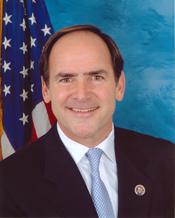
Historical · U.S. House · Tennessee · District 3
Zach Wamp
Former U.S. Representative · Tennessee District 3 · 1995–2011 · Republican
Zach Wamp represented Tennessee's District 3 in the United States House of Representatives (1995–2011) for the Republican party. The page below collects sourced biographical facts, term history, committee roles, and provenance for Wamp.
Bioguide ID: W000119
Key facts
- Full name
- Zach Wamp
- State
- Tennessee
- District
- District 3
- Party
- Republican
- House service
- 1995–2011
- First House term
- 1995
- Status
- Left office
- Current term ends
- —
- Born
- 1957
- Bioguide ID
- W000119
- Committee assignments
- —
- Dataset version
- 1.20260605
Biographical narrative
913 words · sourced from the Wikipedia REST extract
Zach Wamp is a former American politician who served as the U.S. Representative for Tennessee's 3rd congressional district from 1995 until 2011. A member of the Republican Party, Wamp's congressional career spanned eight terms, during which he focused on various legislative priorities, particularly those impacting his district, which includes Chattanooga and significant portions of East Tennessee.
Early life and career
Zach Wamp was born on October 28, 1957, in Fort Benning, Georgia. He spent his formative years in East Ridge, Tennessee, a suburb of Chattanooga. His father was an architect, which likely influenced Wamp's early exposure to design and development. He attended The Lutheran School for elementary education and later enrolled in The McCallie School, a prestigious all-boys preparatory school in Chattanooga. At McCallie, Wamp was an active student, serving as president of the student council and excelling in athletics, particularly as the Most Valuable Player on the varsity basketball team during his senior year, which culminated in his graduation in 1976.
Wamp's higher education journey began at the University of North Carolina at Chapel Hill, where he attended for a year before transferring to the University of Tennessee at Knoxville. However, he faced challenges during his college years, including struggles with substance abuse, which ultimately led him to drop out before completing his degree. Following his departure from college, Wamp entered the workforce as a national sales supervisor for Olan Mills, a photography company based in Chattanooga. He later transitioned into commercial and industrial real estate, working in his family's architectural and development business and eventually becoming vice president of Charter Real Estate Corporation in 1989. In 1992, he joined Fletcher Bright Co. as a broker.
Wamp's political career began at the local level, where he served as a precinct vice chairman and Youth Coordinator for Gene Roberts' mayoral campaign in Chattanooga in 1983. His involvement in the Republican Party deepened as he became president of the Young Republicans and later served as chairman of the Hamilton County Republican Party. He also held the position of regional director for the Tennessee GOP, which laid the groundwork for his future candidacy for federal office.
House tenure
Wamp first ran for the U.S. House of Representatives in 1992, challenging nine-term incumbent Democrat Marilyn Lloyd. Although he lost the election by a narrow margin, the experience solidified his political ambitions. In 1994, when Lloyd chose not to seek re-election, Wamp entered the race again. He faced a competitive primary but ultimately secured the Republican nomination and won the general election with a commitment to serve no more than six terms in office. His campaign was marked by his signing of the Contract with America and a pledge to avoid special interest PAC money.
Following his initial election, Wamp was re-elected in 1996 with a slightly reduced margin. His subsequent elections were characterized by significant victories, with Wamp winning by 64 percent or more of the vote in the years following 1998. In 2004, he considered a run for the U.S. Senate but ultimately decided against it.
Despite his earlier pledge to limit his tenure, Wamp announced in 2006 that he would seek re-election for a seventh term, citing his influential position on the Appropriations Committee as a reason for his change of heart. He faced a challenger in the primary but won re-election with a substantial majority. However, the 2006 midterm elections resulted in a significant loss for the Republican Party, which prompted Wamp to reflect on the changing dynamics of politics during his tenure.
Wamp's final re-election came in 2008, where he achieved his highest electoral performance, securing 69 percent of the vote. His time in the House concluded on January 3, 2011, after serving a total of eight terms.
Legislative focus and committees
During his time in Congress, Wamp was a member of the House Appropriations Committee, a position that allowed him to advocate for funding and resources for his district. One of his primary legislative focuses was securing funding for the Chickamauga Dam, a critical infrastructure project aimed at addressing the deteriorating conditions of the lock system. The project received approval in 2006 for an eight-year, $349 million investment, which Wamp worked diligently to protect from budget cuts.
In addition to infrastructure, Wamp was involved in initiatives related to public safety and drug enforcement. He successfully secured a $4 million appropriation for a methamphetamine task force, which had been established in 1999 and expanded its reach across Tennessee. Wamp was also a staunch supporter of the Tennessee Valley Authority, advocating for its role as a significant government-owned entity.
Wamp's legislative record included support for the display of the Ten Commandments in public buildings, reflecting his alignment with certain conservative values. He also faced scrutiny for his changing stance on the Wall Street bailout, a decision he later expressed regret over. His commitment to conservative principles was recognized when he received a 100 percent rating from the American Conservative Union in 2003.
In 2005, Wamp sought to elevate his role within the Republican leadership by campaigning for the position of Majority Whip following the indictment of Tom DeLay. Although he garnered support from fellow Republican representatives, the incumbent Majority Whip retained his position, and Wamp's bid was unsuccessful.
Throughout his congressional career, Wamp's focus remained on serving the interests of his constituents in Tennessee's 3rd district while navigating the complexities of national politics. His tenure was marked by a commitment to his district's needs, legislative priorities, and evolving political landscape.
Notable legislation
Sponsored and co-sponsored legislation for Zach Wamp is pending operator curation. The biographical narrative above carries the same provenance trail until per-bill rows are written.
Sources
- [1]https://en.wikipedia.org/wiki/Zach_WampWikipedia · retrieved 2026-06-05
Notable quotes
Sourced quotes for Zach Wamp are pending operator curation. Narrative-scope provenance remains attached below.
Sources
- [1]https://en.wikipedia.org/wiki/Zach_WampWikipedia · retrieved 2026-06-05
Key positions
Curated policy positions for Zach Wamp are pending operator review. The biographical narrative above carries the same provenance trail until per-topic positions are written.
Sources
- [1]https://en.wikipedia.org/wiki/Zach_WampWikipedia · retrieved 2026-06-05
Terms served
- 1995–1997U.S. House · Term 1 · Republican
- 1997–1999U.S. House · Term 2 · Republican
- 1999–2001U.S. House · Term 3 · Republican
- 2001–2003U.S. House · Term 4 · Republican
- 2003–2005U.S. House · Term 5 · Republican
- 2005–2007U.S. House · Term 6 · Republican
- 2007–2009U.S. House · Term 7 · Republican
- 2009–2011U.S. House · Term 8 · Republican
Sources & provenance
Every attributable claim above carries a per-section [N] marker that resolves to the corresponding URL below. Each entry records the upstream provider, the canonical URL, and the timestamp at which the source was retrieved by the ingest pipeline.
Key facts
- https://bioguide.congress.gov/search/bio/W000119bioguide · retrieved 2026-06-05
- http://www.house.gov/wamphouse.gov · retrieved 2026-06-05
Biographical narrative
- https://en.wikipedia.org/wiki/Zach_Wampwikipedia · retrieved 2026-06-05
Find your representative
Every U.S. state elects representatives by district. Browse Tennessee’s delegation, the full former-representative roster, or explore the role and term length.
Related on The Candidate
- Preceded by Marilyn LloydEarlier holder of the Tennessee District 3 House seat · Democratic.Open
- Albert WatkinsFormer U.S. Representative · Tennessee District 1 · DemocraticOpen
- Alfred TaylorFormer U.S. Representative · Tennessee District 1 · RepublicanOpen
- Augustus PettiboneFormer U.S. Representative · Tennessee District 1 · RepublicanOpen
- Bill JenkinsFormer U.S. Representative · Tennessee District 1 · RepublicanOpen
- Republican PartyFederal candidates and office holders on the Republican line.Open