
Historical · U.S. House · Tennessee · District 3
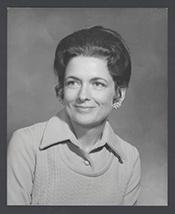
Marilyn Lloyd
Former U.S. Representative · Tennessee District 3 · 1975–1995 · Democratic
Marilyn Lloyd represented Tennessee's District 3 in the United States House of Representatives (1975–1995) for the Democratic party. The page below collects sourced biographical facts, term history, committee roles, and provenance for Lloyd.
Bioguide ID: L000381
Key facts
- Full name
- Marilyn Lloyd
- State
- Tennessee
- District
- District 3
- Party
- Democratic
- House service
- 1975–1995
- First House term
- 1975
- Status
- Left office
- Current term ends
- —
- Born
- 1929
- Bioguide ID
- L000381
- Committee assignments
- —
- Dataset version
- 1.20260605
Biographical narrative
1,086 words · sourced from the Wikipedia REST extract
Marilyn Lloyd was an American politician and businesswoman who served as a U.S. Representative for Tennessee's 3rd congressional district from 1975 until 1995. A member of the Democratic Party, she was notable for being the first woman elected to Congress from Tennessee for a full term. Throughout her ten terms in office, Lloyd established herself as a moderate-to-conservative voice within the Democratic Party, often aligning her views with the conservative sentiments of her constituents. Her legislative career was marked by her involvement in various committees and her advocacy for issues related to women's health and environmental concerns.
Early life and career
Marilyn Lloyd was born Rachel Marilyn Laird on January 3, 1929, in Fort Smith, Arkansas. She was raised in a religious household, being the daughter of a Church of Christ pastor. Lloyd completed her high school education at Western Kentucky College High School in Bowling Green, Kentucky, graduating in 1945. Following her high school education, she attended Shorter College in Rome, Georgia, where she began to develop her interests in business and public service.
Before entering politics, Lloyd had a diverse career in business. She owned a radio station, WTTI, located in Dalton, Georgia, and also operated Executive Aviation in Winchester, Tennessee. These ventures provided her with valuable experience in management and public relations, skills that would later serve her well in her political career.
Lloyd's personal life included multiple marriages. Her first husband was Dr. Robert Earl Davison, a dentist in Trion, Georgia. After Davison's death in 1960, she married Mort Lloyd, a well-known television news anchor in Chattanooga, Tennessee, in 1963. Tragically, Mort Lloyd died in an airplane crash in 1974, shortly before the Democratic primary for Tennessee's 3rd congressional district, which he had entered. Following this, Marilyn Lloyd was selected by the Democratic Party to replace him on the ballot, marking the beginning of her political journey.
House tenure
Marilyn Lloyd's congressional career began when she won the Democratic primary for Tennessee's 3rd congressional district in August 1974, following the untimely death of her husband. She went on to defeat the incumbent Republican Congressman LaMar Baker in the general election held in November of that year. Her election was part of a broader trend during that period, as many Republicans faced defeat in the wake of the Watergate scandal. Lloyd's victory was significant not only for her personal achievement but also for the representation of women in Congress, as she became the first woman to serve a full term in the U.S. House of Representatives from Tennessee.
During her time in Congress, which spanned two decades, Lloyd was known for her moderate-to-conservative stance within the Democratic Party. She often diverged from the national party leadership, reflecting the conservative views of her constituents. Throughout her tenure, she served on several important committees, including the House Science Committee, where she was involved in legislation related to nuclear weapons and research facilities in her district, particularly the Oak Ridge National Laboratory. By the end of her career, she had risen to the position of the second-ranking Democrat on this committee.
In addition to her work on the Science Committee, Lloyd served on the Committee on Public Works from 1975 to 1987, the Armed Services Committee from 1983 to 1995, and the House Select Committee on Aging for much of her congressional career. Her involvement in these committees allowed her to influence a wide range of issues, including infrastructure development, military matters, and the needs of an aging population.
Lloyd's political career was not without its challenges. In 1977, when a Women's Caucus was formed in the House, she was one of the few women who chose not to join initially, likely due to concerns about alienating her constituents. However, she later became a member but resigned in 1980 due to political disagreements. Despite this, she was an advocate for women's health issues, co-sponsoring significant legislation such as the Mammography Quality Standards Act, which was enacted in 1992. Her personal experience with breast cancer in 1991 further galvanized her commitment to women's health, leading her to advocate for better treatment options and the availability of breast implants for reconstructive surgery.
Lloyd faced a closely contested election in 1992 against Republican candidate Zach Wamp, winning by a narrow margin. This election highlighted the shifting political landscape in her district, as she struggled in traditionally Republican areas while maintaining support in more Democratic-leaning regions. The close nature of the race influenced her decision not to seek an 11th term in 1994, and she subsequently endorsed Wamp's candidacy, which contributed to his victory in that election.
Legislative focus and committees
Throughout her congressional career, Marilyn Lloyd's legislative focus encompassed a variety of issues, reflecting both her personal interests and the needs of her constituents. Her long-standing commitment to science and technology was evident in her role on the House Science Committee, where she worked on legislation pertaining to nuclear energy and research initiatives at the Oak Ridge National Laboratory. This facility was a significant part of her district and played a crucial role in national energy policy and scientific research.
Lloyd's advocacy for women's health issues became a defining aspect of her later career. After her breast cancer diagnosis, she became a vocal proponent for women's health rights, particularly in relation to breast cancer treatment and reproductive health. Her change in perspective on abortion, influenced by her personal health struggles, marked a significant shift in her political stance and underscored her commitment to ensuring that women had the autonomy to make decisions about their health care.
In addition to her work on health issues, Lloyd's tenure on the Armed Services Committee allowed her to engage with military and defense matters, an area of importance for many constituents in her district. Her involvement in public works initiatives also demonstrated her commitment to infrastructure development, which was vital for the economic growth of Tennessee.
After her retirement from Congress in 1995, Lloyd continued to engage in advocacy work, particularly focusing on domestic violence issues. The Marilyn Lloyd Environmental and Life Sciences Research Complex at Oak Ridge National Laboratory was named in her honor in 1999, recognizing her contributions to science and public service. Lloyd passed away on September 19, 2018, at the age of 89, leaving behind a legacy of public service and advocacy for women's health and environmental issues. Her congressional papers are archived at the University of Tennessee at Chattanooga, preserving her contributions to American politics and her role as a pioneer for women in government.
Notable legislation
Sponsored and co-sponsored legislation for Marilyn Lloyd is pending operator curation. The biographical narrative above carries the same provenance trail until per-bill rows are written.
Sources
- [1]https://en.wikipedia.org/wiki/Marilyn_LloydWikipedia · retrieved 2026-06-05
Notable quotes
Sourced quotes for Marilyn Lloyd are pending operator curation. Narrative-scope provenance remains attached below.
Sources
- [1]https://en.wikipedia.org/wiki/Marilyn_LloydWikipedia · retrieved 2026-06-05
Key positions
Curated policy positions for Marilyn Lloyd are pending operator review. The biographical narrative above carries the same provenance trail until per-topic positions are written.
Sources
- [1]https://en.wikipedia.org/wiki/Marilyn_LloydWikipedia · retrieved 2026-06-05
Terms served
- 1975–1977U.S. House · Term 1 · Democratic
- 1977–1979U.S. House · Term 2 · Democratic
- 1979–1981U.S. House · Term 3 · Democratic
- 1981–1983U.S. House · Term 4 · Democratic
- 1983–1985U.S. House · Term 5 · Democratic
- 1985–1987U.S. House · Term 6 · Democratic
- 1987–1989U.S. House · Term 7 · Democratic
- 1989–1991U.S. House · Term 8 · Democratic
- 1991–1993U.S. House · Term 9 · Democratic
- 1993–1995U.S. House · Term 10 · Democratic
Sources & provenance
Every attributable claim above carries a per-section [N] marker that resolves to the corresponding URL below. Each entry records the upstream provider, the canonical URL, and the timestamp at which the source was retrieved by the ingest pipeline.
Key facts
- https://bioguide.congress.gov/search/bio/L000381bioguide · retrieved 2026-06-05
- https://www.govtrack.us/congress/members/406873govtrack · retrieved 2026-06-05
Biographical narrative
- https://en.wikipedia.org/wiki/Marilyn_Lloydwikipedia · retrieved 2026-06-05
Find your representative
Every U.S. state elects representatives by district. Browse Tennessee’s delegation, the full former-representative roster, or explore the role and term length.
Related on The Candidate
- Preceded by LaMar BakerEarlier holder of the Tennessee District 3 House seat · Republican.Open
- Succeeded by Zach WampLater holder of the Tennessee District 3 House seat · Republican.Open
- Albert WatkinsFormer U.S. Representative · Tennessee District 1 · DemocraticOpen
- Alfred TaylorFormer U.S. Representative · Tennessee District 1 · RepublicanOpen
- Augustus PettiboneFormer U.S. Representative · Tennessee District 1 · RepublicanOpen
- Bill JenkinsFormer U.S. Representative · Tennessee District 1 · RepublicanOpen