
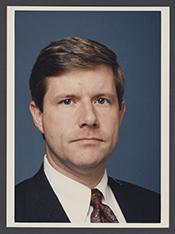
Historical · U.S. House · Tennessee · District 4
Van Hilleary
Former U.S. Representative · Tennessee District 4 · 1995–2003 · Republican
Van Hilleary represented Tennessee's District 4 in the United States House of Representatives (1995–2003) for the Republican party. The page below collects sourced biographical facts, term history, committee roles, and provenance for Hilleary.
Bioguide ID: H000615
Key facts
- Full name
- Van Hilleary
- State
- Tennessee
- District
- District 4
- Party
- Republican
- House service
- 1995–2003
- First House term
- 1995
- Status
- Left office
- Current term ends
- —
- Born
- 1959
- Bioguide ID
- H000615
- Committee assignments
- —
- Dataset version
- 1.20260605
Biographical narrative
933 words · sourced from the Wikipedia REST extract
William Vanderpool "Van" Hilleary is a former American politician who served as the U.S. Representative for Tennessee's 4th congressional district from 1995 until 2003. A member of the Republican Party, Hilleary's political career included four terms in the House of Representatives, during which he established a conservative voting record and engaged in various legislative initiatives. After leaving Congress, he ran for Governor of Tennessee in 2002 and is currently preparing to run for Congress again in 2026 for Tennessee's 6th congressional district.
Early life and career
Van Hilleary was born on June 20, 1959, in Dayton, Tennessee, the county seat of Rhea County. He grew up in nearby Spring City, where his family operated a textile manufacturing business. Hilleary pursued higher education at the University of Tennessee, graduating in 1981. During his time at the university, he was involved in the Sigma Chi Fraternity and participated in the Air Force Reserve Officer Training Corps (ROTC) program. Following his graduation, he served on active duty in the United States Air Force from 1982 to 1984, and he has remained a member of the Air Force Reserve since that time.
Hilleary's military service included two volunteer tours during the Gulf War, specifically Operation Desert Shield and Operation Desert Storm. As a navigator on C-130 aircraft, he completed a total of 24 missions in the conflict. After his military service, he pursued a legal education and graduated from the Cumberland School of Law at Samford University in Birmingham, Alabama, in 1990. His background in law and military service would later influence his political career and legislative priorities.
House tenure
Hilleary's political career began in earnest after he returned from military service. In 1992, he ran for the Tennessee State Senate but was defeated by Anna Belle Clement O'Brien, the younger sister of former Governor Frank G. Clement. Despite this setback, Hilleary's strong showing in the race led to his recruitment for the Republican primary in 1994 for the open seat in Tennessee's 4th congressional district. The seat became available when incumbent Democrat Jim Cooper decided to retire to pursue a Senate seat.
Hilleary won the Republican primary decisively and subsequently faced Democratic nominee Jeff Whorley, a former aide to Cooper, in the general election. This election marked a significant moment for the Republican Party in the district, as it was the first serious bid for the seat since its establishment following the 1980 census. Hilleary's victory in the general election was notable, as he won by a margin of 14 points, which was unexpected given the district's political landscape at the time.
The 4th congressional district, which stretches from the Virginia border in East Tennessee to the Mississippi border in Middle Tennessee, was not considered a stronghold for either party. Its diverse geography and demographics made it challenging for candidates to secure consistent support. Despite this, Hilleary was able to secure re-election three times, each time increasing his margin of victory. His initial win in 1994, where he garnered 56 percent of the vote, would be the lowest percentage he achieved in his congressional career. Notably, he won re-election in 1996 even as Bill Clinton carried the district in the presidential election, largely due to Al Gore's presence on the ticket.
During his tenure in the House, Hilleary developed a reputation for his conservative voting record. He was particularly vocal against any form of a state income tax, a contentious issue in Tennessee politics at the time. His stance on this and other issues resonated with constituents, allowing him to maintain a strong presence in the district and across the state.
In 2002, Hilleary sought the Republican nomination for Governor of Tennessee. He faced a challenge from Jim Henry, a moderate candidate who had previously served as the minority leader in the Tennessee House of Representatives. Hilleary won the primary by a significant margin, positioning himself as the preferred candidate among grassroots Republican activists. In the general election, he faced Phil Bredesen, a wealthy former mayor of Nashville. The race was competitive, with Bredesen leveraging his financial resources and knowledge of state healthcare issues to gain an advantage. Ultimately, Hilleary was unable to secure the governorship, losing to Bredesen.
Legislative focus and committees
During his time in the U.S. House of Representatives, Hilleary was involved in various legislative initiatives that aligned with his conservative principles. His voting record reflected a commitment to fiscal conservatism, and he often advocated for limited government intervention in economic matters. Hilleary's opposition to a state income tax was a significant aspect of his political identity, and he consistently promoted policies aimed at reducing taxes and government spending.
Hilleary's legislative focus included issues pertinent to his constituents in Tennessee, such as economic development, healthcare, and military affairs. His background as a military veteran informed his perspectives on defense and veterans' issues, and he worked to ensure that the needs of service members and their families were addressed in Congress.
Throughout his congressional career, Hilleary served on various committees, which allowed him to influence legislation and advocate for his district's interests. His committee assignments provided him with opportunities to engage in discussions on key national issues and to collaborate with colleagues from both parties. Hilleary's ability to navigate the complexities of legislative processes contributed to his effectiveness as a representative.
After leaving Congress in 2003, Hilleary remained active in Tennessee politics and has announced plans to run for Congress again in 2026, seeking to represent Tennessee's 6th congressional district. His political journey reflects a commitment to public service and a desire to continue contributing to the political landscape of Tennessee.
Notable legislation
Sponsored and co-sponsored legislation for Van Hilleary is pending operator curation. The biographical narrative above carries the same provenance trail until per-bill rows are written.
Sources
- [1]https://en.wikipedia.org/wiki/Van_HillearyWikipedia · retrieved 2026-06-05
Notable quotes
Sourced quotes for Van Hilleary are pending operator curation. Narrative-scope provenance remains attached below.
Sources
- [1]https://en.wikipedia.org/wiki/Van_HillearyWikipedia · retrieved 2026-06-05
Key positions
Curated policy positions for Van Hilleary are pending operator review. The biographical narrative above carries the same provenance trail until per-topic positions are written.
Sources
- [1]https://en.wikipedia.org/wiki/Van_HillearyWikipedia · retrieved 2026-06-05
Terms served
- 1995–1997U.S. House · Term 1 · Republican
- 1997–1999U.S. House · Term 2 · Republican
- 1999–2001U.S. House · Term 3 · Republican
- 2001–2003U.S. House · Term 4 · Republican
Sources & provenance
Every attributable claim above carries a per-section [N] marker that resolves to the corresponding URL below. Each entry records the upstream provider, the canonical URL, and the timestamp at which the source was retrieved by the ingest pipeline.
Key facts
- https://bioguide.congress.gov/search/bio/H000615bioguide · retrieved 2026-06-05
- https://www.govtrack.us/congress/members/400547govtrack · retrieved 2026-06-05
Biographical narrative
- https://en.wikipedia.org/wiki/Van_Hillearywikipedia · retrieved 2026-06-05
Find your representative
Every U.S. state elects representatives by district. Browse Tennessee’s delegation, the full former-representative roster, or explore the role and term length.
Related on The Candidate
- Preceded by Joseph EvinsEarlier holder of the Tennessee District 4 House seat · Democratic.Open
- Succeeded by Lincoln DavisLater holder of the Tennessee District 4 House seat · Democratic.Open
- Albert WatkinsFormer U.S. Representative · Tennessee District 1 · DemocraticOpen
- Alfred TaylorFormer U.S. Representative · Tennessee District 1 · RepublicanOpen
- Augustus PettiboneFormer U.S. Representative · Tennessee District 1 · RepublicanOpen
- Bill JenkinsFormer U.S. Representative · Tennessee District 1 · RepublicanOpen