
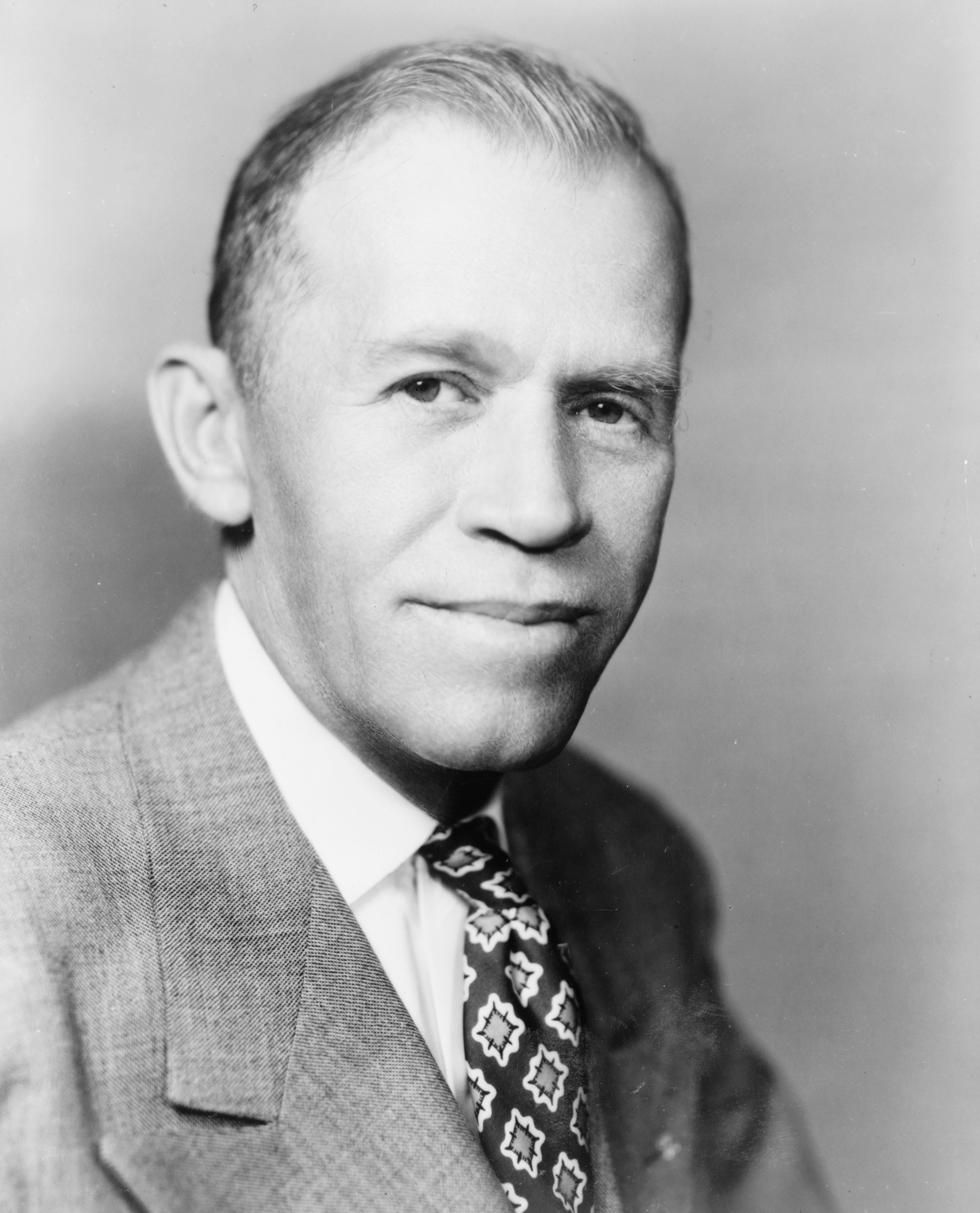
Historical · U.S. House · Tennessee · District 5
James Priest
Former U.S. Representative · Tennessee District 5 · 1941–1957 · Democratic
James Priest represented Tennessee's District 5 in the United States House of Representatives (1941–1957) for the Democratic party. The page below collects sourced biographical facts, term history, committee roles, and provenance for Priest.
Bioguide ID: P000536
Key facts
- Full name
- James Priest
- State
- Tennessee
- District
- District 5
- Party
- Democratic
- House service
- 1941–1957
- First House term
- 1941
- Status
- Left office
- Current term ends
- —
- Born
- 1900
- Bioguide ID
- P000536
- Committee assignments
- —
- Dataset version
- 1.20260605
Biographical narrative
916 words · sourced from the Wikipedia REST extract
James Percy Priest was an American politician, educator, and journalist who served as a U.S. Representative for Tennessee's 5th congressional district from 1941 until his death in 1956. A member of the Democratic Party, Priest was known for his significant contributions to the legislative process during his eight terms in Congress, where he held various leadership roles, including serving as the chairman of the House Commerce Committee at the time of his passing. His political career was marked by a commitment to his constituents in Nashville and a notable presence in the House during a transformative period in American history.
Early life and career
James Percy Priest was born on April 1, 1900, in Carters Creek, Maury County, Tennessee. He was the son of George and Harriet Priest, and his early education took place at Central High School in Columbia, Tennessee. Following high school, Priest pursued higher education at several institutions, including State Teachers' College in Murfreesboro, Peabody College in Nashville, and the University of Tennessee. His academic background laid the foundation for his career in education, as he began teaching in Culleoka, Tennessee, where he worked from 1920 until 1926.
In 1926, Priest transitioned from education to journalism, joining the editorial staff of the Nashville Tennessean. This role allowed him to engage with the community and develop a deeper understanding of the political landscape in Tennessee. His experience in journalism likely influenced his later political career, providing him with skills in communication and public engagement.
Priest's personal life saw him marry Mildred Webster Noland in 1947, after a courtship that began in 1937. The couple had one daughter, Harriet. His family life was an important aspect of his identity, and he maintained strong ties to his community throughout his career.
House tenure
James Percy Priest entered the political arena in 1940 when he was encouraged to run for the United States House of Representatives as an independent candidate in Tennessee's 5th congressional district, which includes Nashville. In a surprising upset, he defeated the incumbent Democratic Congressman Jo Byrns Jr. Upon taking office, Priest joined the Democratic caucus, aligning himself with the party that would define his legislative career.
Priest's tenure in the House began in 1941 and continued until his death in 1956, during which he was reelected seven times. His district underwent a renumbering process, initially becoming the 6th District in 1943 before reverting to the 5th District in 1953. Throughout his time in Congress, Priest was known for his effective leadership and was appointed as the House majority whip from 1949 to 1953. This role placed him in a significant position within the Democratic Party, allowing him to influence party strategy and legislative priorities.
Priest's political career was also marked by his stance on various issues, including his decision not to sign the 1956 Southern Manifesto, a document that opposed desegregation. He was one of only three Democrats from Tennessee who chose not to endorse this controversial position, indicating his willingness to take a stand on civil rights issues during a time of significant social change.
At the time of his death, Priest was serving as the chairman of the House Commerce Committee, a position that underscored his influence and leadership within Congress. He had already secured the Democratic nomination for a ninth term, which positioned him favorably for reelection, as the political landscape in Nashville had been dominated by Democrats since the Reconstruction era.
Legislative focus and committees
Throughout his congressional career, James Percy Priest was involved in a wide range of legislative issues, particularly those related to commerce and infrastructure. As chairman of the House Commerce Committee, he played a pivotal role in shaping policies that affected economic development and regulatory practices in the United States. His leadership in this committee allowed him to advocate for legislation that supported the growth of commerce and industry, which was particularly relevant during the post-World War II economic expansion.
Priest's work on the committee involved addressing various concerns, including transportation, telecommunications, and energy policies. His efforts contributed to the development of infrastructure projects that would benefit his constituents and the broader American public. The significance of his contributions is reflected in the lasting impact of the legislation he supported during his tenure.
In addition to his committee work, Priest was known for his ability to navigate the complexities of congressional politics, building coalitions and fostering relationships with colleagues across party lines. This skill was essential in advancing his legislative agenda and ensuring that the interests of his constituents were represented effectively.
Priest's commitment to public service extended beyond his legislative duties. His background in education and journalism informed his approach to governance, emphasizing the importance of communication and transparency in the political process. He was dedicated to addressing the needs of his constituents, and his legislative focus often reflected the priorities of the Nashville community.
James Percy Priest's legacy is marked by his contributions to the U.S. House of Representatives and his commitment to public service. Following his death on October 12, 1956, due to complications from surgery, he was interred at Woodlawn Cemetery in Nashville. His impact on the region is commemorated through various honors, including the naming of the J. Percy Priest Dam and Percy Priest Lake, as well as an elementary school in Forest Hills, Tennessee. His papers, along with those of a biographer, were donated to the Tennessee State Library and Archives, ensuring that his contributions to American politics and his community are preserved for future generations.
Notable legislation
Sponsored and co-sponsored legislation for James Priest is pending operator curation. The biographical narrative above carries the same provenance trail until per-bill rows are written.
Sources
- [1]https://en.wikipedia.org/wiki/Percy_PriestWikipedia · retrieved 2026-06-05
Notable quotes
Sourced quotes for James Priest are pending operator curation. Narrative-scope provenance remains attached below.
Sources
- [1]https://en.wikipedia.org/wiki/Percy_PriestWikipedia · retrieved 2026-06-05
Key positions
Curated policy positions for James Priest are pending operator review. The biographical narrative above carries the same provenance trail until per-topic positions are written.
Sources
- [1]https://en.wikipedia.org/wiki/Percy_PriestWikipedia · retrieved 2026-06-05
Terms served
- 1941–1943U.S. House · Term 1 · Ind. Democrat
- 1943–1945U.S. House · Term 2 · Democratic
- 1945–1947U.S. House · Term 3 · Democratic
- 1947–1949U.S. House · Term 4 · Democratic
- 1949–1951U.S. House · Term 5 · Democratic
- 1951–1953U.S. House · Term 6 · Democratic
- 1953–1955U.S. House · Term 7 · Democratic
- 1955–1957U.S. House · Term 8 · Democratic
Sources & provenance
Every attributable claim above carries a per-section [N] marker that resolves to the corresponding URL below. Each entry records the upstream provider, the canonical URL, and the timestamp at which the source was retrieved by the ingest pipeline.
Key facts
- https://bioguide.congress.gov/search/bio/P000536bioguide · retrieved 2026-06-05
- https://www.govtrack.us/congress/members/408920govtrack · retrieved 2026-06-05
Biographical narrative
- https://en.wikipedia.org/wiki/Percy_Priestwikipedia · retrieved 2026-06-05
Find your representative
Every U.S. state elects representatives by district. Browse Tennessee’s delegation, the full former-representative roster, or explore the role and term length.
Related on The Candidate
- Preceded by Joseph Byrns Jr.Earlier holder of the Tennessee District 5 House seat · Democratic.Open
- Succeeded by Joseph LoserLater holder of the Tennessee District 5 House seat · Democratic.Open
- Albert WatkinsFormer U.S. Representative · Tennessee District 1 · DemocraticOpen
- Alfred TaylorFormer U.S. Representative · Tennessee District 1 · RepublicanOpen
- Augustus PettiboneFormer U.S. Representative · Tennessee District 1 · RepublicanOpen
- Bill JenkinsFormer U.S. Representative · Tennessee District 1 · RepublicanOpen