
Historical · U.S. House · Tennessee · District 5
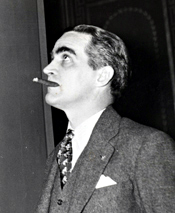
Joseph Byrns Jr.
Former U.S. Representative · Tennessee District 5 · 1939–1941 · Democratic
Joseph Byrns Jr. represented Tennessee's District 5 in the United States House of Representatives (1939–1941) for the Democratic party. The page below collects sourced biographical facts, term history, committee roles, and provenance for Jr..
Bioguide ID: B001218
Key facts
- Full name
- Joseph Byrns Jr.
- State
- Tennessee
- District
- District 5
- Party
- Democratic
- House service
- 1939–1941
- First House term
- 1939
- Status
- Left office
- Current term ends
- —
- Born
- 1903
- Bioguide ID
- B001218
- Committee assignments
- —
- Dataset version
- 1.20260605
Biographical narrative
906 words · sourced from the Wikipedia REST extract
Joseph Byrns Jr. was an American attorney and politician who served as a U.S. Representative for Tennessee's 5th congressional district. A member of the Democratic Party, he held office from 1939 until 1941, following in the footsteps of his father, Joseph W. Byrns, who was a prominent figure in Congress and served as Speaker of the House. Byrns Jr.'s political career was marked by his brief tenure in the House, which ended after a single term, and his subsequent service in the military during World War II. After his congressional career, he returned to his legal practice and later retired to Florida, where he spent his final years.
Early life and career
Joseph Wellington Byrns Jr. was born on August 15, 1903, in Davidson County, Tennessee. He was the son of Joseph W. Byrns, a significant political figure who served as Speaker of the House of Representatives, and Julia Woodard. Growing up in a politically active household, Byrns Jr. was exposed to the workings of government from an early age. His education included attendance at the Emerson Institute in Washington, D.C., where he completed his studies in 1923, a period during which his father was serving in Congress. This environment likely influenced his later interest in law and politics.
Byrns pursued higher education at Vanderbilt University Law School, graduating in 1928. Upon completing his studies, he was admitted to the bar the same year, marking the beginning of his legal career. In 1929, he married Cornelia Park, but their marriage ended in divorce. The circumstances surrounding this divorce were notable, as Cornelia reportedly continued to identify herself as Mrs. Joseph W. Byrns Jr. for the rest of her life, refusing to acknowledge the separation. In later years, Byrns found happiness in his second marriage to Lillie Warmack Adams from Goodlettsville, Tennessee.
In addition to his legal career, Byrns served in the reserve component of the Army Air Corps from 1930 to 1938, achieving the rank of captain. This military experience would later inform his perspective on national defense and military service, particularly during the tumultuous years leading up to and during World War II.
House tenure
Byrns's political career took a significant turn in 1938 when he won the Democratic nomination for his father's former congressional seat in Tennessee's 5th district. His election to the House of Representatives followed shortly thereafter, and he officially took office on January 3, 1939. During his single term, Byrns participated in various legislative activities and contributed to discussions on issues pertinent to his constituents and the nation.
His tenure in the House lasted until January 3, 1941, when he sought re-election. In the 1940 Democratic primary, Byrns was successful in securing his party's nomination for a second term. However, his political fortunes changed during the general election. Byrns faced significant opposition from Percy Priest, an independent candidate who was also a member of the editorial staff of the Nashville Tennessean. Byrns's support for an amendment to postpone the operation of the Selective Service Act by 60 days became a point of contention that contributed to his electoral defeat. Ultimately, Byrns lost the election, receiving 43% of the vote compared to Priest's 50%, with a smaller percentage going to the Republican nominee.
Following his defeat, Byrns returned to his legal practice, where he continued to work until he was called to serve in the United States Army during World War II. He was on active duty from June 23, 1942, until August 17, 1945, spending the majority of this time in the European Theater of Operations. His military service during this critical period in history underscored his commitment to the nation and provided him with experiences that would shape his post-war life.
Legislative focus and committees
During his time in the House of Representatives, Byrns's legislative focus reflected the pressing issues of the late 1930s and early 1940s. As a member of the Democratic Party, he aligned with the broader goals of the New Deal and was involved in discussions surrounding economic recovery, social welfare, and national defense. His legal background likely informed his contributions to legislative debates and his understanding of the implications of various policies.
Byrns's committee assignments and specific legislative initiatives are not detailed in the available records, but as a member of Congress during a period marked by significant national challenges, he would have engaged with a range of issues, including those related to the economy, military preparedness, and social programs. The political landscape of the time was heavily influenced by the impending involvement of the United States in World War II, and Byrns's military service would have further shaped his perspectives on national security and defense matters.
Despite his relatively brief congressional career, Byrns's legacy is intertwined with that of his father, whose prominence in American politics cast a long shadow over his son's achievements. After leaving Congress, Byrns's return to the practice of law marked a transition away from the political spotlight, and he eventually retired to Florida, where he lived until his passing.
Joseph Byrns Jr. died on March 8, 1973, in Daytona Beach, Florida, at the age of 69. His final resting place is at Mount Olivet Cemetery in Nashville, Tennessee, where he is interred alongside his parents and his second wife. Byrns's life and career reflect the complexities of American political life in the early 20th century, characterized by familial legacy, military service, and the challenges of public office.
Notable legislation
Sponsored and co-sponsored legislation for Joseph Byrns Jr. is pending operator curation. The biographical narrative above carries the same provenance trail until per-bill rows are written.
Sources
- [1]https://en.wikipedia.org/wiki/Joseph_W._Byrns_Jr.Wikipedia · retrieved 2026-06-05
Notable quotes
Sourced quotes for Joseph Byrns Jr. are pending operator curation. Narrative-scope provenance remains attached below.
Sources
- [1]https://en.wikipedia.org/wiki/Joseph_W._Byrns_Jr.Wikipedia · retrieved 2026-06-05
Key positions
Curated policy positions for Joseph Byrns Jr. are pending operator review. The biographical narrative above carries the same provenance trail until per-topic positions are written.
Sources
- [1]https://en.wikipedia.org/wiki/Joseph_W._Byrns_Jr.Wikipedia · retrieved 2026-06-05
Terms served
- 1939–1941U.S. House · Term 1 · Democratic
Sources & provenance
Every attributable claim above carries a per-section [N] marker that resolves to the corresponding URL below. Each entry records the upstream provider, the canonical URL, and the timestamp at which the source was retrieved by the ingest pipeline.
Key facts
- https://bioguide.congress.gov/search/bio/B001218bioguide · retrieved 2026-06-05
- https://www.govtrack.us/congress/members/402157govtrack · retrieved 2026-06-05
Biographical narrative
- https://en.wikipedia.org/wiki/Joseph_W._Byrns_Jr.wikipedia · retrieved 2026-06-05
Find your representative
Every U.S. state elects representatives by district. Browse Tennessee’s delegation, the full former-representative roster, or explore the role and term length.
Related on The Candidate
- Preceded by Richard AtkinsonEarlier holder of the Tennessee District 5 House seat · Democratic.Open
- Succeeded by James PriestLater holder of the Tennessee District 5 House seat · Democratic.Open
- Albert WatkinsFormer U.S. Representative · Tennessee District 1 · DemocraticOpen
- Alfred TaylorFormer U.S. Representative · Tennessee District 1 · RepublicanOpen
- Augustus PettiboneFormer U.S. Representative · Tennessee District 1 · RepublicanOpen
- Bill JenkinsFormer U.S. Representative · Tennessee District 1 · RepublicanOpen