
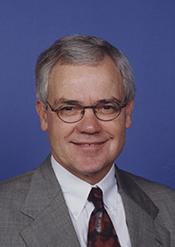
Historical · U.S. House · Tennessee · District 5
Robert Clement
Former U.S. Representative · Tennessee District 5 · 1988–2003 · Democratic
Robert Clement represented Tennessee's District 5 in the United States House of Representatives (1988–2003) for the Democratic party. The page below collects sourced biographical facts, term history, committee roles, and provenance for Clement.
Bioguide ID: C000503
Key facts
- Full name
- Robert Clement
- State
- Tennessee
- District
- District 5
- Party
- Democratic
- House service
- 1988–2003
- First House term
- 1988
- Status
- Left office
- Current term ends
- —
- Born
- 1943
- Bioguide ID
- C000503
- Committee assignments
- —
- Dataset version
- 1.20260605
Biographical narrative
896 words · sourced from the Wikipedia REST extract
Robert Nelson Clement is a former American politician who served as a member of the United States House of Representatives for Tennessee's 5th congressional district from 1988 until 2003. A member of the Democratic Party, Clement's political career spanned over two decades, during which he was known for his bipartisan approach and commitment to public service. Prior to his congressional tenure, he held various significant positions, including serving on the Tennessee Public Service Commission and as president of Cumberland University. After leaving Congress, he pursued an unsuccessful bid for the U.S. Senate in 2002.
Early life and career
Bob Clement was born on September 23, 1943, in Tennessee, into a politically active family as the son of Frank G. Clement, who served as the Governor of Tennessee. His early exposure to politics came during his father's third gubernatorial campaign in 1962, where he accompanied his father on the campaign trail and participated in public speaking engagements. This formative experience likely influenced his later political aspirations.
Clement completed his secondary education at Hillsboro High School in Nashville before attending the University of Tennessee, where he graduated in 1967. Following his graduation, he served in the National Guard from 1969 to 1971 and continued his service in the reserves until 2001, retiring with the rank of colonel. His military service contributed to his leadership skills and public service ethos.
Before entering politics, Clement explored various career opportunities, including a potential investment in a telephone company during his college years. However, his father declined to support this venture financially. Instead, Clement became interested in the Tennessee Public Service Commission, which regulates utilities, including telephone companies. In 1972, he successfully ran for a seat on the commission, defeating incumbent Hammond Fowler in a significant primary victory. At the age of 29, he became the youngest person ever elected to statewide office in Tennessee, marking the beginning of his political career.
Clement's tenure on the Tennessee Public Service Commission was notable for its impact on utility regulation in the state. He won re-election and served until 1978, when he sought the Democratic nomination for governor. Although he did not win the primary, he garnered significant attention and support. In 1979, President Jimmy Carter appointed him to the Board of Directors of the Tennessee Valley Authority (TVA), where he advocated against the overbuilding of nuclear reactors and sought to manage the agency's financial practices more effectively. Clement stepped down from the TVA board in 1981.
House tenure
Clement's congressional career began in 1988 when he ran for the 5th congressional district seat, which had been vacated by Bill Boner, who left to become mayor of Nashville. After resigning from his position as president of Cumberland University, where he had successfully revitalized the institution, Clement won the Democratic primary against a competitive field, including future Tennessee Governor Phil Bredesen. His victory in the special election on January 19, 1988, was largely uncontested, as the Republican Party had not shown significant interest in the district for many years.
Clement's initial term in the House was marked by a strong Democratic presence, and he was unopposed for a full term later that year. Over the course of his eight terms in Congress, he was re-elected six times without facing substantial opposition. His tenure was characterized by a commitment to bipartisanship, which he maintained throughout his political career. Despite representing a predominantly Democratic district, Clement was known for his willingness to collaborate with members of the opposing party.
During his time in the House, Clement participated in various legislative initiatives and was involved in significant votes, including one on October 10, 2002, where he was among the House Democrats who supported the authorization for military action in Iraq. His voting record reflected a blend of Democratic values and a pragmatic approach to governance.
Legislative focus and committees
Throughout his congressional career, Bob Clement focused on a range of issues pertinent to his constituents and the broader national landscape. His legislative priorities included economic development, education, health care, and infrastructure improvements. He was particularly attentive to the needs of his district, which included Nashville and surrounding areas, and worked to secure funding for local projects and initiatives.
Clement served on several committees during his time in the House, which allowed him to influence legislation in key areas. His committee assignments provided him with a platform to advocate for policies that aligned with the interests of his constituents and the Democratic Party's broader agenda. His experience in the Tennessee Public Service Commission and as president of Cumberland University informed his legislative focus, particularly in areas related to education and public utilities.
In addition to his committee work, Clement was active in fostering relationships with other lawmakers, which facilitated his bipartisan approach to governance. His ability to work across party lines was a hallmark of his political style, and he often sought common ground on contentious issues.
Clement's congressional career came to an end in 2003 when he chose not to seek re-election after an unsuccessful bid for the U.S. Senate in 2002. His departure from the House marked the conclusion of a significant chapter in his public service career, during which he had established himself as a dedicated representative of Tennessee's 5th congressional district. Following his time in Congress, Clement continued to engage in public life and remained active in various civic and community initiatives.
Notable legislation
Sponsored and co-sponsored legislation for Robert Clement is pending operator curation. The biographical narrative above carries the same provenance trail until per-bill rows are written.
Sources
- [1]https://en.wikipedia.org/wiki/Bob_ClementWikipedia · retrieved 2026-06-05
Notable quotes
Sourced quotes for Robert Clement are pending operator curation. Narrative-scope provenance remains attached below.
Sources
- [1]https://en.wikipedia.org/wiki/Bob_ClementWikipedia · retrieved 2026-06-05
Key positions
Curated policy positions for Robert Clement are pending operator review. The biographical narrative above carries the same provenance trail until per-topic positions are written.
Sources
- [1]https://en.wikipedia.org/wiki/Bob_ClementWikipedia · retrieved 2026-06-05
Terms served
- 1988–1989U.S. House · Term 1 · Democratic
- 1989–1991U.S. House · Term 2 · Democratic
- 1991–1993U.S. House · Term 3 · Democratic
- 1993–1995U.S. House · Term 4 · Democratic
- 1995–1997U.S. House · Term 5 · Democratic
- 1997–1999U.S. House · Term 6 · Democratic
- 1999–2001U.S. House · Term 7 · Democratic
- 2001–2003U.S. House · Term 8 · Democratic
Sources & provenance
Every attributable claim above carries a per-section [N] marker that resolves to the corresponding URL below. Each entry records the upstream provider, the canonical URL, and the timestamp at which the source was retrieved by the ingest pipeline.
Key facts
- https://bioguide.congress.gov/search/bio/C000503bioguide · retrieved 2026-06-05
- https://www.govtrack.us/congress/members/400548govtrack · retrieved 2026-06-05
Biographical narrative
- https://en.wikipedia.org/wiki/Bob_Clementwikipedia · retrieved 2026-06-05
Find your representative
Every U.S. state elects representatives by district. Browse Tennessee’s delegation, the full former-representative roster, or explore the role and term length.
Related on The Candidate
- Preceded by William BonerEarlier holder of the Tennessee District 5 House seat · Democratic.Open
- Albert WatkinsFormer U.S. Representative · Tennessee District 1 · DemocraticOpen
- Alfred TaylorFormer U.S. Representative · Tennessee District 1 · RepublicanOpen
- Augustus PettiboneFormer U.S. Representative · Tennessee District 1 · RepublicanOpen
- Bill JenkinsFormer U.S. Representative · Tennessee District 1 · RepublicanOpen
- Democratic PartyFederal candidates and office holders on the Democratic line.Open