
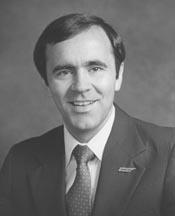
Historical · U.S. House · Tennessee · District 5
William Boner
Former U.S. Representative · Tennessee District 5 · 1979–1987 · Democratic
William Boner represented Tennessee's District 5 in the United States House of Representatives (1979–1987) for the Democratic party. The page below collects sourced biographical facts, term history, committee roles, and provenance for Boner.
Bioguide ID: B000615
Key facts
- Full name
- William Boner
- State
- Tennessee
- District
- District 5
- Party
- Democratic
- House service
- 1979–1987
- First House term
- 1979
- Status
- Left office
- Current term ends
- —
- Born
- 1945
- Bioguide ID
- B000615
- Committee assignments
- —
- Dataset version
- 1.20260605
Biographical narrative
841 words · sourced from the Wikipedia REST extract
William H. Boner is a former American politician and educator who served as a Democratic U.S. Representative for Tennessee's 5th congressional district from 1979 until 1987. Following his congressional tenure, he became the third mayor of the Metropolitan Government of Nashville and Davidson County, holding office from 1987 to 1991. Boner has had a diverse career that includes roles in education, business, and local government, reflecting a commitment to public service and community engagement.
Early life and career
William Hill Boner was born on February 14, 1945. He grew up in Nashville, Tennessee, where he attended East Nashville High School. During his high school years, Boner was an active athlete, participating in both basketball and tennis. His basketball team achieved notable success, winning the state championship on March 13, 1962. Boner made a significant contribution to this victory, scoring 18 points in a crucial period of the game. His leadership qualities were evident early on, as he was elected student body president for the 1962-1963 academic year and also became the governor of the Boy's State program, a role he took on with little prior intention to run.
Boner's athletic career was impacted by a car accident that caused injuries to him and a teammate, which limited their participation in the basketball season. Despite these challenges, he earned recognition as a first-team All-Nashville player in 1963. After graduating from high school, Boner attended Middle Tennessee State University, where he continued to excel in basketball and was elected president of the freshman class. He was actively involved in campus life, participating in discussions on religion and presenting on topics related to personal decision-making.
Following his time at university, Boner worked as a manager at a Shell gas station in Smyrna, Tennessee. His career in education began when he became the basketball coach at Trevecca Nazarene College on February 1, 1969. In addition to coaching, he took on a teaching position in the physical education department. His first year as a coach was challenging, with the team receiving unfavorable media attention for their performance, which was described as poor.
House tenure
Boner's political career began in earnest when he was elected to the U.S. House of Representatives in 1978, representing Tennessee's 5th congressional district. He took office in 1979 and served for a total of five terms, concluding his congressional service in 1987. During his time in Congress, Boner was involved in various legislative activities and contributed to discussions on issues pertinent to his constituents and the nation.
His tenure in the House was not without controversy. In 1986, Boner faced an investigation by the House Ethics Committee. The inquiry focused on allegations of misusing campaign funds, failing to disclose conflicts of interest, and accepting undisclosed gifts, including a bribe from a government contractor. These issues marked a challenging period in his congressional career and contributed to the scrutiny he faced as a public official.
Legislative focus and committees
Throughout his time in the House, Boner participated in various legislative initiatives and was a member of several committees. His work often reflected the interests and needs of his constituents in Tennessee. While specific details about the bills he sponsored or supported are not provided, it is typical for members of Congress to engage in legislation that aligns with their party's platform and the priorities of their district.
After concluding his service in Congress, Boner transitioned to local government, becoming the mayor of Nashville. He was elected in 1987, succeeding Richard Fulton, who was unable to run for a fourth term. Boner's mayoral campaign was competitive, particularly against Phil Bredesen, a managed health care executive. Although Boner won the initial round of voting, he did not secure a majority, leading to a runoff election in which he ultimately prevailed.
As mayor, Boner was involved in various initiatives and public appearances, including a notable appearance on "The Phil Donahue Show" in 1990, where he performed musically alongside a country singer. His personal life also garnered attention during this period, particularly regarding his marriage to Traci Peel, which occurred while he was still married to his third wife.
After his term as mayor, Boner chose not to seek reelection for a second term. He shifted his focus to business, owning a pallet factory in Tompkinsville, Kentucky, and acquiring a restaurant franchise in Atlanta. Eventually, he returned to the Nashville area, where he resumed his career in education. Boner worked as a social studies teacher at Franklin High School and served as a driver's education instructor within the Williamson School System.
In addition to his educational roles, Boner hosted a nightly television interview show called "Prime Talk" on Nashville's WNAB during the mid-1990s. This program allowed him to engage with the community and discuss various topics of interest.
William H. Boner's career reflects a blend of public service, education, and business, illustrating his multifaceted contributions to his community and the state of Tennessee. His experiences in athletics, education, and politics have shaped his life and career, leaving a lasting impact on those he served.
Notable legislation
Sponsored and co-sponsored legislation for William Boner is pending operator curation. The biographical narrative above carries the same provenance trail until per-bill rows are written.
Sources
- [1]https://en.wikipedia.org/wiki/Bill_BonerWikipedia · retrieved 2026-06-05
Notable quotes
Sourced quotes for William Boner are pending operator curation. Narrative-scope provenance remains attached below.
Sources
- [1]https://en.wikipedia.org/wiki/Bill_BonerWikipedia · retrieved 2026-06-05
Key positions
Curated policy positions for William Boner are pending operator review. The biographical narrative above carries the same provenance trail until per-topic positions are written.
Sources
- [1]https://en.wikipedia.org/wiki/Bill_BonerWikipedia · retrieved 2026-06-05
Terms served
- 1979–1981U.S. House · Term 1 · Democratic
- 1981–1983U.S. House · Term 2 · Democratic
- 1983–1985U.S. House · Term 3 · Democratic
- 1985–1987U.S. House · Term 4 · Democratic
- 1987–1987U.S. House · Term 5 · Democratic
Sources & provenance
Every attributable claim above carries a per-section [N] marker that resolves to the corresponding URL below. Each entry records the upstream provider, the canonical URL, and the timestamp at which the source was retrieved by the ingest pipeline.
Key facts
- https://bioguide.congress.gov/search/bio/B000615bioguide · retrieved 2026-06-05
- https://www.govtrack.us/congress/members/401582govtrack · retrieved 2026-06-05
Biographical narrative
- https://en.wikipedia.org/wiki/Bill_Bonerwikipedia · retrieved 2026-06-05
Find your representative
Every U.S. state elects representatives by district. Browse Tennessee’s delegation, the full former-representative roster, or explore the role and term length.
Related on The Candidate
- Preceded by Clifford AllenEarlier holder of the Tennessee District 5 House seat · Democratic.Open
- Succeeded by Robert ClementLater holder of the Tennessee District 5 House seat · Democratic.Open
- Albert WatkinsFormer U.S. Representative · Tennessee District 1 · DemocraticOpen
- Alfred TaylorFormer U.S. Representative · Tennessee District 1 · RepublicanOpen
- Augustus PettiboneFormer U.S. Representative · Tennessee District 1 · RepublicanOpen
- Bill JenkinsFormer U.S. Representative · Tennessee District 1 · RepublicanOpen