
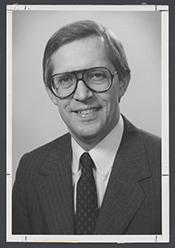
Historical · U.S. House · Tennessee · District 7
Donald Sundquist
Former U.S. Representative · Tennessee District 7 · 1983–1995 · Republican
Donald Sundquist represented Tennessee's District 7 in the United States House of Representatives (1983–1995) for the Republican party. The page below collects sourced biographical facts, term history, committee roles, and provenance for Sundquist.
Bioguide ID: S001075
Key facts
- Full name
- Donald Sundquist
- State
- Tennessee
- District
- District 7
- Party
- Republican
- House service
- 1983–1995
- First House term
- 1983
- Status
- Left office
- Current term ends
- —
- Born
- 1936
- Bioguide ID
- S001075
- Committee assignments
- —
- Dataset version
- 1.20260605
Biographical narrative
864 words · sourced from the Wikipedia REST extract
Donald Kenneth Sundquist was an American businessman and politician who served as a U.S. Representative for Tennessee's 7th congressional district from 1983 to 1995 before becoming the 47th governor of Tennessee, a position he held from 1995 to 2003. A member of the Republican Party, Sundquist was known for his conservative voting record and his focus on government efficiency and welfare reform during his time in office.
Early life and career
Don Sundquist was born on March 15, 1936, in Moline, Illinois, to Kenneth and Louise Sundquist. His family heritage included Swedish and German roots, which contributed to his diverse cultural background. He completed his secondary education at Moline High School, graduating in 1953. Following high school, Sundquist attended Augustana College in Rock Island, Illinois, where he earned a Bachelor of Arts degree in Business Administration in 1957. During his college years, he was an active member of the Rho Nu Delta fraternity.
After completing his education, Sundquist served in the United States Navy from 1957 to 1963. His military service included two years of active duty, which provided him with valuable experiences that would later influence his leadership style and public service ethos. Upon leaving the Navy, Sundquist began his professional career with Jostens, a company specializing in school-related products. He worked at various Jostens plants in Illinois and Minnesota before being transferred to Shelbyville, Tennessee, in 1962, where he became the plant manager.
In 1972, Sundquist left Jostens to establish his own business, Graphic Sales of America, in Memphis, Tennessee. His entrepreneurial endeavors allowed him to gain a deeper understanding of business operations and the challenges faced by small businesses. This experience would later inform his political career, particularly his advocacy for business-friendly policies.
Sundquist's political involvement began in earnest after moving to Tennessee. He became active in the Republican Party, initially serving as an organizer for Barry Goldwater's presidential campaign in 1964. His commitment to the party deepened as he took on leadership roles, including serving as the Chair of the national Young Republicans from 1971 to 1973 and as the chair of the Shelby County Republican Party from 1975 to 1977. Sundquist's political acumen was further demonstrated by his participation as a delegate in the Republican National Conventions of 1976 and 1980, as well as managing Howard Baker's presidential campaign during the 1980 election cycle.
House tenure
In 1982, Sundquist entered the political arena by running for the U.S. House of Representatives, seeking to fill the seat vacated by Congressman Robin Beard, who was retiring to pursue a Senate seat. Following redistricting, Beard's district had been renumbered from the 6th to the 7th. Sundquist's campaign was competitive, and he won the general election by a narrow margin against Bob Clement, the son of former Governor Frank G. Clement. This victory marked the beginning of Sundquist's six terms in Congress, where he would establish himself as a prominent figure in Tennessee politics.
Throughout his tenure in the House, Sundquist was known for his conservative voting record, which resonated with his constituents and conservative advocacy groups. He garnered support from organizations such as the National Federation of Independent Business and the American Conservative Union. His legislative work included serving on the House Ways and Means Committee, where he was involved in subcommittees focused on trade and revenue measures. Sundquist also participated in Republican task forces addressing trade and ethics reform, reflecting his commitment to economic issues and governance integrity.
After his initial election, Sundquist faced minimal electoral challenges in subsequent terms. He was unopposed in the 1984 election and was reelected three additional times with relative ease. His ability to maintain a strong connection with his constituents contributed to his political longevity and effectiveness as a representative.
Legislative focus and committees
During his time in the U.S. House of Representatives, Sundquist's legislative focus was primarily on issues related to economic policy, trade, and fiscal responsibility. His involvement in the House Ways and Means Committee allowed him to influence significant legislation concerning taxation and economic growth. He served on the Subcommittee on Trade, where he worked on policies aimed at enhancing American competitiveness in global markets. Additionally, his role on the Subcommittee on Select Revenue Measures positioned him to address various tax-related issues, including revenue generation and fiscal policy.
Sundquist's conservative stance on economic matters was reflected in his voting patterns and public statements. He was particularly aligned with the interests of small businesses and advocated for policies that would foster a favorable business environment. His relationships with conservative organizations further solidified his reputation as a staunch advocate for free-market principles.
In addition to his work on economic issues, Sundquist was involved in broader discussions surrounding ethics reform within Congress. His participation in the Republican Task Force on Ethics Reform highlighted his commitment to maintaining integrity in government and addressing concerns related to accountability among elected officials.
Overall, Sundquist's legislative tenure was characterized by a focus on conservative economic policies, an emphasis on trade and revenue measures, and a commitment to ethical governance. His six terms in the House laid the groundwork for his subsequent election as governor of Tennessee, where he would continue to influence state policy and governance.
Notable legislation
Sponsored and co-sponsored legislation for Donald Sundquist is pending operator curation. The biographical narrative above carries the same provenance trail until per-bill rows are written.
Sources
- [1]https://en.wikipedia.org/wiki/Don_SundquistWikipedia · retrieved 2026-06-05
Notable quotes
Sourced quotes for Donald Sundquist are pending operator curation. Narrative-scope provenance remains attached below.
Sources
- [1]https://en.wikipedia.org/wiki/Don_SundquistWikipedia · retrieved 2026-06-05
Key positions
Curated policy positions for Donald Sundquist are pending operator review. The biographical narrative above carries the same provenance trail until per-topic positions are written.
Sources
- [1]https://en.wikipedia.org/wiki/Don_SundquistWikipedia · retrieved 2026-06-05
Terms served
- 1983–1985U.S. House · Term 1 · Republican
- 1985–1987U.S. House · Term 2 · Republican
- 1987–1989U.S. House · Term 3 · Republican
- 1989–1991U.S. House · Term 4 · Republican
- 1991–1993U.S. House · Term 5 · Republican
- 1993–1995U.S. House · Term 6 · Republican
Sources & provenance
Every attributable claim above carries a per-section [N] marker that resolves to the corresponding URL below. Each entry records the upstream provider, the canonical URL, and the timestamp at which the source was retrieved by the ingest pipeline.
Key facts
- https://bioguide.congress.gov/search/bio/S001075bioguide · retrieved 2026-06-05
- https://www.govtrack.us/congress/members/410529govtrack · retrieved 2026-06-05
Biographical narrative
- https://en.wikipedia.org/wiki/Don_Sundquistwikipedia · retrieved 2026-06-05
Find your representative
Every U.S. state elects representatives by district. Browse Tennessee’s delegation, the full former-representative roster, or explore the role and term length.
Related on The Candidate
- Preceded by Leonard BlantonEarlier holder of the Tennessee District 7 House seat · Democratic.Open
- Succeeded by Ed BryantLater holder of the Tennessee District 7 House seat · Republican.Open
- Albert WatkinsFormer U.S. Representative · Tennessee District 1 · DemocraticOpen
- Alfred TaylorFormer U.S. Representative · Tennessee District 1 · RepublicanOpen
- Augustus PettiboneFormer U.S. Representative · Tennessee District 1 · RepublicanOpen
- Bill JenkinsFormer U.S. Representative · Tennessee District 1 · RepublicanOpen