
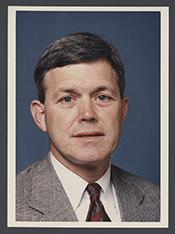
Historical · U.S. House · Tennessee · District 7
Ed Bryant
Former U.S. Representative · Tennessee District 7 · 1995–2003 · Republican
Ed Bryant represented Tennessee's District 7 in the United States House of Representatives (1995–2003) for the Republican party. The page below collects sourced biographical facts, term history, committee roles, and provenance for Bryant.
Bioguide ID: B000996
Key facts
- Full name
- Ed Bryant
- State
- Tennessee
- District
- District 7
- Party
- Republican
- House service
- 1995–2003
- First House term
- 1995
- Status
- Left office
- Current term ends
- —
- Born
- 1948
- Bioguide ID
- B000996
- Committee assignments
- —
- Dataset version
- 1.20260605
Biographical narrative
920 words · sourced from the Wikipedia REST extract
Edward Glenn Bryant is a former American politician who served as a Republican member of the United States House of Representatives, representing Tennessee's 7th congressional district from 1995 until 2003. Prior to his congressional tenure, he held the position of United States Attorney for the Western District of Tennessee and later served as a United States magistrate judge. Throughout his political career, Bryant was known for his conservative stance on various issues and played a notable role in significant legislative events, including the impeachment trial of President Bill Clinton.
Early life and career
Ed Bryant was born on September 7, 1948, in Jackson, Tennessee. He was raised in a family where his mother worked as a registered nurse and his father was an electrician. Bryant's educational journey began at Tennessee Technological University, where he studied for a year before transferring to the University of Mississippi. At Ole Miss, he earned a Bachelor of Arts degree in 1970, followed by a Juris Doctor degree in 1972. During his time at the university, he was actively involved in campus life, particularly as a member of the Sigma Nu fraternity and the national leadership organization Omicron Delta Kappa.
Following his graduation, Bryant was commissioned as a second lieutenant in the United States Army through the Army Reserve Officers' Training Corps. He initially served in the Military Intelligence Corps before transitioning to the Judge Advocate General's Corps. His military assignments included work with the Ballistic Missile Defense System Command in Huntsville, Alabama, and the 4th Infantry Division at Fort Carson, Colorado. Additionally, he had the opportunity to teach constitutional law to cadets at the United States Military Academy at West Point. After his military service, he spent another year in the Tennessee Army National Guard.
Upon returning to Jackson, Bryant joined the law firm Waldrop & Hall, where he practiced law and eventually became the President of the Madison County Bar Association. His political career began to take shape in 1988 when he served as an early organizer for Pat Robertson's presidential campaign. That same year, he sought the Republican nomination for Tennessee's 8th congressional district after Congressman Ed Jones announced he would not seek re-election. Although Bryant won the nomination, he lost the general election to Democrat John S. Tanner.
Following this initial foray into politics, Bryant was appointed by President George H. W. Bush as the United States Attorney for the Western District of Tennessee, a position he held from 1991 to 1993. After his tenure as U.S. Attorney, he moved to Henderson, Tennessee, which is located in the neighboring 7th Congressional District.
House tenure
In 1994, when Congressman Don Sundquist opted not to run for re-election in the 7th District, Bryant seized the opportunity and won the Republican primary for the seat. The 7th District is known for its strong Republican leanings, making Bryant's victory in the general election highly probable. He was first elected to the House of Representatives in November 1994, and he subsequently secured re-election three more times, consistently receiving a significant majority of the vote.
Bryant's electoral success was characterized by a solid conservative platform that resonated with his constituents. His only notable challenge came during his first re-election campaign against Clarksville mayor Don Trotter, whom he defeated by a substantial margin. In subsequent elections, Bryant faced little opposition, even running unopposed in 1998. His re-election in 2000 also saw him winning by a large margin, further solidifying his position in Congress.
Throughout his time in the House, Bryant developed a reputation as a staunch conservative. He garnered support from various business-oriented and social conservative organizations, including the National Federation of Independent Business, the American Conservative Union, the National Rifle Association, and National Right-to-Life. His legislative record reflected a commitment to conservative principles, which contributed to his popularity among Republican voters in his district.
One of the most prominent aspects of Bryant's congressional career was his role as one of the House managers during the impeachment trial of President Bill Clinton. In this capacity, he was involved in presenting the case against the President, which garnered national attention. Bryant was noted for his more personable demeanor compared to some of his colleagues, which may have contributed to his selection to conduct interviews related to the case.
Legislative focus and committees
During his tenure in the House, Ed Bryant served on various committees that aligned with his legislative interests and the priorities of his constituents. His work often focused on issues pertinent to his district and the broader Republican agenda. While specific committee assignments are not detailed, it is common for members of Congress to participate in committees that oversee areas such as judiciary matters, defense, and economic policy, which would align with Bryant's background in law and military service.
Bryant's legislative focus included advocating for conservative fiscal policies, supporting law enforcement and military initiatives, and promoting pro-business legislation. His alignment with conservative values was reflected in his voting record and the types of legislation he championed during his time in office.
After serving four terms in the House, Bryant concluded his congressional career on January 3, 2003. Following his departure from Congress, he briefly moved to Nashville before returning to West Tennessee. In 2008, he was appointed as a United States magistrate judge for the Western District of Tennessee, a position he held until his retirement in February 2019. Throughout his career, Bryant's contributions to both the legal and political landscapes of Tennessee have left a lasting impact on the state's governance and representation.
Notable legislation
Sponsored and co-sponsored legislation for Ed Bryant is pending operator curation. The biographical narrative above carries the same provenance trail until per-bill rows are written.
Sources
- [1]https://en.wikipedia.org/wiki/Ed_BryantWikipedia · retrieved 2026-06-05
Notable quotes
Sourced quotes for Ed Bryant are pending operator curation. Narrative-scope provenance remains attached below.
Sources
- [1]https://en.wikipedia.org/wiki/Ed_BryantWikipedia · retrieved 2026-06-05
Key positions
Curated policy positions for Ed Bryant are pending operator review. The biographical narrative above carries the same provenance trail until per-topic positions are written.
Sources
- [1]https://en.wikipedia.org/wiki/Ed_BryantWikipedia · retrieved 2026-06-05
Terms served
- 1995–1997U.S. House · Term 1 · Republican
- 1997–1999U.S. House · Term 2 · Republican
- 1999–2001U.S. House · Term 3 · Republican
- 2001–2003U.S. House · Term 4 · Republican
Sources & provenance
Every attributable claim above carries a per-section [N] marker that resolves to the corresponding URL below. Each entry records the upstream provider, the canonical URL, and the timestamp at which the source was retrieved by the ingest pipeline.
Key facts
- https://bioguide.congress.gov/search/bio/B000996bioguide · retrieved 2026-06-05
- https://www.govtrack.us/congress/members/400549govtrack · retrieved 2026-06-05
Biographical narrative
- https://en.wikipedia.org/wiki/Ed_Bryantwikipedia · retrieved 2026-06-05
Find your representative
Every U.S. state elects representatives by district. Browse Tennessee’s delegation, the full former-representative roster, or explore the role and term length.
Related on The Candidate
- Preceded by Donald SundquistEarlier holder of the Tennessee District 7 House seat · Republican.Open
- Succeeded by Mark GreenLater holder of the Tennessee District 7 House seat · Republican.Open
- Albert WatkinsFormer U.S. Representative · Tennessee District 1 · DemocraticOpen
- Alfred TaylorFormer U.S. Representative · Tennessee District 1 · RepublicanOpen
- Augustus PettiboneFormer U.S. Representative · Tennessee District 1 · RepublicanOpen
- Bill JenkinsFormer U.S. Representative · Tennessee District 1 · RepublicanOpen