
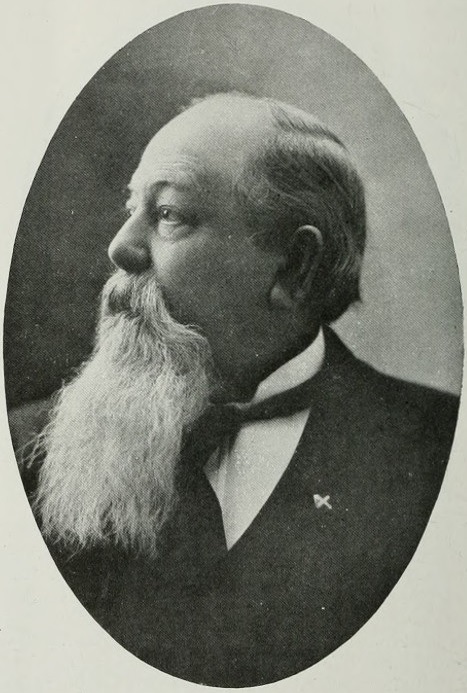
Historical · U.S. House · Tennessee · District 8
John Taylor
Former U.S. Representative · Tennessee District 8 · 1883–1887 · Democratic
John Taylor represented Tennessee's District 8 in the United States House of Representatives (1883–1887) for the Democratic party. The page below collects sourced biographical facts, term history, committee roles, and provenance for Taylor.
Bioguide ID: T000090
Key facts
- Full name
- John Taylor
- State
- Tennessee
- District
- District 8
- Party
- Democratic
- House service
- 1883–1887
- First House term
- 1883
- Status
- Left office
- Current term ends
- —
- Born
- 1838
- Bioguide ID
- T000090
- Committee assignments
- —
- Dataset version
- 1.20260606
Biographical narrative
890 words · sourced from the Wikipedia REST extract
John Taylor was a U.S. Representative from Tennessee who served in the House of Representatives during the late 19th century. A member of the Democratic Party, he represented Tennessee's 8th congressional district from 1883 to 1887. His career spanned various roles, including military service during the Civil War, local government positions, and judicial appointments. Taylor's legal background and political involvement reflect a commitment to public service that extended beyond his time in Congress.
Early life and career
John Taylor was born on May 18, 1838, in Lexington, Tennessee, to Jesse and Mary May Taylor. His early education took place at the Male Academy in Lexington, followed by attendance at Union University in Murfreesboro, Tennessee. Taylor pursued a legal education and graduated with a law degree from Cumberland University in Lebanon, Tennessee, in 1861. Shortly after completing his studies, he was admitted to the bar and began practicing law in his hometown of Lexington.
In addition to his legal career, Taylor enlisted in the Confederate States Army during the Civil War. His military service began in June 1861 when he was elected as a first lieutenant. He quickly rose through the ranks, achieving the rank of captain and later being elected as a major in the Twenty-seventh Tennessee Regiment in 1862. This experience in the military would shape his leadership skills and public service ethos.
Following the war, Taylor returned to Lexington and entered local politics. He served as the mayor of Lexington in 1869 and 1870, demonstrating his commitment to community governance. In 1870, he was a delegate to the State constitutional convention of Tennessee, contributing to the shaping of the state's legal framework during a period of reconstruction and reform. His legal expertise was further recognized when he was appointed as the Attorney General of the eleventh judicial circuit of Tennessee, a position he held from 1870 to 1878.
Taylor's political involvement continued as he participated in the Democratic National Convention in 1880. He also served in the Tennessee House of Representatives during the years 1881 and 1882, further solidifying his role in state politics and governance.
House tenure
John Taylor was elected to the United States House of Representatives as a Democrat, representing Tennessee's 8th congressional district. His congressional career began on March 4, 1883, when he took office in the Forty-eighth Congress. He was re-elected to the Forty-ninth Congress, serving until March 3, 1887. During his time in the House, Taylor was involved in various legislative activities and discussions pertinent to his constituents and the nation.
In the Forty-ninth Congress, Taylor served as the chairman of the Committee on Expenditures in the Department of the Navy. This role placed him at the intersection of military and fiscal policy, allowing him to influence decisions regarding naval appropriations and expenditures. His leadership in this committee underscored his engagement with issues of national defense and government spending.
Taylor's tenure in Congress was marked by the broader political context of the time, which included post-Civil War reconstruction efforts and the evolving landscape of American politics. His contributions during this period reflected the interests and needs of his district, as well as the Democratic Party's platform.
After concluding his congressional service in 1887, Taylor returned to Tennessee, where he continued his legal career. His experience in the House of Representatives provided him with insights and connections that would benefit his subsequent endeavors.
Legislative focus and committees
Throughout his congressional career, John Taylor's legislative focus was shaped by his background in law and his experiences in local and state government. As a member of the House of Representatives, he was particularly concerned with issues related to military expenditures, given his role as chairman of the Committee on Expenditures in the Department of the Navy. This position allowed him to engage with matters of national security and the financial oversight of military operations.
Taylor's legal training and experience as Attorney General likely influenced his approach to legislation, emphasizing the importance of law and governance. His participation in the Democratic National Convention and the Tennessee House of Representatives provided him with a broader understanding of political dynamics and the legislative process, which he applied during his time in Congress.
After his congressional tenure, Taylor remained active in public service. He was elected to the State Senate in 1892, further demonstrating his commitment to legislative work at the state level. In 1895, he was appointed as a judge of the criminal court for the eleventh judicial circuit, a position he held until the court was abolished. His judicial role allowed him to continue influencing legal matters in Tennessee.
In 1902, Taylor was elected as a judge of the court of chancery appeals, a position that was later renamed the court of civil appeals by the legislature. He was re-elected in 1910 for an eight-year term, indicating his continued popularity and respect within the legal community. Taylor served in this capacity until his death on February 17, 1911, in Lexington, Tennessee.
John Taylor's life and career reflect a deep engagement with the legal and political systems of Tennessee and the United States. His contributions as a lawyer, politician, and judge illustrate a dedication to public service that spanned several decades and various roles within the government. He is interred at Lexington Cemetery, where he is remembered for his service to his community and country.
Notable legislation
Sponsored and co-sponsored legislation for John Taylor is pending operator curation. The biographical narrative above carries the same provenance trail until per-bill rows are written.
Sources
- [1]https://en.wikipedia.org/wiki/John_May_TaylorWikipedia · retrieved 2026-06-06
Notable quotes
Sourced quotes for John Taylor are pending operator curation. Narrative-scope provenance remains attached below.
Sources
- [1]https://en.wikipedia.org/wiki/John_May_TaylorWikipedia · retrieved 2026-06-06
Key positions
Curated policy positions for John Taylor are pending operator review. The biographical narrative above carries the same provenance trail until per-topic positions are written.
Sources
- [1]https://en.wikipedia.org/wiki/John_May_TaylorWikipedia · retrieved 2026-06-06
Terms served
- 1883–1885U.S. House · Term 1 · Democratic
- 1885–1887U.S. House · Term 2 · Democratic
Sources & provenance
Every attributable claim above carries a per-section [N] marker that resolves to the corresponding URL below. Each entry records the upstream provider, the canonical URL, and the timestamp at which the source was retrieved by the ingest pipeline.
Key facts
- https://bioguide.congress.gov/search/bio/T000090bioguide · retrieved 2026-06-06
- https://www.govtrack.us/congress/members/410673govtrack · retrieved 2026-06-06
Biographical narrative
- https://en.wikipedia.org/wiki/John_May_Taylorwikipedia · retrieved 2026-06-06
Find your representative
Every U.S. state elects representatives by district. Browse Tennessee’s delegation, the full former-representative roster, or explore the role and term length.
Related on The Candidate
- Preceded by John AtkinsEarlier holder of the Tennessee District 8 House seat · Democratic.Open
- Succeeded by Benjamin EnloeLater holder of the Tennessee District 8 House seat · Democratic.Open
- Albert WatkinsFormer U.S. Representative · Tennessee District 1 · DemocraticOpen
- Alfred TaylorFormer U.S. Representative · Tennessee District 1 · RepublicanOpen
- Augustus PettiboneFormer U.S. Representative · Tennessee District 1 · RepublicanOpen
- Bill JenkinsFormer U.S. Representative · Tennessee District 1 · RepublicanOpen