
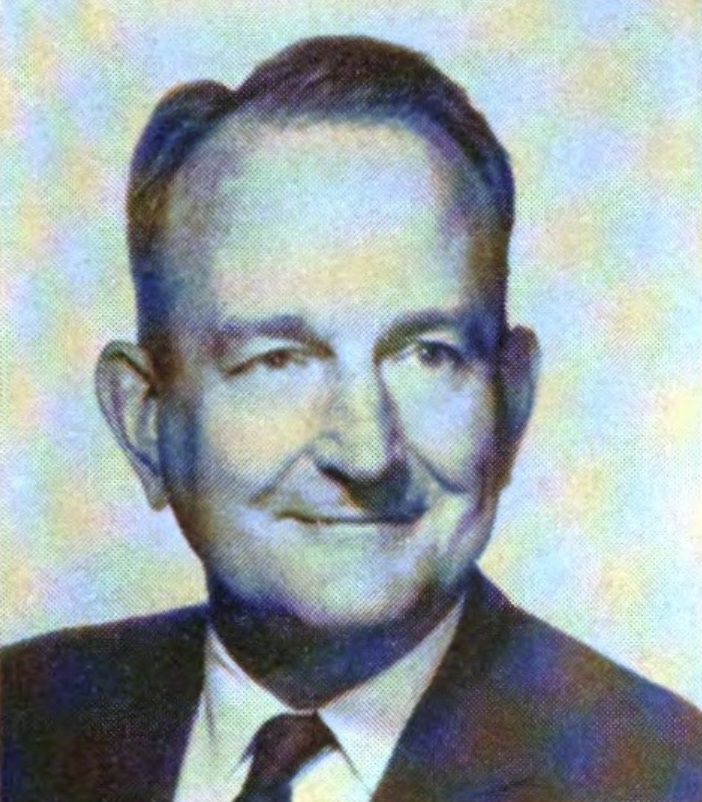
Historical · U.S. House · Tennessee · District 9
George Grider
Former U.S. Representative · Tennessee District 9 · 1965–1967 · Democratic
George Grider represented Tennessee's District 9 in the United States House of Representatives (1965–1967) for the Democratic party. The page below collects sourced biographical facts, term history, committee roles, and provenance for Grider.
Bioguide ID: G000454
Key facts
- Full name
- George Grider
- State
- Tennessee
- District
- District 9
- Party
- Democratic
- House service
- 1965–1967
- First House term
- 1965
- Status
- Left office
- Current term ends
- —
- Born
- 1912
- Bioguide ID
- G000454
- Committee assignments
- —
- Dataset version
- 1.20260605
Biographical narrative
828 words · sourced from the Wikipedia REST extract
George Grider was a U.S. Representative from Tennessee's 9th congressional district, serving from 1965 to 1967. A member of the Democratic Party, Grider's political career followed a distinguished military service in the United States Navy, where he achieved the rank of captain. His tenure in Congress was marked by a significant electoral victory over a long-serving incumbent, although he ultimately served only one term before being defeated in the subsequent election.
Early life and career
George William Grider was born on October 1, 1912, in Memphis, Tennessee. He was the son of John McGavock Grider, who was killed in action during World War I, and he had a brother named John McGavock Grider Jr. Grider attended public schools in Memphis and later received an appointment to the United States Naval Academy in Annapolis, Maryland. He graduated from the academy in 1936, where he also married in secret, a decision that contravened the institution's regulations at the time. His official marriage took place two years later in 1938.
Following his graduation, Grider was commissioned as an ensign in the U.S. Navy and began his naval career aboard the USS Mississippi, where he served as a catapult officer. His early assignments included the USS Rathburne, and he later attended the Navy's Submarine Warfare School. Grider's career during World War II was notable; he served on the USS Skipjack, one of the era's most accomplished submarines. At the time of the Pearl Harbor attack, he was an instructor at the Fleet Sonar School in San Diego, California. He was subsequently assigned to the USS Wahoo as engineering officer and later held executive officer positions on the USS Pollack and the USS Hawkbill. Grider eventually commanded the USS Flasher and the USS Cubera. For his exemplary service during the war, he was awarded the Navy Cross.
After retiring from active naval service in 1947 due to health issues, Grider pursued a legal career. He enrolled in the law school at the University of Virginia, graduating in 1950. Following his admission to the Tennessee bar, he began practicing law in Memphis. His public service continued in local government; he served on the Memphis Planning Commission from 1956 to 1957 and was a member of the Shelby County Quarterly Court from 1959 to 1964.
House tenure
Grider's political career took a significant turn when he decided to run for the U.S. House of Representatives. In 1964, he successfully campaigned for the Democratic nomination for Tennessee's 9th congressional district, defeating the long-serving incumbent Clifford Davis, who had held the seat for 13 terms. This victory was significant, as it marked a shift in the political landscape of Memphis, which had been dominated by the Democratic Party for decades.
Grider's election to Congress occurred during a time of considerable political change. He faced a challenging general election in November 1964, winning by a narrow margin of five percentage points. His victory was aided by the national Democratic wave associated with President Lyndon Johnson's landslide win that year. Grider was one of two naval veterans elected to the House from western Tennessee during this election cycle.
During his time in Congress, Grider participated in significant legislative actions, including voting in favor of the Voting Rights Act of 1965, a landmark piece of legislation aimed at eliminating racial discrimination in voting. However, his congressional career was relatively brief. In November 1966, he lost his bid for reelection to Republican candidate Dan Kuykendall. This election was part of a broader trend in Tennessee, where Republicans gained ground in the wake of a national shift in political sentiment. Grider's defeat marked the end of his term in the House, concluding on January 3, 1967.
Legislative focus and committees
While specific details regarding Grider's committee assignments during his congressional tenure are not extensively documented, his legislative focus aligned with the broader Democratic agenda of the mid-1960s, particularly in relation to civil rights and social justice issues. His support for the Voting Rights Act of 1965 indicated a commitment to addressing racial inequalities and promoting voter access, reflecting the Democratic Party's priorities during this period.
Grider's political career was characterized by his military background and legal expertise, which likely informed his approach to governance and public policy. After his defeat in the 1966 election, he transitioned away from politics, moving to Niagara Falls, New York, where he served as vice president and general counsel for the Carborundum Company, an abrasives manufacturer. He returned to Memphis in 1975 and resumed his legal practice.
Grider's life came to an end on March 20, 1991, in Memphis, the city of his birth. He was laid to rest at the Memphis National Cemetery. His legacy includes his contributions to both military service and public office, as well as his role in a significant electoral shift in Memphis politics during the 1960s. Grider's time in Congress, though brief, was marked by notable legislative actions and a commitment to the Democratic principles of his era.
Notable legislation
Sponsored and co-sponsored legislation for George Grider is pending operator curation. The biographical narrative above carries the same provenance trail until per-bill rows are written.
Sources
- [1]https://en.wikipedia.org/wiki/George_W._GriderWikipedia · retrieved 2026-06-05
Notable quotes
Sourced quotes for George Grider are pending operator curation. Narrative-scope provenance remains attached below.
Sources
- [1]https://en.wikipedia.org/wiki/George_W._GriderWikipedia · retrieved 2026-06-05
Key positions
Curated policy positions for George Grider are pending operator review. The biographical narrative above carries the same provenance trail until per-topic positions are written.
Sources
- [1]https://en.wikipedia.org/wiki/George_W._GriderWikipedia · retrieved 2026-06-05
Terms served
- 1965–1967U.S. House · Term 1 · Democratic
Sources & provenance
Every attributable claim above carries a per-section [N] marker that resolves to the corresponding URL below. Each entry records the upstream provider, the canonical URL, and the timestamp at which the source was retrieved by the ingest pipeline.
Key facts
- https://bioguide.congress.gov/search/bio/G000454bioguide · retrieved 2026-06-05
- https://www.govtrack.us/congress/members/404799govtrack · retrieved 2026-06-05
Biographical narrative
- https://en.wikipedia.org/wiki/George_W._Griderwikipedia · retrieved 2026-06-05
Find your representative
Every U.S. state elects representatives by district. Browse Tennessee’s delegation, the full former-representative roster, or explore the role and term length.
Related on The Candidate
- Preceded by Clifford DavisEarlier holder of the Tennessee District 9 House seat · Democratic.Open
- Succeeded by Harold FordLater holder of the Tennessee District 9 House seat · Democratic.Open
- Albert WatkinsFormer U.S. Representative · Tennessee District 1 · DemocraticOpen
- Alfred TaylorFormer U.S. Representative · Tennessee District 1 · RepublicanOpen
- Augustus PettiboneFormer U.S. Representative · Tennessee District 1 · RepublicanOpen
- Bill JenkinsFormer U.S. Representative · Tennessee District 1 · RepublicanOpen