
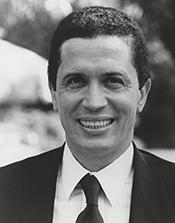
Historical · U.S. House · Tennessee · District 9
Harold Ford
Former U.S. Representative · Tennessee District 9 · 1975–1997 · Democratic
Harold Ford represented Tennessee's District 9 in the United States House of Representatives (1975–1997) for the Democratic party. The page below collects sourced biographical facts, term history, committee roles, and provenance for Ford.
Bioguide ID: F000261
Key facts
- Full name
- Harold Ford
- State
- Tennessee
- District
- District 9
- Party
- Democratic
- House service
- 1975–1997
- First House term
- 1975
- Status
- Left office
- Current term ends
- —
- Born
- 1945
- Bioguide ID
- F000261
- Committee assignments
- —
- Dataset version
- 1.20260605
Biographical narrative
1,084 words · sourced from the Wikipedia REST extract
Harold E. Ford is a former American politician who served as a Democratic member of the United States House of Representatives, representing Tennessee's 9th congressional district from 1975 until his retirement in 1997. He was notable for being the first African American to represent Tennessee in Congress and was a prominent figure in the political landscape of Memphis, Tennessee. Over his two decades in office, Ford was involved in various legislative efforts and was recognized for his advocacy on behalf of his constituents, particularly in areas related to economic development and social welfare.
Early life and career
Harold Eugene Ford was born on May 20, 1945, in Memphis, Tennessee. He was raised in a large family, being the eighth of fifteen children born to Newton Jackson Ford and Vera (Davis) Ford. His father was an undertaker and businessman who established N.J. Ford Funeral Home in 1932, a family business that would continue to serve the community for decades. The Ford family had deep roots in Memphis, with Harold's great-grandfather, Newton Ford, being a respected civic leader and elected county squire in the late 19th century.
Ford's educational journey began at Geeter High School, from which he graduated in 1963. He then attended Tennessee State University, where he earned a Bachelor of Science degree in 1967 and completed a year of graduate study. In 1969, he obtained a degree in mortuary science from John A. Gupton College in Nashville and subsequently worked in his family's funeral home until 1974. Additionally, he earned a Master of Business Administration from Howard University in 1982.
Ford's political career began in the Tennessee House of Representatives, where he was elected in 1970, making him one of the youngest members and one of the few African Americans in the state legislature at that time. His family's political legacy and his ability to connect with the African American community helped him secure support for his candidacy. During his tenure in the state legislature, he served as majority whip and chaired a committee focused on utility rates and practices. Ford was also active in the Democratic Party, serving as a delegate to various state and national conventions from 1972 through 1996.
House tenure
In 1974, after two terms in the Tennessee legislature, Ford sought the Democratic nomination for the Memphis-based 8th U.S. Congressional District. He successfully defeated three opponents in the primary election and went on to face incumbent Republican Dan Kuykendall in the general election. At the time, the district was predominantly white, but redistricting efforts had increased the African American voter base. Ford campaigned on a platform focused on economic development, appealing to both black and white voters. His campaign was characterized by a strong grassroots effort, leveraging support from local churches and community leaders.
Ford's election marked a significant milestone as he became the first African American to represent Tennessee in the U.S. Congress. He won the election by a narrow margin, initially facing a challenging vote count but ultimately prevailing by a small number of votes. Following his election, Ford was re-elected multiple times, securing substantial support from both black and white constituents. After the district was renumbered as the 9th District in 1983, Ford continued to win re-election with increasing margins, benefiting from the demographic shifts in the district.
Throughout his congressional career, Ford served on several important committees, including the House Ways and Means Committee, where he began his tenure in 1975. He also held positions on the Banking, Currency and Housing Committee, the Veterans' Affairs Committee, and the Select Committee on Assassinations, which investigated significant historical events, including the assassination of Martin Luther King Jr. Notably, he chaired the subcommittee on Public Assistance and Unemployment and later led the House Select Committee on Aging during the 102nd and 103rd Congresses.
Ford's legislative efforts focused on securing federal funds for his district and advocating for social welfare programs. He supported initiatives aimed at increasing government assistance for lower-income constituents, including job training, healthcare, and unemployment benefits. He was an advocate for President Jimmy Carter's urban renewal initiatives and opposed cuts to social programs proposed during President Ronald Reagan's administration. Ford also proposed welfare reform legislation intended to facilitate the transition of recipients from welfare to work, although this legislation did not pass.
However, Ford's congressional effectiveness faced challenges following his indictment in 1987 on bank fraud charges, which alleged that he misused business loans for personal expenses. He denied the allegations, asserting that the prosecution was racially and politically motivated. Despite losing some committee leadership roles during the legal proceedings, Ford remained in Congress while awaiting trial. In 1993, he was acquitted of all charges by a jury, allowing him to continue his legislative work.
After serving 11 terms in the House of Representatives, Ford chose to retire in 1996. His son, Harold Ford Jr., subsequently returned to Tennessee from New York and successfully ran for the congressional seat that his father had held.
Legislative focus and committees
During his time in the House of Representatives, Harold Ford was known for his commitment to securing federal resources for his constituents in Memphis. His role on the House Ways and Means Committee was particularly significant, as it allowed him to influence legislation related to taxation, social security, and health care. Ford's advocacy for increased funding for social programs was a hallmark of his legislative agenda, reflecting his dedication to addressing the needs of lower-income families in his district.
Ford's legislative focus extended to various social issues, including job training and health care access. He worked to enhance government assistance programs, believing that such support was essential for the well-being of his constituents. His support for President Carter's initiatives to revitalize urban areas underscored his commitment to improving the quality of life in Memphis.
In addition to his work on the Ways and Means Committee, Ford's involvement in the House Select Committee on Aging highlighted his interest in issues affecting older Americans. His leadership in this area allowed him to advocate for policies that addressed the needs of an aging population, including health care and social services.
Throughout his congressional career, Ford maintained a focus on bipartisanship, seeking to build coalitions across party lines to advance his legislative goals. His ability to connect with a diverse constituency and navigate the complexities of congressional politics contributed to his long tenure in office. Following his retirement, Ford remained active in political affairs and continued to engage with the Democratic Party, reflecting his enduring commitment to public service.
Notable legislation
Sponsored and co-sponsored legislation for Harold Ford is pending operator curation. The biographical narrative above carries the same provenance trail until per-bill rows are written.
Sources
- [1]https://en.wikipedia.org/wiki/Harold_Ford_Sr.Wikipedia · retrieved 2026-06-05
Notable quotes
Sourced quotes for Harold Ford are pending operator curation. Narrative-scope provenance remains attached below.
Sources
- [1]https://en.wikipedia.org/wiki/Harold_Ford_Sr.Wikipedia · retrieved 2026-06-05
Key positions
Curated policy positions for Harold Ford are pending operator review. The biographical narrative above carries the same provenance trail until per-topic positions are written.
Sources
- [1]https://en.wikipedia.org/wiki/Harold_Ford_Sr.Wikipedia · retrieved 2026-06-05
Terms served
- 1975–1977U.S. House · Term 1 · Democratic
- 1977–1979U.S. House · Term 2 · Democratic
- 1979–1981U.S. House · Term 3 · Democratic
- 1981–1983U.S. House · Term 4 · Democratic
- 1983–1985U.S. House · Term 5 · Democratic
- 1985–1987U.S. House · Term 6 · Democratic
- 1987–1989U.S. House · Term 7 · Democratic
- 1989–1991U.S. House · Term 8 · Democratic
- 1991–1993U.S. House · Term 9 · Democratic
- 1993–1995U.S. House · Term 10 · Democratic
- 1995–1997U.S. House · Term 11 · Democratic
Sources & provenance
Every attributable claim above carries a per-section [N] marker that resolves to the corresponding URL below. Each entry records the upstream provider, the canonical URL, and the timestamp at which the source was retrieved by the ingest pipeline.
Key facts
- https://bioguide.congress.gov/search/bio/F000261bioguide · retrieved 2026-06-05
- https://www.govtrack.us/congress/members/404213govtrack · retrieved 2026-06-05
Biographical narrative
- https://en.wikipedia.org/wiki/Harold_Ford_Sr.wikipedia · retrieved 2026-06-05
Find your representative
Every U.S. state elects representatives by district. Browse Tennessee’s delegation, the full former-representative roster, or explore the role and term length.
Related on The Candidate
- Preceded by George GriderEarlier holder of the Tennessee District 9 House seat · Democratic.Open
- Succeeded by Harold Ford Jr.Later holder of the Tennessee District 9 House seat · Democratic.Open
- Albert WatkinsFormer U.S. Representative · Tennessee District 1 · DemocraticOpen
- Alfred TaylorFormer U.S. Representative · Tennessee District 1 · RepublicanOpen
- Augustus PettiboneFormer U.S. Representative · Tennessee District 1 · RepublicanOpen
- Bill JenkinsFormer U.S. Representative · Tennessee District 1 · RepublicanOpen