
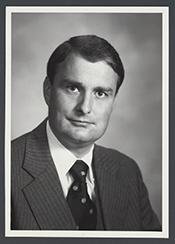
Historical · U.S. House · Utah · District 2
David Monson
Former U.S. Representative · Utah District 2 · 1985–1987 · Republican
David Monson represented Utah's District 2 in the United States House of Representatives (1985–1987) for the Republican party. The page below collects sourced biographical facts, term history, committee roles, and provenance for Monson.
Bioguide ID: M000860
Key facts
- Full name
- David Monson
- State
- Utah
- District
- District 2
- Party
- Republican
- House service
- 1985–1987
- First House term
- 1985
- Status
- Left office
- Current term ends
- —
- Born
- 1945
- Bioguide ID
- M000860
- Committee assignments
- —
- Dataset version
- 1.20260605
Biographical narrative
1,013 words · sourced from the Wikipedia REST extract
David S. Monson is a former American politician who served as a U.S. Representative for Utah's 2nd congressional district. A member of the Republican Party, Monson's political career includes notable positions such as the State Auditor of Utah and the Lieutenant Governor of Utah. His tenure in the U.S. House of Representatives was marked by a single term that began in the mid-1980s and concluded shortly thereafter. Following his departure from Congress, Monson transitioned to a career in business, focusing on international trade and recycling.
Early life and career
David S. Monson was born on June 20, 1945, in Salt Lake City, Utah. Growing up in this vibrant urban center, he attended local public schools, where he received a foundational education that would later support his professional endeavors. Monson pursued higher education at the University of Utah, where he earned a Bachelor of Science degree in 1970. This academic achievement laid the groundwork for his future career, particularly in the fields of finance and public service.
After completing his education, Monson became a certified public accountant, a profession that provided him with valuable skills in financial management and analysis. His expertise in accounting would later inform his approach to public office, particularly in fiscal matters. In addition to his professional pursuits, Monson served his country as a member of the Utah Air National Guard from 1967 to 1973, achieving the rank of Sergeant. This military experience contributed to his leadership skills and commitment to public service.
Monson's early career in public service began when he was elected as the Utah State Auditor in 1972. In this role, he was responsible for overseeing the financial operations of the state, ensuring accountability and transparency in government spending. His election was significant, as he was one of only two Republicans to secure a statewide office during a time when the majority of such positions were held by Democrats. Monson served as State Auditor from 1973 until 1977, gaining experience and recognition that would pave the way for his future political ambitions.
Following his tenure as State Auditor, Monson was elected as the Lieutenant Governor of Utah. He held this position for two consecutive terms from 1977 to 1985. As Lieutenant Governor, he worked closely with the Governor and was involved in various state initiatives, further solidifying his reputation as a dedicated public servant. His time in this role allowed him to gain insights into the legislative process and the workings of state government, which would later be beneficial during his congressional career.
House tenure
In 1984, David S. Monson decided to run for the United States House of Representatives, seeking to represent Utah's 2nd congressional district in the Ninety-ninth Congress. His campaign was met with challenges, particularly due to controversies surrounding his participation in a trade mission to Japan. This mission included individuals who later faced serious allegations, which complicated his campaign narrative. Despite these difficulties, Monson successfully secured the Republican nomination and advanced to the general election.
In the general election, Monson faced off against former state Senator Frances Farley. The race was closely contested, reflecting the competitive political landscape of the time. Ultimately, Monson emerged victorious, winning the election by a narrow margin. His victory marked a significant achievement in his political career, allowing him to transition from state to federal office.
Monson's term in the U.S. House of Representatives began in January 1985. During his time in Congress, he participated in various legislative activities and contributed to discussions on issues pertinent to his constituents and the nation. However, his tenure was relatively brief, as he chose not to seek reelection in 1986. Monson's decision to step away from politics culminated in the conclusion of his congressional term on January 3, 1987. His departure from the House marked the end of his formal political career, which had spanned over a decade in various capacities.
Legislative focus and committees
During his time in the House of Representatives, David S. Monson was involved in legislative matters that reflected his background in finance and public service. While specific details regarding the bills he sponsored or the committees he served on are not provided, it can be inferred that his experience as a certified public accountant and his previous roles in state government would have influenced his legislative priorities. Monson likely focused on issues related to fiscal responsibility, government accountability, and the efficient use of taxpayer resources.
His background as a former State Auditor would have equipped him with insights into the financial challenges faced by both state and federal governments. This experience may have informed his approach to budgeting and appropriations, as well as his stance on various economic policies. Additionally, his role as Lieutenant Governor would have provided him with a comprehensive understanding of the legislative process and the importance of collaboration among lawmakers.
Although Monson's congressional career was brief, it occurred during a time of significant political and social change in the United States. The mid-1980s were characterized by various national issues, including economic policies, foreign relations, and domestic social concerns. Monson's contributions to the legislative process during this period would have been shaped by these broader contexts, as well as by the specific needs and interests of his constituents in Utah's 2nd congressional district.
After concluding his term in Congress, Monson transitioned to a career in the private sector, where he became involved in international trade and recycling paper. This shift allowed him to apply his skills and experience in a different context, contributing to economic development and sustainability efforts. Monson's post-political career reflects a continued commitment to public service and community engagement, as he remains active in business and civic activities.
In summary, David S. Monson's political career encompasses significant roles at both the state and federal levels. His experiences as State Auditor and Lieutenant Governor provided a strong foundation for his brief tenure in the U.S. House of Representatives. Following his departure from Congress, Monson has continued to engage in meaningful work within the business sector, demonstrating a lasting dedication to the principles of public service and community involvement.
Notable legislation
Sponsored and co-sponsored legislation for David Monson is pending operator curation. The biographical narrative above carries the same provenance trail until per-bill rows are written.
Sources
- [1]https://en.wikipedia.org/wiki/David_Smith_MonsonWikipedia · retrieved 2026-06-05
Notable quotes
Sourced quotes for David Monson are pending operator curation. Narrative-scope provenance remains attached below.
Sources
- [1]https://en.wikipedia.org/wiki/David_Smith_MonsonWikipedia · retrieved 2026-06-05
Key positions
Curated policy positions for David Monson are pending operator review. The biographical narrative above carries the same provenance trail until per-topic positions are written.
Sources
- [1]https://en.wikipedia.org/wiki/David_Smith_MonsonWikipedia · retrieved 2026-06-05
Terms served
- 1985–1987U.S. House · Term 1 · Republican
Sources & provenance
Every attributable claim above carries a per-section [N] marker that resolves to the corresponding URL below. Each entry records the upstream provider, the canonical URL, and the timestamp at which the source was retrieved by the ingest pipeline.
Key facts
- https://bioguide.congress.gov/search/bio/M000860bioguide · retrieved 2026-06-05
- https://www.govtrack.us/congress/members/407833govtrack · retrieved 2026-06-05
Biographical narrative
- https://en.wikipedia.org/wiki/David_Smith_Monsonwikipedia · retrieved 2026-06-05
Find your representative
Every U.S. state elects representatives by district. Browse Utah’s delegation, the full former-representative roster, or explore the role and term length.
Related on The Candidate
- Preceded by David MarriottEarlier holder of the Utah District 2 House seat · Republican.Open
- Succeeded by Karen ShepherdLater holder of the Utah District 2 House seat · Democratic.Open
- Clarence AllenFormer U.S. Representative · Utah District 1 · RepublicanOpen
- Don ColtonFormer U.S. Representative · Utah District 1 · RepublicanOpen
- Douglas StringfellowFormer U.S. Representative · Utah District 1 · RepublicanOpen
- Henry DixonFormer U.S. Representative · Utah District 1 · RepublicanOpen