
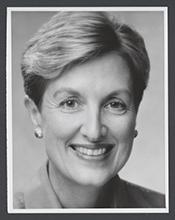
Historical · U.S. House · Utah · District 2
Karen Shepherd
Former U.S. Representative · Utah District 2 · 1993–1995 · Democratic
Karen Shepherd represented Utah's District 2 in the United States House of Representatives (1993–1995) for the Democratic party. The page below collects sourced biographical facts, term history, committee roles, and provenance for Shepherd.
Bioguide ID: S000332
Key facts
- Full name
- Karen Shepherd
- State
- Utah
- District
- District 2
- Party
- Democratic
- House service
- 1993–1995
- First House term
- 1993
- Status
- Left office
- Current term ends
- —
- Born
- 1940
- Bioguide ID
- S000332
- Committee assignments
- —
- Dataset version
- 1.20260605
Biographical narrative
1,021 words · sourced from the Wikipedia REST extract
Karen Shepherd is a former American politician who served as a U.S. Representative for Utah's 2nd congressional district from 1993 to 1995. A member of the Democratic Party, she was notable for being one of the first women elected to Congress from Utah. Throughout her political career, Shepherd focused on various issues, including health care reform, education, and environmental protection, and she was involved in significant legislative efforts during her time in office.
Early life and career
Karen Rae Shepherd was born on July 5, 1940, in Silver City, New Mexico. She was the daughter of Ralph Felker, who worked for the U.S. Forest Service. Due to her father's job, the family relocated several times during her childhood, eventually settling in Provo, Utah. Shepherd completed her high school education in Provo and went on to pursue higher education at the University of Utah, where she earned a Bachelor of Arts degree in English in 1962. Following her undergraduate studies, she continued her education at Brigham Young University (BYU), obtaining a Master of Arts degree in British Literature in 1963.
In 1963, Shepherd married Vincent Shepherd, an officer in the Army, and they moved to Fort Lewis, Washington. While in Washington, she taught English at Olympic Junior College. After her husband completed his military service, the couple accepted positions at the American University in Cairo, Egypt, where they lived for two years. Upon returning to the United States, they settled back in Utah, where they had two children, Heather and Dylan. Vincent Shepherd operated a wholesale oil distributing company, while Karen continued her teaching career, instructing Freshman English at BYU.
Shepherd became increasingly politically active during this period, working on the Senate campaigns of prominent Utah Democrats Wayne Owens and Frank Moss. Her political involvement led to her becoming the first woman to serve at the cabinet level in Salt Lake County Government when she was appointed Director of Social Services. In 1978, she co-owned Network Magazine, which focused on issues related to women's workplaces, and later founded Webster Publishing. After selling the magazine and her publishing business in 1988, she took on the role of Director of Development at the University of Utah's School of Business. In 1990, Shepherd was elected to the Utah State Senate, succeeding Frances Farley, the only woman serving in the Utah Senate at that time. She served in the state legislature for two years before deciding to run for the U.S. House of Representatives.
House tenure
Shepherd's campaign for the U.S. House of Representatives in 1992 was marked by a platform that emphasized a balanced budget, government involvement in health care reform, education, abortion rights, and environmental protection. She introduced a comprehensive 10-point plan aimed at improving the lives of children, which included initiatives such as tracking down delinquent fathers and fully funding the Head Start program. In the general election, she faced Enid Greene, a fiscal and social conservative who had previously served as an aide to Utah Governor Norman Bangerter. Shepherd won the election by a narrow margin, securing 50 percent of the vote compared to Greene's 47 percent, thus becoming the second woman in Utah's history to be elected to Congress.
Once she was sworn into office in January 1993, Shepherd was assigned to the Natural Resources Committee and the Public Works and Transportation Committee. She quickly became a leader among her fellow freshmen, co-chairing a reform effort aimed at addressing lobbying and campaign finance practices. This initiative included proposals to ban gifts from lobbyists to lawmakers and to limit the number of committees a member could chair.
During her time in Congress, Shepherd supported President Bill Clinton's 1993 budget package, which included tax increases for higher-income individuals and budget cuts. This budget passed by a narrow vote, and Shepherd expressed her belief that, despite its imperfections, it was essential to move forward on critical issues such as health care and free trade. She also supported the Brady Bill and the Assault Weapons Ban, demonstrating her commitment to gun control measures.
In the 1994 election, Shepherd faced Enid Greene again, who had since changed her last name to Waldholtz after her marriage. The election was competitive, with a third candidate, Independent Merrill Cook, also entering the race. The campaign focused on Shepherd's votes regarding the Clinton budget and her stance on gun control. Waldholtz campaigned on the "Contract with America," a platform developed by Newt Gingrich, and ultimately won the election with 46 percent of the vote, while Shepherd received 36 percent and Cook garnered 18 percent.
Legislative focus and committees
Throughout her congressional tenure, Karen Shepherd was actively involved in various legislative initiatives that reflected her commitment to progressive values. Her focus on health care reform was a significant aspect of her platform, as she advocated for government involvement in ensuring access to quality health care for all citizens. Shepherd's emphasis on education reform was also evident in her proposals aimed at improving educational opportunities and resources for children.
Shepherd's work on the Natural Resources Committee allowed her to address environmental issues, which were a key concern for many of her constituents. She sought to promote policies that would protect natural resources and promote sustainable practices. Her involvement in the Public Works and Transportation Committee also positioned her to influence infrastructure development and improvements within her district and beyond.
As a member of the Freshman Caucus, Shepherd played a crucial role in shaping discussions around lobbying and campaign finance reform. Her leadership in this area underscored her commitment to transparency and accountability in government. By advocating for reforms to limit the influence of money in politics, she aimed to enhance the integrity of the legislative process.
Despite facing challenges during her re-election campaign in 1994, Shepherd's contributions to Congress during her brief tenure were significant. Her legislative focus on health care, education, and environmental issues, combined with her efforts to reform lobbying practices, reflected her dedication to public service and her constituents' needs. After her congressional career, she continued to engage in public service and advocacy, furthering her commitment to the issues she championed during her time in office.
Notable legislation
Sponsored and co-sponsored legislation for Karen Shepherd is pending operator curation. The biographical narrative above carries the same provenance trail until per-bill rows are written.
Sources
- [1]https://en.wikipedia.org/wiki/Karen_ShepherdWikipedia · retrieved 2026-06-05
Notable quotes
Sourced quotes for Karen Shepherd are pending operator curation. Narrative-scope provenance remains attached below.
Sources
- [1]https://en.wikipedia.org/wiki/Karen_ShepherdWikipedia · retrieved 2026-06-05
Key positions
Curated policy positions for Karen Shepherd are pending operator review. The biographical narrative above carries the same provenance trail until per-topic positions are written.
Sources
- [1]https://en.wikipedia.org/wiki/Karen_ShepherdWikipedia · retrieved 2026-06-05
Terms served
- 1993–1995U.S. House · Term 1 · Democratic
Sources & provenance
Every attributable claim above carries a per-section [N] marker that resolves to the corresponding URL below. Each entry records the upstream provider, the canonical URL, and the timestamp at which the source was retrieved by the ingest pipeline.
Key facts
- https://bioguide.congress.gov/search/bio/S000332bioguide · retrieved 2026-06-05
- https://www.govtrack.us/congress/members/409829govtrack · retrieved 2026-06-05
Biographical narrative
- https://en.wikipedia.org/wiki/Karen_Shepherdwikipedia · retrieved 2026-06-05
Find your representative
Every U.S. state elects representatives by district. Browse Utah’s delegation, the full former-representative roster, or explore the role and term length.
Related on The Candidate
- Preceded by Douglas OwensEarlier holder of the Utah District 2 House seat · Democratic.Open
- Succeeded by Enid Greene WaldholtzLater holder of the Utah District 2 House seat · Republican.Open
- Clarence AllenFormer U.S. Representative · Utah District 1 · RepublicanOpen
- Don ColtonFormer U.S. Representative · Utah District 1 · RepublicanOpen
- Douglas StringfellowFormer U.S. Representative · Utah District 1 · RepublicanOpen
- Henry DixonFormer U.S. Representative · Utah District 1 · RepublicanOpen