
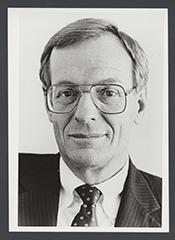
Historical · U.S. House · Utah · District 2
Douglas Owens
Former U.S. Representative · Utah District 2 · 1973–1993 · Democratic
Douglas Owens represented Utah's District 2 in the United States House of Representatives (1973–1993) for the Democratic party. The page below collects sourced biographical facts, term history, committee roles, and provenance for Owens.
Bioguide ID: O000156
Key facts
- Full name
- Douglas Owens
- State
- Utah
- District
- District 2
- Party
- Democratic
- House service
- 1973–1993
- First House term
- 1973
- Status
- Left office
- Current term ends
- —
- Born
- 1937
- Bioguide ID
- O000156
- Committee assignments
- —
- Dataset version
- 1.20260605
Biographical narrative
804 words · sourced from the Wikipedia REST extract
Douglas Wayne Owens was an American politician who served as a member of the United States House of Representatives for Utah's 2nd congressional district. A member of the Democratic Party, Owens held office from 1973 to 1975 and again from 1987 to 1993. His political career was marked by a commitment to public service and engagement with his constituents, as well as involvement in significant legislative matters during his time in Congress. After his passing in 2002, he was posthumously inducted into the Hinckley Institute of Politics Hall of Fame, recognizing his contributions to the political landscape.
Early life and career
Wayne Owens was born on May 2, 1937, in Panguitch, Utah, a small town that shaped his early experiences. He completed his high school education at Panguitch High School in 1955 before pursuing higher education at the University of Utah in Salt Lake City. Owens earned his Bachelor’s degree in 1961 and later obtained his Juris Doctor in 1964. His academic journey was notably interrupted by a mission for the Church of Jesus Christ of Latter-day Saints, during which he served in France from 1957 to 1960. This experience not only enriched his understanding of different cultures but also led to his meeting with Marlene, who would become his wife.
While attending university and law school, Owens worked various jobs to support himself, including serving as a night-watchman at the Beehive House. After completing his education, he entered the legal profession, practicing law in private practice. His political career began to take shape as he worked as a staffer for three prominent U.S. Senators: Frank Moss of Utah, Robert F. Kennedy of New York, and Edward M. Kennedy of Massachusetts. Owens played a significant role in the political landscape of the 1960s and 1970s, serving as the Western states coordinator for Robert Kennedy's presidential campaign in 1968 and Edward Kennedy's campaign in 1980. He also participated as a delegate at the Democratic National Conventions in both 1968 and 1980.
House tenure
Owens's political career in the U.S. House of Representatives began in 1973 when he was elected as a Democrat to represent Utah's 2nd congressional district. His campaign strategy involved personally engaging with voters through a method he termed "walking for Congress," which allowed him to connect with constituents on a personal level. In the election, he successfully unseated the incumbent Republican, Sherman P. Lloyd, securing approximately 55% of the vote.
During his first term in Congress, Owens served on the House Judiciary Committee, which was pivotal during the impeachment proceedings against President Richard Nixon. This experience placed him at the center of a significant historical moment in American politics. However, his initial tenure in the House was relatively short-lived, as he lost his seat in the 1974 elections to Republican Jake Garn. Following his congressional service, Owens took on the role of mission president for the LDS Canada Montreal Mission from 1975 to 1978, a position that allowed him to continue his commitment to service and leadership within the church.
After returning to Salt Lake City to practice law, Owens made a political comeback in 1986 when he was re-elected to the House. He served another term until 1992, during which he continued to engage with his constituents and address various legislative issues. In 1992, he sought a seat in the U.S. Senate but was defeated by Bob Bennett, a loss that was more significant than anticipated. Owens's political career faced challenges, including his involvement in the House banking scandal, which garnered considerable media attention and scrutiny.
Legislative focus and committees
Throughout his time in the House of Representatives, Owens was involved in various legislative initiatives and committee assignments that reflected his interests and the needs of his constituents. His work on the House Judiciary Committee during the impeachment proceedings against President Nixon highlighted his engagement with critical constitutional issues and the rule of law. Owens's legislative focus included a range of topics pertinent to his district and the broader national landscape.
Owens's commitment to public service extended beyond his congressional duties. After his final term in Congress, he continued to advocate for peace and cooperation in the Middle East, leading the Center for Middle East Peace & Economic Cooperation. His efforts in this area underscored his dedication to fostering dialogue and understanding among diverse communities.
In summary, Wayne Owens's career as a U.S. Representative was characterized by his dedication to public service, engagement with his constituents, and involvement in significant legislative matters. His legacy continues to be recognized, particularly through his posthumous induction into the Hinckley Institute of Politics Hall of Fame, which honors his contributions to politics and society. Owens's life and career reflect a commitment to the principles of democracy and civic engagement, leaving an enduring impact on the political landscape of Utah and the nation.
Notable legislation
Sponsored and co-sponsored legislation for Douglas Owens is pending operator curation. The biographical narrative above carries the same provenance trail until per-bill rows are written.
Sources
- [1]https://en.wikipedia.org/wiki/Wayne_OwensWikipedia · retrieved 2026-06-05
Notable quotes
Sourced quotes for Douglas Owens are pending operator curation. Narrative-scope provenance remains attached below.
Sources
- [1]https://en.wikipedia.org/wiki/Wayne_OwensWikipedia · retrieved 2026-06-05
Key positions
Curated policy positions for Douglas Owens are pending operator review. The biographical narrative above carries the same provenance trail until per-topic positions are written.
Sources
- [1]https://en.wikipedia.org/wiki/Wayne_OwensWikipedia · retrieved 2026-06-05
Terms served
- 1973–1975U.S. House · Term 1 · Democratic
- 1987–1989U.S. House · Term 2 · Democratic
- 1989–1991U.S. House · Term 3 · Democratic
- 1991–1993U.S. House · Term 4 · Democratic
Sources & provenance
Every attributable claim above carries a per-section [N] marker that resolves to the corresponding URL below. Each entry records the upstream provider, the canonical URL, and the timestamp at which the source was retrieved by the ingest pipeline.
Key facts
- https://bioguide.congress.gov/search/bio/O000156bioguide · retrieved 2026-06-05
- https://www.govtrack.us/congress/members/408407govtrack · retrieved 2026-06-05
Biographical narrative
- https://en.wikipedia.org/wiki/Wayne_Owenswikipedia · retrieved 2026-06-05
Find your representative
Every U.S. state elects representatives by district. Browse Utah’s delegation, the full former-representative roster, or explore the role and term length.
Related on The Candidate
- Preceded by Sherman LloydEarlier holder of the Utah District 2 House seat · Republican.Open
- Succeeded by Karen ShepherdLater holder of the Utah District 2 House seat · Democratic.Open
- Clarence AllenFormer U.S. Representative · Utah District 1 · RepublicanOpen
- Don ColtonFormer U.S. Representative · Utah District 1 · RepublicanOpen
- Douglas StringfellowFormer U.S. Representative · Utah District 1 · RepublicanOpen
- Henry DixonFormer U.S. Representative · Utah District 1 · RepublicanOpen