
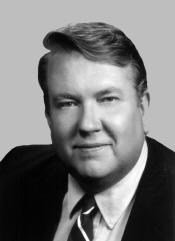
Historical · U.S. House · Utah · District 2
Merrill Cook
Former U.S. Representative · Utah District 2 · 1997–2001 · Republican
Merrill Cook represented Utah's District 2 in the United States House of Representatives (1997–2001) for the Republican party. The page below collects sourced biographical facts, term history, committee roles, and provenance for Cook.
Bioguide ID: C000722
Key facts
- Full name
- Merrill Cook
- State
- Utah
- District
- District 2
- Party
- Republican
- House service
- 1997–2001
- First House term
- 1997
- Status
- Left office
- Current term ends
- —
- Born
- 1946
- Bioguide ID
- C000722
- Committee assignments
- —
- Dataset version
- 1.20260605
Biographical narrative
940 words · sourced from the Wikipedia REST extract
Merrill Cook was an American politician and businessman who served as a Republican member of the United States House of Representatives, representing Utah's 2nd congressional district from 1997 until 2001. Born on May 6, 1946, in Philadelphia, Pennsylvania, Cook had a diverse career that included both business ventures and multiple attempts at public office prior to his congressional tenure. His political journey was marked by a series of electoral campaigns, some of which were successful while others were not, reflecting his evolving political affiliations and strategies.
Early life and career
Merrill Alonzo Cook was born to Melvin A. Cook, a notable scientist recognized for his contributions to the development of slurry explosives. Raised in Salt Lake City, Utah, Cook completed his secondary education at East High School in 1964. He pursued higher education at the University of Utah, where he earned a bachelor's degree in 1969. Following his undergraduate studies, he attended Harvard Business School, obtaining a Master of Business Administration (M.B.A.) in 1971.
After completing his education, Cook began his professional career as a budget analyst at Arthur D. Little, Inc. His entrepreneurial spirit led him to establish the Cook Slurry Company in 1973, a business focused on manufacturing mining explosives. Cook held the positions of president and chief executive officer at the company, which contributed to his financial independence and provided him with the means to engage in political activities.
Cook's early political aspirations began to take shape in the 1980s. He first ran for the Utah Board of Education in 1984, followed by a bid for Mayor of Salt Lake City in a special election in 1985. In 1986, he sought a position on the Salt Lake County Commission, though he was unsuccessful in all these endeavors. In 1988, Cook founded the Utah Independent Party and ran for Governor of Utah, finishing third with a significant share of the vote. His candidacy was notable for drawing votes away from both major party candidates, influencing the outcome of the election.
Cook attempted to secure the governorship again in 1992, where he placed second in the race. His political ambitions continued as he sought election to the U.S. House of Representatives in 1994, finishing third in the Republican primary for Utah's 2nd congressional district. Despite these setbacks, Cook's persistence in pursuing public office laid the groundwork for his eventual election to Congress.
House tenure
Merrill Cook's congressional career began in 1997 when he was elected to represent Utah's 2nd congressional district. His entry into the House of Representatives was facilitated by the decision of incumbent Republican Enid Greene not to seek re-election amid a scandal. Cook rejoined the Republican Party after previously running as an independent and managed to secure the party's nomination through a competitive primary process. He faced Democratic candidate Rocky Anderson in the general election, ultimately winning with a significant majority of the vote.
During his first term in office, Cook was re-elected in 1998, although his tenure was marked by controversies, including accusations of erratic behavior. Notably, he experienced tensions within the Republican Party, which were exacerbated by his public outbursts and conflicts with party leadership. Despite these challenges, he maintained a solid electoral base, winning his second term by a comfortable margin.
Cook's political fortunes began to shift in 2000 when he faced a strong challenge from Democratic candidate Jim Matheson, the son of a former governor. Polls indicated that Cook was trailing Matheson, raising concerns among Republican leaders about the viability of his campaign. Cook's position was further complicated by a primary challenge from computer entrepreneur Derek Smith, who ultimately defeated him, ending his congressional career.
Following his departure from Congress in January 2001, Cook continued to engage in political activities, including a run for mayor of Salt Lake County in 2004 as an independent candidate. However, he garnered only a small percentage of the vote in that election. He also attempted to reclaim his former congressional seat in 2008 but was unsuccessful in securing the Republican nomination. Cook's political activities were characterized by substantial personal financial investments, which he utilized to support his campaigns and initiatives.
Legislative focus and committees
During his time in the House of Representatives, Merrill Cook was involved in various legislative initiatives and served on multiple committees. His focus included issues pertinent to his constituents in Utah, reflecting the interests and needs of the 2nd congressional district. While specific legislative achievements and committee assignments are not detailed, Cook's tenure was marked by his engagement in the political discourse of the time, particularly on matters affecting Utah and its residents.
Cook's approach to governance was influenced by his business background, which shaped his perspectives on economic and regulatory issues. His experience as a businessman likely informed his legislative priorities, as he sought to advocate for policies that would benefit the economic landscape of Utah.
Despite the controversies that surrounded his political career, Cook's time in Congress was significant in that it represented a period of transition for him from a businessman to a political figure. His electoral history reflects a complex relationship with the Republican Party and the electorate, as he navigated the challenges of public service and party dynamics.
In summary, Merrill Cook's career was characterized by a series of electoral campaigns, a notable congressional tenure, and ongoing involvement in Utah politics. His legacy includes his contributions to the political landscape of the state and his efforts to represent the interests of his constituents during a dynamic period in American politics. Cook passed away on March 9, 2026, at the age of 79, leaving behind a multifaceted legacy as both a businessman and a politician.
Notable legislation
Sponsored and co-sponsored legislation for Merrill Cook is pending operator curation. The biographical narrative above carries the same provenance trail until per-bill rows are written.
Sources
- [1]https://en.wikipedia.org/wiki/Merrill_CookWikipedia · retrieved 2026-06-05
Notable quotes
Sourced quotes for Merrill Cook are pending operator curation. Narrative-scope provenance remains attached below.
Sources
- [1]https://en.wikipedia.org/wiki/Merrill_CookWikipedia · retrieved 2026-06-05
Key positions
Curated policy positions for Merrill Cook are pending operator review. The biographical narrative above carries the same provenance trail until per-topic positions are written.
Sources
- [1]https://en.wikipedia.org/wiki/Merrill_CookWikipedia · retrieved 2026-06-05
Terms served
- 1997–1999U.S. House · Term 1 · Republican
- 1999–2001U.S. House · Term 2 · Republican
Sources & provenance
Every attributable claim above carries a per-section [N] marker that resolves to the corresponding URL below. Each entry records the upstream provider, the canonical URL, and the timestamp at which the source was retrieved by the ingest pipeline.
Key facts
- https://bioguide.congress.gov/search/bio/C000722bioguide · retrieved 2026-06-05
- https://www.govtrack.us/congress/members/400577govtrack · retrieved 2026-06-05
Biographical narrative
- https://en.wikipedia.org/wiki/Merrill_Cookwikipedia · retrieved 2026-06-05
Find your representative
Every U.S. state elects representatives by district. Browse Utah’s delegation, the full former-representative roster, or explore the role and term length.
Related on The Candidate
- Preceded by Enid Greene WaldholtzEarlier holder of the Utah District 2 House seat · Republican.Open
- Succeeded by Chris StewartLater holder of the Utah District 2 House seat · Republican.Open
- Clarence AllenFormer U.S. Representative · Utah District 1 · RepublicanOpen
- Don ColtonFormer U.S. Representative · Utah District 1 · RepublicanOpen
- Douglas StringfellowFormer U.S. Representative · Utah District 1 · RepublicanOpen
- Henry DixonFormer U.S. Representative · Utah District 1 · RepublicanOpen