
Historical · U.S. House · Utah · District 3
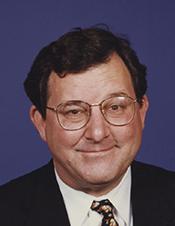
Chris Cannon
Former U.S. Representative · Utah District 3 · 1997–2009 · Republican
Chris Cannon represented Utah's District 3 in the United States House of Representatives (1997–2009) for the Republican party. The page below collects sourced biographical facts, term history, committee roles, and provenance for Cannon.
Bioguide ID: C000116
Key facts
- Full name
- Chris Cannon
- State
- Utah
- District
- District 3
- Party
- Republican
- House service
- 1997–2009
- First House term
- 1997
- Status
- Left office
- Current term ends
- —
- Born
- 1950
- Bioguide ID
- C000116
- Committee assignments
- —
- Dataset version
- 1.20260605
Biographical narrative
1,219 words · sourced from the Wikipedia REST extract
Christopher Black Cannon was an American politician who served as a member of the United States House of Representatives for the Republican Party, representing Utah's third congressional district from 1997 until 2009. His tenure in Congress was marked by his involvement in significant legislative matters, including his participation in the impeachment trial of President Bill Clinton. Cannon's political career was characterized by a strong conservative stance, and he was known for his active role in various congressional committees and caucuses, particularly those focused on resource management and drug policy.
Early life and career
Chris Cannon was born on October 20, 1950, in Salt Lake City, Utah. He pursued higher education at Brigham Young University (BYU), where he earned a degree before continuing his studies at the J. Reuben Clark Law School, also affiliated with BYU. Following his graduation, Cannon embarked on a career in law and business, which spanned from 1980 to 1996. During this period, he established himself as a lawyer, business owner, and venture capitalist, ultimately achieving significant financial success.
Cannon's professional background included a role as an associate solicitor for the United States Department of the Interior from 1984 to 1986. His political involvement began to take shape during the early 1990s when he served as the finance chairman for the Utah Republican Party from 1992 to 1994. This position allowed him to build connections within the party and gain experience in political fundraising and strategy.
In 1996, Cannon entered the political arena as the Republican candidate for Utah's third congressional district. He faced Democratic incumbent Bill Orton, who had held the seat for three terms. Despite Orton's previous electoral success, Cannon's campaign capitalized on the district's Republican majority, and he won the election by a narrow margin. This victory marked the beginning of Cannon's six-term career in the House of Representatives.
Cannon came from a politically active family in Utah. He was the third member of the Cannon family to serve in the House, following his great-grandfather, George Q. Cannon, who served as a nonvoting member during the territorial period, and his grandfather, Frank Cannon, who was the first senator from Utah. This familial legacy contributed to Cannon's commitment to public service and his understanding of the political landscape in Utah.
In his personal life, Cannon was married to Claudia, and they had eight children together. Tragically, their daughter Rachel passed away from cancer in 2005. Cannon's family life was an important aspect of his identity, and he often emphasized the values instilled in him through his upbringing and family experiences.
House tenure
Cannon's congressional career began in January 1997, and he quickly established himself as a prominent figure within the House of Representatives. His first significant national exposure came in 1999 when he was selected as one of the House managers responsible for prosecuting President Bill Clinton during the impeachment trial in the Senate. This role placed him in the national spotlight and underscored his commitment to his party's agenda.
Throughout his time in Congress, Cannon was known for his conservative voting record and alignment with the Republican Party's principles. He was a member of several key committees, including the House Judiciary Committee, where he served on the Subcommittee on Commercial and Administrative Law. In January 2003, he was appointed as the chairman of this subcommittee, a position he held until 2007. He also served on the Judiciary Subcommittee on Courts, the Internet, and Intellectual Property, as well as the House Government Reform Committee.
Cannon's legislative focus included issues related to drug policy and resource management. He was a co-founder of the Congressional Caucus to Fight and Control Methamphetamine, which aimed to address the growing concerns surrounding methamphetamine abuse. By 2008, the caucus had garnered nearly 130 members from both major political parties, reflecting a bipartisan commitment to tackling this issue.
In addition to his work on drug policy, Cannon was actively involved in resource management issues. He was elected chairman of the Western Caucus in January 2003, an organization comprising over 50 Congress members dedicated to addressing the unique challenges faced by western states. His leadership in this caucus allowed him to advocate for policies that aligned with the interests of his constituents and the broader western region.
Cannon's electoral success in the House was notable, as he was re-elected five times after his initial victory. His district was heavily Republican, which contributed to his ability to maintain a strong support base. In 2004, he faced a primary challenge from Matt Throckmorton, whom he defeated, and subsequently won the general election against Democratic candidate Beau Babka with a significant margin.
However, Cannon's political career faced challenges in the later years. In 2006, he encountered a more formidable primary opponent, millionaire real estate developer John D. Jacob. Although Cannon ultimately won the primary, the close results indicated a shift in the political landscape within the district. This trend continued into the 2008 election cycle, where he faced increasing pressure from challengers running to his right.
Cannon's last term in Congress ended on January 3, 2009, following his defeat in the Republican primary by Jason Chaffetz. This marked the conclusion of his six terms in the House, during which he had established himself as a significant figure in Utah politics and a staunch advocate for conservative policies.
Legislative focus and committees
Throughout his tenure in the House, Chris Cannon was recognized for his strong conservative stance on various issues. He maintained a lifetime rating of 96 from the American Conservative Union, reflecting his alignment with conservative principles. His district, known for its Republican leanings, consistently supported Republican candidates, including President George W. Bush, who received a substantial percentage of the vote in the area during the 2004 election.
Cannon's legislative initiatives often centered around issues pertinent to his constituents, particularly in resource management and drug policy. His co-founding of the Congressional Caucus to Fight and Control Methamphetamine demonstrated his commitment to addressing pressing social issues. The caucus aimed to bring attention to the methamphetamine crisis and promote legislation to combat its effects on communities.
In addition to his work on drug policy, Cannon was involved in various committees that shaped national policy. His role as chairman of the Commercial and Administrative Law Subcommittee allowed him to influence legislation related to commercial law and administrative procedures. He also participated in the House Resources Committee, where he focused on issues related to energy and natural resources, serving on subcommittees that addressed energy and mineral resources as well as forests and forest health.
Cannon's legislative efforts included support for measures aimed at providing voting representation for the District of Columbia and advocating for additional congressional representation for Utah. His involvement in these initiatives reflected his understanding of the broader implications of representation and governance.
In summary, Chris Cannon's congressional career was marked by significant legislative involvement, a strong conservative ideology, and a commitment to addressing the needs of his constituents. His tenure in the House of Representatives spanned over a decade, during which he played a prominent role in shaping policy and advocating for issues relevant to his district and the nation. Following his departure from Congress, Cannon continued to be remembered for his contributions to Utah politics and his family's political legacy. He passed away on May 8, 2024, at the age of 73.
Notable legislation
Sponsored and co-sponsored legislation for Chris Cannon is pending operator curation. The biographical narrative above carries the same provenance trail until per-bill rows are written.
Sources
- [1]https://en.wikipedia.org/wiki/Chris_CannonWikipedia · retrieved 2026-06-05
Notable quotes
Sourced quotes for Chris Cannon are pending operator curation. Narrative-scope provenance remains attached below.
Sources
- [1]https://en.wikipedia.org/wiki/Chris_CannonWikipedia · retrieved 2026-06-05
Key positions
Curated policy positions for Chris Cannon are pending operator review. The biographical narrative above carries the same provenance trail until per-topic positions are written.
Sources
- [1]https://en.wikipedia.org/wiki/Chris_CannonWikipedia · retrieved 2026-06-05
Terms served
- 1997–1999U.S. House · Term 1 · Republican
- 1999–2001U.S. House · Term 2 · Republican
- 2001–2003U.S. House · Term 3 · Republican
- 2003–2005U.S. House · Term 4 · Republican
- 2005–2007U.S. House · Term 5 · Republican
- 2007–2009U.S. House · Term 6 · Republican
Sources & provenance
Every attributable claim above carries a per-section [N] marker that resolves to the corresponding URL below. Each entry records the upstream provider, the canonical URL, and the timestamp at which the source was retrieved by the ingest pipeline.
Key facts
- https://bioguide.congress.gov/search/bio/C000116bioguide · retrieved 2026-06-05
- http://chriscannon.house.govhouse.gov · retrieved 2026-06-05
Biographical narrative
- https://en.wikipedia.org/wiki/Chris_Cannonwikipedia · retrieved 2026-06-05
Find your representative
Every U.S. state elects representatives by district. Browse Utah’s delegation, the full former-representative roster, or explore the role and term length.
Related on The Candidate
- Preceded by William OrtonEarlier holder of the Utah District 3 House seat · Democratic.Open
- Succeeded by Jason ChaffetzLater holder of the Utah District 3 House seat · Republican.Open
- Clarence AllenFormer U.S. Representative · Utah District 1 · RepublicanOpen
- Don ColtonFormer U.S. Representative · Utah District 1 · RepublicanOpen
- Douglas StringfellowFormer U.S. Representative · Utah District 1 · RepublicanOpen
- Henry DixonFormer U.S. Representative · Utah District 1 · RepublicanOpen