
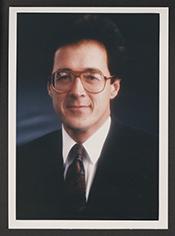
Historical · U.S. House · Utah · District 3
William Orton
Former U.S. Representative · Utah District 3 · 1991–1997 · Democratic
William Orton represented Utah's District 3 in the United States House of Representatives (1991–1997) for the Democratic party. The page below collects sourced biographical facts, term history, committee roles, and provenance for Orton.
Bioguide ID: O000108
Key facts
- Full name
- William Orton
- State
- Utah
- District
- District 3
- Party
- Democratic
- House service
- 1991–1997
- First House term
- 1991
- Status
- Left office
- Current term ends
- —
- Born
- 1948
- Bioguide ID
- O000108
- Committee assignments
- —
- Dataset version
- 1.20260605
Biographical narrative
960 words · sourced from the Wikipedia REST extract
William Harvey Orton was an American politician who served as a Democratic member of the United States House of Representatives from Utah's 3rd congressional district from 1991 until 1997. Known for his moderate stance within the Democratic Party, Orton's political career was marked by both significant electoral victories and challenges, reflecting the complexities of representing a predominantly Republican constituency in Utah.
Early life and career
Bill Orton was born on September 22, 1948, in North Ogden, Utah, to Donald William Orton and Caroll Olsen. He grew up in a family with deep roots in the Church of Jesus Christ of Latter-day Saints, which played a significant role in shaping his values and community involvement. His paternal ancestry traces back to England, where his great-great-grandfather, John Orton, emigrated to the Salt Lake area in 1851 after converting to Mormonism.
Orton's educational journey began at Brigham Young University, where he pursued a degree in law. He earned both his undergraduate degree and his Juris Doctor from the institution. His early career was notable for his employment with the Internal Revenue Service, which he joined at the age of 16. This position allowed him to gain valuable experience while he continued his education through high school, college, and law school. During his time in law school, Orton demonstrated leadership skills by serving as president of his law school fraternity and co-founding the American Inns of Court, an organization dedicated to fostering excellence in legal education.
After completing his education, Orton established a private law practice in 1979, where he focused on various legal matters. His legal background and experience would later inform his approach to governance and policy-making during his tenure in Congress.
House tenure
Orton entered the political arena in 1990 when he ran for the open seat in Utah's 3rd congressional district. His campaign was characterized by a significant upset victory over Republican candidate Karl Snow, winning by a margin of 22 points in a district that was historically Republican. This victory marked the beginning of his first term in the House of Representatives, which commenced in January 1991.
During his time in Congress, Orton was re-elected in both 1992 and 1994, becoming a prominent figure in a challenging political landscape. His tenure included service on several key committees, such as the Banking, Budget, Small Business, and Foreign Affairs Committees. He was also a founding member of the Blue Dog Coalition, a group of moderate and conservative Democrats in Congress. This affiliation highlighted his centrist approach and willingness to cross party lines on various issues.
In the 1994 elections, Orton was one of the few Democrats to maintain a seat in the House as the Republican Party gained control. His re-election that year was notable, as he won by over 19 points in a district that had shifted significantly toward Republican candidates. This victory made him the only Democrat representing Utah at the federal level following the elections, a position that underscored the challenges faced by the Democratic Party in the state.
However, Orton's political career faced difficulties in 1996 when he was narrowly defeated by Republican Chris Cannon during his bid for a fourth term. His loss was attributed to various factors, including the political climate in Utah and the controversial establishment of the Grand Staircase–Escalante National Monument, which was perceived as lacking local input. Following his defeat, Orton's departure from Congress marked the end of a significant chapter in Utah's political history, as no Democrat would be elected to Congress from the state until Jim Matheson won a seat in 2000.
Legislative focus and committees
Throughout his congressional career, Orton was known for his independent voting record, often diverging from party lines. A study conducted by Congressional Quarterly in 1994 revealed that he voted against President Bill Clinton more frequently than many House Republicans, aligning with his reputation as a budget-conscious legislator. His voting alignment with the Democratic Party was notably low, with only 58 percent of his votes supporting party positions, ranking him among the least partisan Democrats in the House.
Orton's legislative focus included issues related to fiscal responsibility, small business development, and foreign affairs. His participation in the Blue Dog Coalition indicated his commitment to a moderate approach to governance, advocating for policies that balanced fiscal conservatism with social responsibility. His background in law and experience in the private sector informed his perspectives on economic and regulatory issues.
In addition to his legislative work, Orton's tenure was marked by a significant legal achievement following his departure from Congress. He played a role in the case of Clinton v. City of New York, which challenged the constitutionality of the Line Item Veto Act of 1996. Orton had previously argued against the legislation on the House floor, asserting that it was unconstitutional. The Supreme Court ultimately upheld his position, marking a unique moment in his legal and political career.
After leaving Congress, Orton returned to his law practice and engaged in consulting work with Advantage Associates, a firm composed of former congressional members. He also made an unsuccessful bid for the governorship of Utah in 2000, challenging incumbent Michael Leavitt.
In the later years of his life, Orton remained active in political circles, serving as a superdelegate during the 2008 Democratic Party primary, where he supported Barack Obama.
Orton's personal life included a long period of bachelorhood, which was notable in the context of Utah's cultural expectations. He married Jacquelyn Massey in 1994, and the couple had two sons. Orton's life came to a tragic end on April 18, 2009, when he died in an ATV accident in Utah. His contributions to Utah's political landscape and his unique position as a moderate Democrat in a predominantly Republican state remain a significant part of his legacy.
Notable legislation
Sponsored and co-sponsored legislation for William Orton is pending operator curation. The biographical narrative above carries the same provenance trail until per-bill rows are written.
Sources
- [1]https://en.wikipedia.org/wiki/Bill_OrtonWikipedia · retrieved 2026-06-05
Notable quotes
Sourced quotes for William Orton are pending operator curation. Narrative-scope provenance remains attached below.
Sources
- [1]https://en.wikipedia.org/wiki/Bill_OrtonWikipedia · retrieved 2026-06-05
Key positions
Curated policy positions for William Orton are pending operator review. The biographical narrative above carries the same provenance trail until per-topic positions are written.
Sources
- [1]https://en.wikipedia.org/wiki/Bill_OrtonWikipedia · retrieved 2026-06-05
Terms served
- 1991–1993U.S. House · Term 1 · Democratic
- 1993–1995U.S. House · Term 2 · Democratic
- 1995–1997U.S. House · Term 3 · Democratic
Sources & provenance
Every attributable claim above carries a per-section [N] marker that resolves to the corresponding URL below. Each entry records the upstream provider, the canonical URL, and the timestamp at which the source was retrieved by the ingest pipeline.
Key facts
- https://bioguide.congress.gov/search/bio/O000108bioguide · retrieved 2026-06-05
- https://www.govtrack.us/congress/members/408364govtrack · retrieved 2026-06-05
Biographical narrative
- https://en.wikipedia.org/wiki/Bill_Ortonwikipedia · retrieved 2026-06-05
Find your representative
Every U.S. state elects representatives by district. Browse Utah’s delegation, the full former-representative roster, or explore the role and term length.
Related on The Candidate
- Preceded by Howard NielsonEarlier holder of the Utah District 3 House seat · Republican.Open
- Succeeded by Chris CannonLater holder of the Utah District 3 House seat · Republican.Open
- Clarence AllenFormer U.S. Representative · Utah District 1 · RepublicanOpen
- Don ColtonFormer U.S. Representative · Utah District 1 · RepublicanOpen
- Douglas StringfellowFormer U.S. Representative · Utah District 1 · RepublicanOpen
- Henry DixonFormer U.S. Representative · Utah District 1 · RepublicanOpen