
Historical · U.S. House · Utah · At-Large
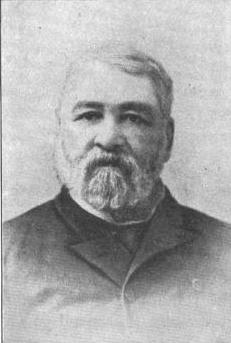
John Kinney
Former U.S. Representative · Utah At-Large · 1863–1865 · Democratic
John Kinney represented Utah's At-Large in the United States House of Representatives (1863–1865) for the Democratic party. The page below collects sourced biographical facts, term history, committee roles, and provenance for Kinney.
Bioguide ID: K000225
Key facts
- Full name
- John Kinney
- State
- Utah
- District
- At-Large
- Party
- Democratic
- House service
- 1863–1865
- First House term
- 1863
- Status
- Left office
- Current term ends
- —
- Born
- 1816
- Bioguide ID
- K000225
- Committee assignments
- —
- Dataset version
- 1.20260606
Biographical narrative
883 words · sourced from the Wikipedia REST extract
John Kinney was a notable American attorney and politician who served as a U.S. Representative for the Territory of Utah during the 38th Congress. A member of the Democratic Party, Kinney's political career was marked by significant judicial roles, including serving as Chief Justice of the Supreme Court of the Territory of Utah and as a Justice of the Supreme Court of Iowa. His contributions to the legal and political landscape of the territories he served in reflect a commitment to public service that spanned several decades.
Early life and career
John Fitch Kinney was born on April 2, 1816, in New Haven, New York. He was the fourth child and second son of Stephen Fitch Kinney and Abby Brockway. Kinney's early education included public schooling and attendance at a select school, which laid the foundation for his future academic pursuits. At the age of 16, he enrolled in the Oswego Academy, where he spent two years studying before entering the legal profession.
Kinney began his legal training in the law office of Orville Robinson, where he studied for two and a half years. He subsequently moved to Marysville, Ohio, to continue his legal studies. In 1837, he was admitted to the bar and commenced his law practice in Marysville. On December 29, 1838, Kinney married Hannah Hall in Mount Vernon, Ohio. He practiced law successfully in Ohio until 1844, when he relocated to Lee County, Iowa.
In Iowa, Kinney quickly became involved in local governance. He was elected secretary of the Territorial Legislative Council in both 1845 and 1846 and served as the prosecuting attorney for Lee County during the same period. His legal and political career advanced when he was appointed as a Justice of the Supreme Court of Iowa by Governor Briggs in 1847. Kinney held this position for nearly two years before being elected to a six-year term as Judge of the Supreme Court by the joint assembly of the Legislature.
In January 1854, Kinney resigned from his judicial role to move to the Utah Territory, where he was appointed Chief Justice of the Supreme Court by President Franklin Pierce. He served in this capacity until 1857, during a tumultuous period known as the Utah War. Following his tenure in Utah, Kinney relocated to Nebraska City, Nebraska, where he resumed his law practice. His legal career continued to flourish, and he was re-appointed as Chief Justice of the Territory of Utah by President James Buchanan, serving from June 1860 until March 1863.
House tenure
Kinney's political career reached a new level when he was elected as the Democratic Delegate to the U.S. House of Representatives for the Territory of Utah. He served in the 38th Congress from March 4, 1863, until March 3, 1865. During his time in Congress, Kinney represented the interests of the Utah Territory, which was still in its formative years. His experience in law and governance likely informed his contributions to legislative discussions and decisions.
Despite his active role in Congress, Kinney did not seek re-nomination in 1864, choosing instead to return to Nebraska City after completing his term. His decision not to pursue further political office may have reflected a desire to focus on his legal career, which he resumed upon his return.
Legislative focus and committees
While specific details regarding Kinney's legislative focus during his time in Congress are not extensively documented, his background as a lawyer and judge suggests that he may have been involved in discussions and legislation pertinent to legal and judicial matters. His experience in the judiciary, particularly in the context of the territories, would have provided him with a unique perspective on issues affecting governance, law enforcement, and civil rights in the rapidly evolving political landscape of the mid-19th century.
After his congressional term, Kinney remained active in public service. In February 1867, he was appointed by President Andrew Johnson as a Special Indian Commissioner to visit the Sioux, reflecting his continued engagement with issues affecting Native American communities. Later, he served as the agent for the Yankton Sioux in South Dakota from December 1884 until January 1889, before returning to Nebraska City to practice law once again.
Kinney's later years saw him relocate to San Diego, California, in 1890, where he continued to engage in political activities. He played a significant role in the Democratic Central Committee during the 1896 presidential election, contributing to the campaign of William Jennings Bryan. Kinney's leadership in local politics was recognized when he received a vote of thanks from the County Convention for his service.
Kinney's personal life included a second marriage to Lucy Jane Leonard in 1899, following the death of his first wife, Hannah, in 1895. The couple made their home in Salt Lake City, Utah. Kinney passed away on August 16, 1902, at the age of 86 in Salt Lake City. His remains were later returned to San Diego, where he was interred alongside his first wife in Mount Hope Cemetery.
John Kinney's life and career reflect the complexities of American political and judicial history during a transformative period in the nation's development. His contributions to the legal system and his service as a delegate in Congress illustrate the important roles that individuals from the territories played in shaping the governance of the United States.
Notable legislation
Sponsored and co-sponsored legislation for John Kinney is pending operator curation. The biographical narrative above carries the same provenance trail until per-bill rows are written.
Sources
- [1]https://en.wikipedia.org/wiki/John_F._KinneyWikipedia · retrieved 2026-06-06
Notable quotes
Sourced quotes for John Kinney are pending operator curation. Narrative-scope provenance remains attached below.
Sources
- [1]https://en.wikipedia.org/wiki/John_F._KinneyWikipedia · retrieved 2026-06-06
Key positions
Curated policy positions for John Kinney are pending operator review. The biographical narrative above carries the same provenance trail until per-topic positions are written.
Sources
- [1]https://en.wikipedia.org/wiki/John_F._KinneyWikipedia · retrieved 2026-06-06
Terms served
- 1863–1865U.S. House · Term 1 · Democratic
Sources & provenance
Every attributable claim above carries a per-section [N] marker that resolves to the corresponding URL below. Each entry records the upstream provider, the canonical URL, and the timestamp at which the source was retrieved by the ingest pipeline.
Key facts
- https://bioguide.congress.gov/search/bio/K000225bioguide · retrieved 2026-06-06
- https://www.govtrack.us/congress/members/406384govtrack · retrieved 2026-06-06
Biographical narrative
- https://en.wikipedia.org/wiki/John_F._Kinneywikipedia · retrieved 2026-06-06
Find your representative
Every U.S. state elects representatives by district. Browse Utah’s delegation, the full former-representative roster, or explore the role and term length.
Related on The Candidate
- Preceded by John BernhiselEarlier holder of the Utah At-Large House seat · Whig.Open
- Succeeded by George CannonLater holder of the Utah At-Large House seat · Republican.Open
- Clarence AllenFormer U.S. Representative · Utah District 1 · RepublicanOpen
- Don ColtonFormer U.S. Representative · Utah District 1 · RepublicanOpen
- Douglas StringfellowFormer U.S. Representative · Utah District 1 · RepublicanOpen
- Henry DixonFormer U.S. Representative · Utah District 1 · RepublicanOpen