
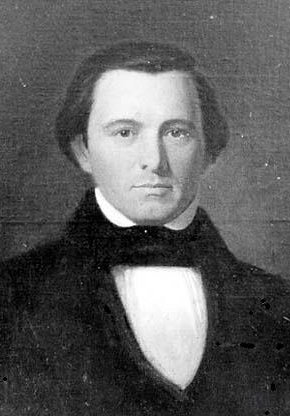
Historical · U.S. House · Virginia · District 14
George Summers
Former U.S. Representative · Virginia District 14 · 1841–1845 · Whig
George Summers represented Virginia's District 14 in the United States House of Representatives (1841–1845) for the Whig party. The page below collects sourced biographical facts, term history, committee roles, and provenance for Summers.
Bioguide ID: S001066
Key facts
- Full name
- George Summers
- State
- Virginia
- District
- District 14
- Party
- Whig
- House service
- 1841–1845
- First House term
- 1841
- Status
- Left office
- Current term ends
- —
- Born
- 1804
- Bioguide ID
- S001066
- Committee assignments
- —
- Dataset version
- 1.20260606
Biographical narrative
901 words · sourced from the Wikipedia REST extract
George Summers was a notable figure in 19th-century American politics, serving as a U.S. Representative for Virginia's 14th Congressional District. A member of the Whig Party, Summers had a career that spanned various roles, including attorney, politician, and judge. His tenure in the U.S. House of Representatives lasted from 1841 until 1845, during which he navigated the complexities of a changing political landscape in Virginia. Born on March 4, 1804, in Fairfax County, Virginia, Summers' early life and subsequent career were deeply intertwined with the region's historical developments, particularly as Virginia transitioned into the Civil War era.
Early life and career
George Summers was born to George Summers and Nancy Ann Smith Radcliffe in Fairfax County. His father had a notable political career, serving multiple terms in the Virginia House of Delegates, which likely influenced young George's future pursuits in public service. In 1814, the family relocated to Kanawha County, an area that would play a significant role in Summers' life and career.
Summers received his early education at what would later become Washington and Lee University in Lexington, Virginia, attending from 1820 to 1821. He continued his studies at Ohio University, where he graduated in 1825. Following his education, Summers was admitted to the Virginia bar in 1827, marking the beginning of his legal career. He established a law practice in Charleston, Virginia, where he quickly became a prominent figure in the local legal community.
His political career began in 1830 when he was elected to the Virginia House of Delegates, representing Kanawha County. Summers served in this capacity until 1832, when he was defeated by James H. Fry. However, he returned to the House of Delegates from 1834 to 1836, demonstrating his resilience in local politics. His early political experiences laid the groundwork for his later ambitions at the national level.
In 1833, Summers married Ammazetta Laidley in Charleston. The couple had two sons, Lewis and George Laidley Summers, who would carry on the family legacy. His family life, combined with his legal and political endeavors, positioned Summers as a well-rounded figure in his community.
House tenure
In 1840, Summers was elected as a Whig to the U.S. House of Representatives, representing Virginia's 19th Congressional District. His first term in Congress began in 1841, during a period marked by significant national debates over issues such as slavery, states' rights, and economic policy. Summers served in the Twenty-Seventh and Twenty-Eighth Congresses, during which he engaged in the legislative process amid the shifting political dynamics of the time.
Following the 1840 census, the 19th Congressional District was abolished, but Summers successfully won re-election to the newly restructured 14th Congressional District. His tenure in the House was characterized by the challenges of representing a constituency during a time of national tension. Despite his efforts, Summers faced defeat in his bid for re-election in 1844, losing to Joseph Johnson. This defeat marked the end of his congressional career, but it did not conclude his involvement in public service.
After leaving Congress, Summers continued to be active in Virginia politics. He represented Kanawha County again as a delegate in the 1850 Virginia Constitutional Convention, where he contributed to discussions on the state's governance and legal framework. In 1851, he sought the governorship of Virginia but was unsuccessful, again losing to Joseph Johnson. Despite these setbacks, Summers was appointed as a circuit court judge for the Eighteenth Judicial Circuit, where he served for six years. His judicial role allowed him to influence legal matters in the Kanawha Valley, an area that was undergoing significant changes during this period.
Legislative focus and committees
During his time in the U.S. House of Representatives, George Summers was involved in various legislative matters that reflected the concerns of his constituents and the broader national issues of the day. As a member of the Whig Party, he aligned with a political platform that emphasized economic modernization, internal improvements, and a cautious approach to the expansion of slavery. His legislative focus was likely influenced by the socio-economic conditions of Virginia and the evolving political landscape leading up to the Civil War.
Summers' participation in the Virginia Secession Convention in 1861 marked a significant chapter in his political life. Elected to represent Kanawha County, he vehemently opposed Virginia's secession from the Union, advocating for a more conciliatory approach to the growing tensions between the North and South. His efforts to call for a border state convention in Nashville or Frankfort highlighted his commitment to finding a peaceful resolution to the conflict. However, his arguments were met with strong opposition from prominent figures at the convention, reflecting the deep divisions within Virginia at the time.
Following the decision to secede, Summers resigned from the Secession Convention, indicating his disapproval of the direction in which the state was heading. This resignation underscored his dedication to the Union and his belief in the importance of maintaining national unity. After his resignation, he returned to his law practice, continuing to serve his community until his death.
George Summers passed away on September 19, 1868, in Charleston, Virginia. He was laid to rest at Spring Hill Cemetery in Charleston, leaving behind a legacy that would be honored by the establishment of Summers County in 1871, formed from portions of several neighboring counties. His contributions to Virginia's political landscape and his commitment to public service remain a part of the historical narrative of the region.
Notable legislation
Sponsored and co-sponsored legislation for George Summers is pending operator curation. The biographical narrative above carries the same provenance trail until per-bill rows are written.
Sources
- [1]https://en.wikipedia.org/wiki/George_W._SummersWikipedia · retrieved 2026-06-06
Notable quotes
Sourced quotes for George Summers are pending operator curation. Narrative-scope provenance remains attached below.
Sources
- [1]https://en.wikipedia.org/wiki/George_W._SummersWikipedia · retrieved 2026-06-06
Key positions
Curated policy positions for George Summers are pending operator review. The biographical narrative above carries the same provenance trail until per-topic positions are written.
Sources
- [1]https://en.wikipedia.org/wiki/George_W._SummersWikipedia · retrieved 2026-06-06
Terms served
- 1841–1843U.S. House · Term 1 · Whig
- 1843–1845U.S. House · Term 2 · Whig
Sources & provenance
Every attributable claim above carries a per-section [N] marker that resolves to the corresponding URL below. Each entry records the upstream provider, the canonical URL, and the timestamp at which the source was retrieved by the ingest pipeline.
Key facts
- https://bioguide.congress.gov/search/bio/S001066bioguide · retrieved 2026-06-06
- https://www.govtrack.us/congress/members/410520govtrack · retrieved 2026-06-06
Biographical narrative
- https://en.wikipedia.org/wiki/George_W._Summerswikipedia · retrieved 2026-06-06
Find your representative
Every U.S. state elects representatives by district. Browse Virginia’s delegation, the full former-representative roster, or explore the role and term length.
Related on The Candidate
- Preceded by Charles MercerEarlier holder of the Virginia District 14 House seat · Whig.Open
- Succeeded by Robert ThompsonLater holder of the Virginia District 14 House seat · Democratic.Open
- Alexander WhiteFormer U.S. Representative · Virginia District 1Open
- Archibald AtkinsonFormer U.S. Representative · Virginia District 1 · DemocraticOpen
- Beverly DouglasFormer U.S. Representative · Virginia District 1 · DemocraticOpen
- Daniel MorganFormer U.S. Representative · Virginia District 1 · FederalistOpen