
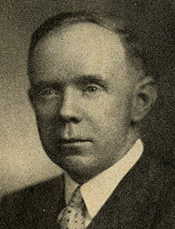
Historical · U.S. House · West Virginia · District 1
Francis Love
Former U.S. Representative · West Virginia District 1 · 1947–1949 · Republican
Francis Love represented West Virginia's District 1 in the United States House of Representatives (1947–1949) for the Republican party. The page below collects sourced biographical facts, term history, committee roles, and provenance for Love.
Bioguide ID: L000454
Key facts
- Full name
- Francis Love
- State
- West Virginia
- District
- District 1
- Party
- Republican
- House service
- 1947–1949
- First House term
- 1947
- Status
- Left office
- Current term ends
- —
- Born
- 1901
- Bioguide ID
- L000454
- Committee assignments
- —
- Dataset version
- 1.20260605
Biographical narrative
885 words · sourced from the Wikipedia REST extract
Francis Love was an American lawyer and politician who served as a Republican member of the United States House of Representatives for West Virginia's 1st congressional district from 1947 to 1949. His political career was marked by a single term in Congress during a time of significant change in American politics, particularly in the post-World War II era. Love's background in education and law, along with his involvement in local and national Republican politics, shaped his approach to governance and public service.
Early life and career
Francis Johnson Love was born on January 23, 1901, in Cadiz, Harrison County, Ohio. His early education took place in public schools, which laid the foundation for his future academic pursuits. After completing his primary education, Love attended Bethany College, located in Bethany, West Virginia. He graduated from the institution in 1924 with an A.B. degree, which provided him with a liberal arts education and prepared him for his subsequent endeavors.
Following his graduation, Love transitioned into the field of education, serving as the principal of Warwood High School in Wheeling, West Virginia, from 1926 to 1929. This role allowed him to gain valuable experience in leadership and administration, as well as a deeper understanding of the educational needs of his community. His time in education likely influenced his later political views and legislative priorities.
In pursuit of a legal career, Love enrolled in West Virginia University Law School in Morgantown, where he earned his Juris Doctor (J.D.) degree in 1932. Upon his admission to the bar the same year, he began practicing law in Wheeling, West Virginia. His legal career would serve as a foundation for his political aspirations, as it provided him with insights into the legal and legislative processes that govern the country.
House tenure
Francis Love's political career took a significant turn when he was elected as a Republican to the Eightieth Congress, serving from January 3, 1947, to January 3, 1949. His election came during a period when the political landscape in the United States was characterized by a shifting balance of power between the two major parties. Love represented a district that had a history of alternating party control every two years, which made his election both a product of the political climate and a reflection of the sentiments of his constituents.
During his time in Congress, Love was involved in the legislative process at a time when the nation was grappling with the challenges of post-war recovery and the onset of the Cold War. However, his tenure was relatively brief, as he was not successful in his bid for reelection in 1948. He lost to Democrat Robert L. Ramsay, marking the end of his congressional career after just one term. Despite his loss, Love remained active in Republican politics and continued to seek opportunities to serve in public office.
In the years following his congressional term, Love ran for his former seat in the House again in 1950 and 1952 as the Republican nominee but was unable to regain the position. The cyclical alternation of party control in his district continued, and his attempts to return to Congress were unsuccessful. This period of his political career highlights the challenges faced by politicians in maintaining electoral support in a dynamic political environment.
Legislative focus and committees
While specific details about the legislation that Francis Love supported during his time in Congress are not extensively documented, his background in law and education likely influenced his legislative priorities. As a member of the Republican Party, he would have aligned with the party's platform, which during that era often emphasized limited government, individual liberties, and economic growth.
In addition to his congressional duties, Love was actively involved in local Republican politics. He served as the Republican Chair of Ohio County, which allowed him to play a significant role in shaping the party's direction at the local level. His involvement in the party extended beyond his congressional term, as he participated as a delegate to several Republican National Conventions in 1956, 1960, 1964, and 1968. These conventions were critical events for the party, where key policies and candidates were discussed and selected.
Love's political activities also included a notable candidacy for the U.S. Senate in 1966. In this campaign, he advocated for a negotiated withdrawal from the Vietnam War, reflecting the growing public concern over the conflict during that time. However, he was defeated by incumbent Democrat Jennings Randolph, with the election results indicating a significant margin of loss. This defeat marked another chapter in Love's political journey, as he continued to engage with the issues of the day even after his congressional career had ended.
In his later years, Love returned to the practice of law, resuming his legal career in Wheeling. His professional background and experiences in public service contributed to his understanding of the legal and political landscape in West Virginia and the broader United States. He remained a resident of Wheeling until his death on October 30, 1989.
Francis Love's life and career reflect the complexities of American politics in the mid-20th century, characterized by shifting party dynamics and evolving public policy debates. His contributions as a lawyer, educator, and politician provide a glimpse into the challenges and opportunities faced by public servants during a transformative period in American history.
Notable legislation
Sponsored and co-sponsored legislation for Francis Love is pending operator curation. The biographical narrative above carries the same provenance trail until per-bill rows are written.
Sources
- [1]https://en.wikipedia.org/wiki/Francis_J._LoveWikipedia · retrieved 2026-06-05
Notable quotes
Sourced quotes for Francis Love are pending operator curation. Narrative-scope provenance remains attached below.
Sources
- [1]https://en.wikipedia.org/wiki/Francis_J._LoveWikipedia · retrieved 2026-06-05
Key positions
Curated policy positions for Francis Love are pending operator review. The biographical narrative above carries the same provenance trail until per-topic positions are written.
Sources
- [1]https://en.wikipedia.org/wiki/Francis_J._LoveWikipedia · retrieved 2026-06-05
Terms served
- 1947–1949U.S. House · Term 1 · Republican
Sources & provenance
Every attributable claim above carries a per-section [N] marker that resolves to the corresponding URL below. Each entry records the upstream provider, the canonical URL, and the timestamp at which the source was retrieved by the ingest pipeline.
Key facts
- https://bioguide.congress.gov/search/bio/L000454bioguide · retrieved 2026-06-05
- https://www.govtrack.us/congress/members/406944govtrack · retrieved 2026-06-05
Biographical narrative
- https://en.wikipedia.org/wiki/Francis_J._Lovewikipedia · retrieved 2026-06-05
Find your representative
Every U.S. state elects representatives by district. Browse West Virginia’s delegation, the full former-representative roster, or explore the role and term length.
Related on The Candidate
- Preceded by Andrew SchifflerEarlier holder of the West Virginia District 1 House seat · Republican.Open
- Succeeded by Robert MollohanLater holder of the West Virginia District 1 House seat · Democratic.Open
- Alan MollohanFormer U.S. Representative · West Virginia District 1 · DemocraticOpen
- Arch Moore Jr.Former U.S. Representative · West Virginia District 1 · RepublicanOpen
- Benjamin RosenbloomFormer U.S. Representative · West Virginia District 1 · RepublicanOpen
- Republican PartyFederal candidates and office holders on the Republican line.Open