
Historical · U.S. House · West Virginia · District 4
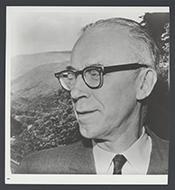
Kenneth Hechler
Former U.S. Representative · West Virginia District 4 · 1959–1977 · Democratic
Kenneth Hechler represented West Virginia's District 4 in the United States House of Representatives (1959–1977) for the Democratic party. The page below collects sourced biographical facts, term history, committee roles, and provenance for Hechler.
Bioguide ID: H000438
Key facts
- Full name
- Kenneth Hechler
- State
- West Virginia
- District
- District 4
- Party
- Democratic
- House service
- 1959–1977
- First House term
- 1959
- Status
- Left office
- Current term ends
- —
- Born
- 1914
- Bioguide ID
- H000438
- Committee assignments
- —
- Dataset version
- 1.20260605
Biographical narrative
1,034 words · sourced from the Wikipedia REST extract
Kenneth William Hechler was a prominent American politician and member of the Democratic Party who served as a U.S. Representative for West Virginia's 4th congressional district from 1959 until 1977. Known for his liberal stance on various social issues, Hechler's political career spanned nearly two decades in Congress, during which he championed civil rights, labor issues, and mine safety regulations. After leaving Congress, he continued his public service as West Virginia Secretary of State from 1985 to 2001.
Early life and career
Ken Hechler was born on September 20, 1914, in Roslyn, New York, to Charles Henry and Catherine Elizabeth Hechler, of German-American descent. He pursued higher education at Swarthmore College, where he earned a Bachelor of Arts degree. He continued his studies at Columbia University, obtaining both a Master of Arts and a PhD in history and government. Before the onset of World War II, Hechler was involved in academia, serving on the faculties of Columbia University, Princeton University, and Barnard College.
His career took a significant turn when he was drafted into the United States Army in July 1942. After completing training at the Armored Force Officer Candidate School, Hechler was assigned as a combat historian in the European Theater. His role involved documenting key events of the war, including the liberation of France, the Normandy invasion, the Battle of the Bulge, and the Allied advance into Germany. Notably, he was attached to the 9th Armored Division during the Battle of Remagen, where he played a crucial role in chronicling the capture of the Ludendorff Bridge. His experiences during the war were later encapsulated in his book, "The Bridge at Remagen," published in 1957, which was subsequently adapted into a film.
Following the war, Hechler participated in the Nuremberg Trials, interviewing several defendants, including high-ranking Nazi officials. His work during this period further solidified his commitment to documenting history and advocating for justice.
Transitioning into politics, Hechler served as a White House assistant to President Harry S. Truman from 1949 to 1953. He later took on the role of Research Director for Adlai Stevenson's presidential campaign in 1956. Afterward, he became the associate director of the American Political Science Association in Washington, D.C., before accepting a faculty position at Marshall University in Huntington, West Virginia. In 1958, Hechler ran for the U.S. House of Representatives in West Virginia's 4th congressional district, which included Huntington and several unionized mill towns along the Ohio River. He won his first election by a narrow margin, securing his position in Congress.
House tenure
Hechler's congressional career began in 1959, and he served a total of nine terms in the House of Representatives until his departure in 1977. Throughout his tenure, he established himself as a liberal Democrat, advocating for civil rights and labor issues. He was notably the only member of Congress to join Martin Luther King Jr. during the Selma to Montgomery marches in 1965, reflecting his commitment to social justice.
Hechler was a strong supporter of civil rights legislation, voting in favor of the Civil Rights Acts of 1960, 1964, and 1968, as well as the Voting Rights Act of 1965. His advocacy extended to labor rights, where he was recognized for his efforts to improve working conditions for miners. He played a pivotal role in the passage of the Coal Mine Safety and Health Act of 1969, which implemented strict safety regulations and established limits on respirable coal dust in mines.
Despite facing opposition from the state Democratic machine, Hechler was able to secure his position in the Democratic primaries with relative ease, often running unopposed in subsequent elections. His political acumen was tested in 1972 when he faced a significant primary challenge after the state’s congressional districts were redrawn following the 1970 census. The new district encompassed areas previously represented by Democrat James Kee, who had held the seat since 1965. However, Hechler leveraged his connections with labor unions to win the primary decisively and subsequently won reelection in the general election.
In 1976, Hechler sought to expand his political influence by entering the gubernatorial race. However, he faced a challenging multi-candidate primary and ultimately lost. Following this defeat, he attempted a write-in campaign for his former congressional seat but was unsuccessful against Democratic nominee Nick Rahall. Hechler continued to engage in political activities but faced further electoral challenges, including a loss in the 1978 Democratic primary.
Legislative focus and committees
During his time in Congress, Hechler was known for his legislative focus on civil rights, labor issues, and mine safety. His commitment to social justice was evident in his support for landmark civil rights legislation, which aimed to dismantle systemic racism and promote equality. Hechler's participation in the Selma to Montgomery marches underscored his dedication to the civil rights movement and highlighted his willingness to take a stand on contentious issues.
Hechler's work on labor issues was particularly significant in the context of West Virginia's economy, which relied heavily on coal mining. His advocacy for the Coal Mine Safety and Health Act of 1969 marked a critical advancement in worker safety, addressing the hazardous conditions faced by miners and establishing regulations that would protect their health and well-being.
Throughout his congressional career, Hechler served on various committees that aligned with his legislative priorities. His involvement in these committees allowed him to influence policy decisions and advocate for the interests of his constituents. He was known for his ability to navigate complex political landscapes and build coalitions to advance his legislative agenda.
After leaving Congress in 1977, Hechler continued his public service career, notably serving as West Virginia Secretary of State from 1985 to 2001. In this role, he focused on election integrity and transparency, implementing measures to enhance the electoral process in the state. His tenure as Secretary of State was marked by significant reforms, including the prosecution of corrupt officials and the promotion of ethical standards in government.
Hechler's legacy is characterized by his unwavering commitment to civil rights, labor advocacy, and public service, reflecting the values he championed throughout his life. His contributions to American politics and his dedication to improving the lives of his constituents have left a lasting impact on West Virginia and beyond.
Notable legislation
Sponsored and co-sponsored legislation for Kenneth Hechler is pending operator curation. The biographical narrative above carries the same provenance trail until per-bill rows are written.
Sources
- [1]https://en.wikipedia.org/wiki/Ken_HechlerWikipedia · retrieved 2026-06-05
Notable quotes
Sourced quotes for Kenneth Hechler are pending operator curation. Narrative-scope provenance remains attached below.
Sources
- [1]https://en.wikipedia.org/wiki/Ken_HechlerWikipedia · retrieved 2026-06-05
Key positions
Curated policy positions for Kenneth Hechler are pending operator review. The biographical narrative above carries the same provenance trail until per-topic positions are written.
Sources
- [1]https://en.wikipedia.org/wiki/Ken_HechlerWikipedia · retrieved 2026-06-05
Terms served
- 1959–1961U.S. House · Term 1 · Democratic
- 1961–1963U.S. House · Term 2 · Democratic
- 1963–1965U.S. House · Term 3 · Democratic
- 1965–1967U.S. House · Term 4 · Democratic
- 1967–1969U.S. House · Term 5 · Democratic
- 1969–1971U.S. House · Term 6 · Democratic
- 1971–1973U.S. House · Term 7 · Democratic
- 1973–1975U.S. House · Term 8 · Democratic
- 1975–1977U.S. House · Term 9 · Democratic
Sources & provenance
Every attributable claim above carries a per-section [N] marker that resolves to the corresponding URL below. Each entry records the upstream provider, the canonical URL, and the timestamp at which the source was retrieved by the ingest pipeline.
Key facts
- https://bioguide.congress.gov/search/bio/H000438bioguide · retrieved 2026-06-05
- https://www.govtrack.us/congress/members/405304govtrack · retrieved 2026-06-05
Biographical narrative
- https://en.wikipedia.org/wiki/Ken_Hechlerwikipedia · retrieved 2026-06-05
Find your representative
Every U.S. state elects representatives by district. Browse West Virginia’s delegation, the full former-representative roster, or explore the role and term length.
Related on The Candidate
- Preceded by William NealEarlier holder of the West Virginia District 4 House seat · Republican.Open
- Alan MollohanFormer U.S. Representative · West Virginia District 1 · DemocraticOpen
- Andrew SchifflerFormer U.S. Representative · West Virginia District 1 · RepublicanOpen
- Arch Moore Jr.Former U.S. Representative · West Virginia District 1 · RepublicanOpen
- Benjamin RosenbloomFormer U.S. Representative · West Virginia District 1 · RepublicanOpen
- Democratic PartyFederal candidates and office holders on the Democratic line.Open