
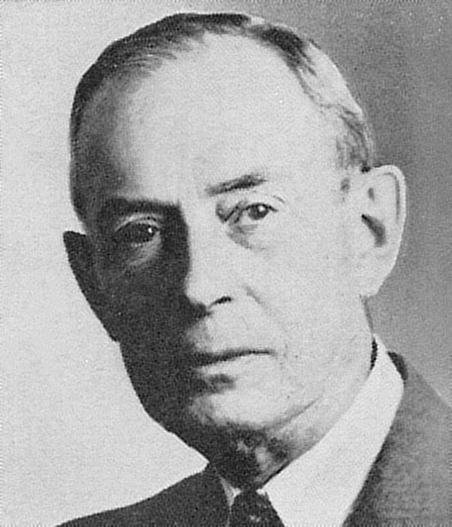
Historical · U.S. House · West Virginia · District 4
William Neal
Former U.S. Representative · West Virginia District 4 · 1953–1959 · Republican
William Neal represented West Virginia's District 4 in the United States House of Representatives (1953–1959) for the Republican party. The page below collects sourced biographical facts, term history, committee roles, and provenance for Neal.
Bioguide ID: N000017
Key facts
- Full name
- William Neal
- State
- West Virginia
- District
- District 4
- Party
- Republican
- House service
- 1953–1959
- First House term
- 1953
- Status
- Left office
- Current term ends
- —
- Born
- 1875
- Bioguide ID
- N000017
- Committee assignments
- —
- Dataset version
- 1.20260605
Biographical narrative
970 words · sourced from the Wikipedia REST extract
William Neal was a physician and politician who served as a U.S. Representative for West Virginia's 4th congressional district. A member of the Republican Party, he held office during the 1950s, with his congressional career spanning two terms. Neal's background in medicine and his involvement in local governance shaped his approach to public service, reflecting a commitment to both health and community welfare.
Early life and career
William Elmer Neal was born on October 14, 1875, on a farm near Proctorville, Ohio. His early education took place in public schools, culminating in his graduation from Proctorville High School in 1894. Following his high school education, Neal spent six years teaching in schools across Ohio and Kentucky, which provided him with valuable experience in education and community engagement.
In pursuit of higher education, Neal attended National Normal University in Lebanon, Ohio, where he graduated in 1900. He then went on to earn a medical degree from the University of Cincinnati in 1906. After completing his medical training, Neal began his practice in Huntington, West Virginia, in 1907, where he established himself as a general practitioner. His medical career not only contributed to his community but also laid the groundwork for his later political endeavors.
Neal's involvement in public service extended beyond his medical practice. He served as the mayor of Huntington from 1925 to 1928, a role that allowed him to influence local governance and public policy. His commitment to community service continued as he became a member of the Huntington Park Board from 1931 to 1952, and he also served on the West Virginia Public Health Council from 1936 to 1940. These positions demonstrated his dedication to improving public health and recreational facilities in his community.
In the early 1950s, Neal transitioned into a political career at the state level, being elected to the West Virginia House of Delegates in 1951 and 1952. His experience in local governance and public health positioned him as a viable candidate for federal office.
House tenure
William Neal's congressional career began when he was elected as a Republican to the Eighty-third Congress, serving from January 3, 1953, to January 3, 1955. He won this election by defeating the incumbent Congressman Maurice G. Burnside, who had previously held the seat and was a former professor at Marshall University. Neal's victory marked a significant shift in representation for West Virginia's 4th congressional district.
During his first term in the House, Neal engaged in various legislative activities, although specific details of his initiatives and contributions during this period are not extensively documented. His tenure was characterized by a focus on issues relevant to his constituents and the broader national landscape.
Following his initial term, Neal faced a rematch against Burnside in the 1954 election. However, he was defeated, which marked a temporary setback in his political career. Despite this loss, Neal remained active in public service and was appointed as a medical consultant to the Foreign Operations Administration in Afghanistan for a brief period in 1955.
Neal's political aspirations were not over, as he successfully challenged Burnside again in 1956, winning a seat in the Eighty-fifth Congress, where he served from January 3, 1957, to January 3, 1959. This second term allowed him to further influence legislation and represent the interests of his constituents in West Virginia.
Throughout his time in Congress, Neal's political actions reflected the complexities of the era, particularly regarding civil rights. Notably, he did not sign the 1956 Southern Manifesto, which opposed desegregation, and he voted in favor of the Civil Rights Act of 1957. These decisions indicated a willingness to engage with the pressing social issues of the time, although the specifics of his legislative priorities and initiatives during his terms are not detailed in available records.
Neal's congressional career came to an end after he was defeated for reelection in 1958 by Ken Hechler, another candidate associated with Marshall University. This election marked the conclusion of his time in the House of Representatives, and it would be several decades before a Republican would reclaim the seat in Huntington, which was later designated as the 3rd District.
Legislative focus and committees
During his time in the U.S. House of Representatives, William Neal's legislative focus was shaped by his background in medicine and public service. While specific details regarding the committees he served on are not provided, it can be inferred that his experience as a physician and mayor would have influenced his interests in health care, public health policy, and community welfare.
Neal's engagement with health-related issues was evident in his earlier roles, including his position on the West Virginia Public Health Council. His medical expertise likely informed his perspective on legislation related to health care access, public health initiatives, and the welfare of his constituents.
In addition to health care, Neal's tenure in Congress coincided with significant national discussions surrounding civil rights and social justice. His votes in favor of the Civil Rights Act of 1957 suggest that he was attuned to the evolving political landscape and the need for legislative action to address civil rights issues. This alignment with civil rights initiatives may have reflected broader shifts within the Republican Party during the 1950s.
Neal's legislative contributions, while not extensively documented, were likely influenced by his commitment to improving the lives of his constituents through effective governance and public health advocacy. His dual background in medicine and local governance provided him with a unique perspective on the challenges facing his community and the nation during a transformative period in American history.
William Neal passed away on November 12, 1959, in Huntington, West Virginia. He was interred in Spring Hill Cemetery, leaving behind a legacy as a physician and public servant who contributed to both his local community and the national legislative process during his time in office.
Notable legislation
Sponsored and co-sponsored legislation for William Neal is pending operator curation. The biographical narrative above carries the same provenance trail until per-bill rows are written.
Sources
- [1]https://en.wikipedia.org/wiki/Will_E._NealWikipedia · retrieved 2026-06-05
Notable quotes
Sourced quotes for William Neal are pending operator curation. Narrative-scope provenance remains attached below.
Sources
- [1]https://en.wikipedia.org/wiki/Will_E._NealWikipedia · retrieved 2026-06-05
Key positions
Curated policy positions for William Neal are pending operator review. The biographical narrative above carries the same provenance trail until per-topic positions are written.
Sources
- [1]https://en.wikipedia.org/wiki/Will_E._NealWikipedia · retrieved 2026-06-05
Terms served
- 1953–1955U.S. House · Term 1 · Republican
- 1957–1959U.S. House · Term 2 · Republican
Sources & provenance
Every attributable claim above carries a per-section [N] marker that resolves to the corresponding URL below. Each entry records the upstream provider, the canonical URL, and the timestamp at which the source was retrieved by the ingest pipeline.
Key facts
- https://bioguide.congress.gov/search/bio/N000017bioguide · retrieved 2026-06-05
- https://www.govtrack.us/congress/members/408110govtrack · retrieved 2026-06-05
Biographical narrative
- https://en.wikipedia.org/wiki/Will_E._Nealwikipedia · retrieved 2026-06-05
Find your representative
Every U.S. state elects representatives by district. Browse West Virginia’s delegation, the full former-representative roster, or explore the role and term length.
Related on The Candidate
- Preceded by Hubert EllisEarlier holder of the West Virginia District 4 House seat · Republican.Open
- Succeeded by Kenneth HechlerLater holder of the West Virginia District 4 House seat · Democratic.Open
- Alan MollohanFormer U.S. Representative · West Virginia District 1 · DemocraticOpen
- Andrew SchifflerFormer U.S. Representative · West Virginia District 1 · RepublicanOpen
- Arch Moore Jr.Former U.S. Representative · West Virginia District 1 · RepublicanOpen
- Benjamin RosenbloomFormer U.S. Representative · West Virginia District 1 · RepublicanOpen