
Historical · U.S. House · West Virginia · District 4
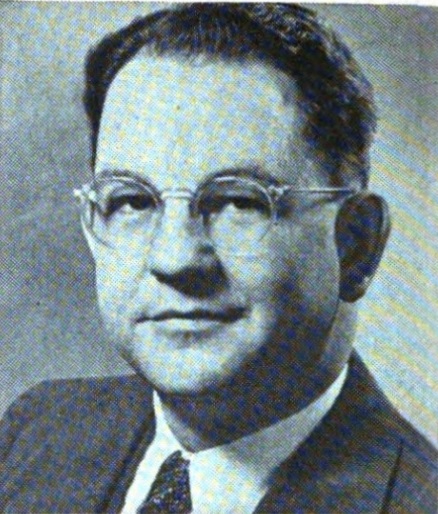
Maurice Burnside
Former U.S. Representative · West Virginia District 4 · 1949–1957 · Democratic
Maurice Burnside represented West Virginia's District 4 in the United States House of Representatives (1949–1957) for the Democratic party. The page below collects sourced biographical facts, term history, committee roles, and provenance for Burnside.
Bioguide ID: B001131
Key facts
- Full name
- Maurice Burnside
- State
- West Virginia
- District
- District 4
- Party
- Democratic
- House service
- 1949–1957
- First House term
- 1949
- Status
- Left office
- Current term ends
- —
- Born
- 1902
- Bioguide ID
- B001131
- Committee assignments
- —
- Dataset version
- 1.20260605
Biographical narrative
807 words · sourced from the Wikipedia REST extract
Maurice Burnside was a U.S. Representative from West Virginia, serving the state's 4th congressional district as a member of the Democratic Party. His political career spanned three terms in the House of Representatives from 1949 to 1957. In addition to his legislative work, Burnside had a diverse background as an educator, a business executive, and a public advocate. He was also involved in various educational and governmental roles throughout his life, reflecting a commitment to public service and community engagement.
Early life and career
Maurice Gwinn Burnside was born on August 23, 1902, near Columbia in Richland County, South Carolina. His early education took place in the public schools of South Carolina, where he laid the foundation for his future academic pursuits. Burnside attended The Citadel, a military college in Charleston, South Carolina, from 1920 to 1922. He later graduated from Furman University in Greenville, South Carolina, in 1926. His academic journey continued as he earned a Master of Arts degree from the University of Texas at Austin in 1928, followed by a Doctorate in Philosophy from Duke University in Durham, North Carolina, in 1937.
Burnside's professional career began in education. He served as an instructor at Greenville High School in South Carolina from 1931 to 1932. His academic involvement expanded as he joined the staff of the Duke University Library from 1933 to 1935. Subsequently, he took on a teaching role at the Alabama Polytechnic Institute, now known as Auburn University, from 1936 to 1937. In 1937, Burnside moved to Huntington, West Virginia, where he became a professor at Marshall University, a position he held until 1948. His academic career was complemented by his involvement in public service; he served on the Parole and Probation Examination Board of West Virginia from 1939 to 1941 and chaired the Workers Education program for the state from 1942 to 1945. These roles demonstrated his commitment to education and community welfare.
House tenure
Burnside's political career began in earnest when he was elected to the U.S. House of Representatives as a Democrat. His first term commenced on January 3, 1949, as he was elected to the Eighty-first Congress. He successfully secured re-election for a second term in the Eighty-second Congress, which lasted until January 3, 1953. However, he faced challenges in his political career; he was an unsuccessful candidate for re-election to the Eighty-third Congress in 1952.
After a brief hiatus from Congress, Burnside returned to the House after being elected to the Eighty-fourth Congress, serving from January 3, 1955, until January 3, 1957. His tenure in Congress was marked by various legislative activities and participation in discussions relevant to his constituents in West Virginia. Despite his efforts, he was unable to secure a position in the Eighty-fifth Congress, as he was again an unsuccessful candidate in the 1956 elections.
Throughout his congressional career, Burnside was involved in the legislative process, contributing to debates and discussions that shaped policy and governance during the post-World War II era. His time in office coincided with significant developments in American society, including civil rights movements and changes in national security policy.
Legislative focus and committees
During his time in the House of Representatives, Maurice Burnside focused on a range of issues pertinent to his constituents and the broader national landscape. While specific details about the bills he sponsored or supported are not documented, his legislative priorities likely reflected the needs and interests of the people in West Virginia, particularly in the context of post-war recovery and economic development.
Burnside's political stance was characterized by his decision not to sign the 1956 Southern Manifesto, a document that opposed the Supreme Court's decision in Brown v. Board of Education, which mandated the desegregation of public schools. This choice indicated a nuanced position on civil rights issues during a time of significant social change in the United States.
After his congressional service, Burnside continued to engage in public service and advocacy. He held a position as branch chief at the National Security Agency in Washington, D.C., in 1953, which underscored his involvement in national security matters. Additionally, he served as a legislative liaison to the Department of Defense from 1961 to 1968, further demonstrating his commitment to public service and governance.
Beyond his professional endeavors, Burnside was known for his personal interests, including gardening and playing duplicate bridge, which reflected a well-rounded character engaged in both public and private pursuits. He remained active in political circles, serving as a delegate to the 1960 Democratic National Convention.
Maurice Burnside passed away on February 2, 1991, in Wilson, North Carolina. His remains were cremated, and he has a gravestone located in Pilot Mountain, North Carolina. His life and career reflect a dedication to education, public service, and the political process, contributing to the fabric of American governance during a transformative period in the nation's history.
Notable legislation
Sponsored and co-sponsored legislation for Maurice Burnside is pending operator curation. The biographical narrative above carries the same provenance trail until per-bill rows are written.
Sources
- [1]https://en.wikipedia.org/wiki/Maurice_G._BurnsideWikipedia · retrieved 2026-06-05
Notable quotes
Sourced quotes for Maurice Burnside are pending operator curation. Narrative-scope provenance remains attached below.
Sources
- [1]https://en.wikipedia.org/wiki/Maurice_G._BurnsideWikipedia · retrieved 2026-06-05
Key positions
Curated policy positions for Maurice Burnside are pending operator review. The biographical narrative above carries the same provenance trail until per-topic positions are written.
Sources
- [1]https://en.wikipedia.org/wiki/Maurice_G._BurnsideWikipedia · retrieved 2026-06-05
Terms served
- 1949–1951U.S. House · Term 1 · Democratic
- 1951–1953U.S. House · Term 2 · Democratic
- 1955–1957U.S. House · Term 3 · Democratic
Sources & provenance
Every attributable claim above carries a per-section [N] marker that resolves to the corresponding URL below. Each entry records the upstream provider, the canonical URL, and the timestamp at which the source was retrieved by the ingest pipeline.
Key facts
- https://bioguide.congress.gov/search/bio/B001131bioguide · retrieved 2026-06-05
- https://www.govtrack.us/congress/members/402075govtrack · retrieved 2026-06-05
Biographical narrative
- https://en.wikipedia.org/wiki/Maurice_G._Burnsidewikipedia · retrieved 2026-06-05
Find your representative
Every U.S. state elects representatives by district. Browse West Virginia’s delegation, the full former-representative roster, or explore the role and term length.
Related on The Candidate
- Preceded by Hubert EllisEarlier holder of the West Virginia District 4 House seat · Republican.Open
- Succeeded by Kenneth HechlerLater holder of the West Virginia District 4 House seat · Democratic.Open
- Alan MollohanFormer U.S. Representative · West Virginia District 1 · DemocraticOpen
- Andrew SchifflerFormer U.S. Representative · West Virginia District 1 · RepublicanOpen
- Arch Moore Jr.Former U.S. Representative · West Virginia District 1 · RepublicanOpen
- Benjamin RosenbloomFormer U.S. Representative · West Virginia District 1 · RepublicanOpen