
Historical · U.S. House · West Virginia · District 6
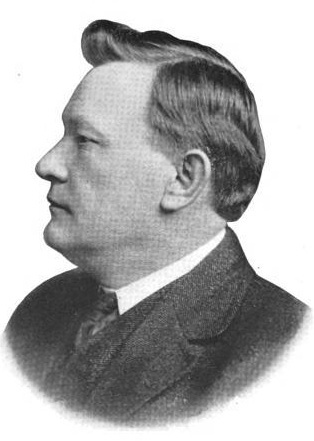
Edward England
Former U.S. Representative · West Virginia District 6 · 1927–1929 · Republican
Edward England represented West Virginia's District 6 in the United States House of Representatives (1927–1929) for the Republican party. The page below collects sourced biographical facts, term history, committee roles, and provenance for England.
Bioguide ID: E000180
Key facts
- Full name
- Edward England
- State
- West Virginia
- District
- District 6
- Party
- Republican
- House service
- 1927–1929
- First House term
- 1927
- Status
- Left office
- Current term ends
- —
- Born
- 1869
- Bioguide ID
- E000180
- Committee assignments
- —
- Dataset version
- 1.20260606
Biographical narrative
821 words · sourced from the Wikipedia REST extract
Edward England was a lawyer and politician from West Virginia who served as a U.S. Representative for the state's 6th congressional district. A member of the Republican Party, he held office in the House of Representatives from 1927 until 1929. Prior to his congressional career, England had significant involvement in state politics, including roles as a state senator and Attorney General of West Virginia. His legal career began in the late 19th century, and he continued to practice law after his time in Congress until his death in 1934.
Early life and career
Edward England was born on September 29, 1869, in Gay, West Virginia, to Mary Welch and Andrew J.S. England. He received his early education in local schools, which laid the foundation for his future academic pursuits. In 1892, he graduated from Concord Normal School in Athens, West Virginia. Following his graduation, England worked as a teacher for several years, gaining valuable experience in education and community engagement.
In pursuit of a legal career, England attended Southern Normal University in Huntingdon, Tennessee, where he studied law. He graduated in 1898 and was subsequently admitted to the bar the same year. England began his legal practice in Oceana, West Virginia, where he established himself as a competent attorney. In 1901, he relocated to Logan, West Virginia, the county seat of Logan County, where he continued to build his legal career.
England's political career began to take shape when he was elected mayor of Logan in 1903. His tenure as mayor allowed him to gain experience in governance and public service, which would later serve him well in higher political offices. In 1908, he was elected to the West Virginia Senate, where he served until 1916. During his time in the Senate, he held the position of Senate President in 1915. This role was significant, as the Senate President is next in line for the governorship in West Virginia, a state that does not have a Lieutenant Governor. England's leadership was recognized when he presided over the first meeting of all the lieutenant governors in the United States in 1915, which took place in Rhea Springs, Tennessee.
In 1916, England's political career advanced further when he won a statewide election to become the Attorney General of West Virginia. He served in this capacity from 1917 to 1925, during which time he was involved in various legal and administrative matters affecting the state. His leadership in the legal community was acknowledged when he was elected president of the Attorney Generals' Association of the United States in 1923. Despite his accomplishments, England faced challenges in his political aspirations, including an unsuccessful bid for the Republican nomination for Governor in 1924.
House tenure
Edward England's congressional career began when he was elected to the Seventieth Congress, representing West Virginia's 6th congressional district. His term in the U.S. House of Representatives commenced on March 4, 1927, and concluded on March 3, 1929. During his time in Congress, England participated in the legislative process and contributed to discussions and decisions that shaped national policy. However, his tenure was relatively brief, as he was not successful in his bid for reelection in 1928.
England's time in Congress occurred during a period of significant change in the United States, marked by economic challenges and shifting political dynamics. While specific details regarding his legislative activities and voting record are not available, his prior experience as a state senator and Attorney General likely informed his approach to federal issues. After leaving Congress, England returned to his legal practice in Charleston, West Virginia, where he continued to engage in the legal profession until his passing.
Legislative focus and committees
While specific details about Edward England's legislative focus and committee assignments during his time in the House of Representatives are not documented, it can be inferred that his extensive background in law and state politics influenced his contributions. Given his previous roles, it is likely that he had interests in legal and regulatory matters, particularly those affecting West Virginia and the broader Appalachian region.
As a member of the Republican Party during the late 1920s, England would have been part of a political landscape that was navigating the complexities of post-World War I America. This period was characterized by economic prosperity followed by the onset of the Great Depression, which began in 1929, shortly after his congressional term ended. The challenges of this era would have impacted the legislative priorities of all members of Congress, including England.
After his congressional service, England returned to his legal practice, indicating a continued commitment to the law and public service. His career spanned several decades, during which he held various significant positions in West Virginia politics. Edward England passed away on September 9, 1934, in Cleveland, Ohio. He was interred at Sunset Memorial Park in Charleston, West Virginia, leaving behind a legacy of public service and legal advocacy in his home state.
Notable legislation
Sponsored and co-sponsored legislation for Edward England is pending operator curation. The biographical narrative above carries the same provenance trail until per-bill rows are written.
Sources
- [1]https://en.wikipedia.org/wiki/Edward_T._EnglandWikipedia · retrieved 2026-06-06
Notable quotes
Sourced quotes for Edward England are pending operator curation. Narrative-scope provenance remains attached below.
Sources
- [1]https://en.wikipedia.org/wiki/Edward_T._EnglandWikipedia · retrieved 2026-06-06
Key positions
Curated policy positions for Edward England are pending operator review. The biographical narrative above carries the same provenance trail until per-topic positions are written.
Sources
- [1]https://en.wikipedia.org/wiki/Edward_T._EnglandWikipedia · retrieved 2026-06-06
Terms served
- 1927–1929U.S. House · Term 1 · Republican
Sources & provenance
Every attributable claim above carries a per-section [N] marker that resolves to the corresponding URL below. Each entry records the upstream provider, the canonical URL, and the timestamp at which the source was retrieved by the ingest pipeline.
Key facts
- https://bioguide.congress.gov/search/bio/E000180bioguide · retrieved 2026-06-06
- https://www.govtrack.us/congress/members/403869govtrack · retrieved 2026-06-06
Biographical narrative
- https://en.wikipedia.org/wiki/Edward_T._Englandwikipedia · retrieved 2026-06-06
Find your representative
Every U.S. state elects representatives by district. Browse West Virginia’s delegation, the full former-representative roster, or explore the role and term length.
Related on The Candidate
- Preceded by James TaylorEarlier holder of the West Virginia District 6 House seat · Democratic.Open
- Succeeded by Joseph SmithLater holder of the West Virginia District 6 House seat · Democratic.Open
- Alan MollohanFormer U.S. Representative · West Virginia District 1 · DemocraticOpen
- Andrew SchifflerFormer U.S. Representative · West Virginia District 1 · RepublicanOpen
- Arch Moore Jr.Former U.S. Representative · West Virginia District 1 · RepublicanOpen
- Benjamin RosenbloomFormer U.S. Representative · West Virginia District 1 · RepublicanOpen