
Historical · U.S. House · Wyoming · At-Large
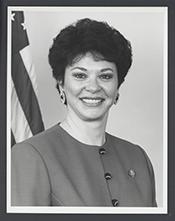
Barbara Cubin
Former U.S. Representative · Wyoming At-Large · 1995–2009 · Republican
Barbara Cubin represented Wyoming's At-Large in the United States House of Representatives (1995–2009) for the Republican party. The page below collects sourced biographical facts, term history, committee roles, and provenance for Cubin.
Bioguide ID: C000962
Key facts
- Full name
- Barbara Cubin
- State
- Wyoming
- District
- At-Large
- Party
- Republican
- House service
- 1995–2009
- First House term
- 1995
- Status
- Left office
- Current term ends
- —
- Born
- 1946
- Bioguide ID
- C000962
- Committee assignments
- —
- Dataset version
- 1.20260605
Biographical narrative
928 words · sourced from the Wikipedia REST extract
Barbara Cubin is a former U.S. Representative who served Wyoming's at-large congressional district as a member of the Republican Party. She made history as the first woman elected to Congress from Wyoming, holding office from 1995 until her term ended in 2009. During her time in the House of Representatives, Cubin was known for her conservative voting record and her involvement in various legislative committees, particularly those focused on energy and resources.
Early life and career
Barbara Lynn Cubin was born on November 30, 1946, in Salinas, California. She spent much of her childhood in Casper, Wyoming, where she completed her high school education. Following her graduation, Cubin pursued higher education at Creighton University in Omaha, Nebraska, where she earned a Bachelor of Science degree in chemistry. Her early career included a variety of roles that showcased her commitment to education and public service. She worked as a substitute teacher in science and math and later took on a full-time position as a social worker, focusing on senior citizens and disabled adults.
Cubin's professional journey also included employment with the Wyoming Labor Department and the Ironworkers' Union, where she was involved in training programs aimed at helping minorities and Vietnam War veterans transition into careers as iron workers. In 1974, she joined the Wyoming Machinery Company as a chemist. The following year, she began managing the office of her husband, Fritz Cubin, who was a physician. Their marriage in 1975 resulted in two children.
Cubin's personal life was marked by challenges, particularly concerning her husband's health. Fritz Cubin faced serious health issues that persisted for a decade until his passing in 2010. Barbara Cubin herself encountered health problems, including surgeries related to her gall bladder and a mild heart attack in 2005, which required surgical intervention to address a blocked artery.
Cubin's political career began in earnest in November 1986 when she was elected to the Wyoming House of Representatives, representing Natrona County. She served in this capacity until 1993, during which time she sponsored significant legislation, including an initiative that proposed life without parole as a sentencing option. In November 1992, she transitioned to the Wyoming Senate, representing a portion of Casper in the 29th district until she was elected to the U.S. House of Representatives in 1995.
House tenure
Cubin's entry into the U.S. House of Representatives followed her victory in the 1994 election, where she sought to succeed Republican Craig Thomas, who was running for the U.S. Senate. In a competitive primary, Cubin emerged victorious against eight other Republican candidates. She subsequently won the general election against Bob Schuster, a prominent attorney, securing approximately 53% of the vote. This election was notable for being one of the most expensive campaigns in Wyoming's history and marked Cubin as the first woman to win a federal office in the state.
Throughout her tenure in the House, Cubin was re-elected multiple times. In 1996, she garnered 55% of the vote, and her subsequent elections generally saw her winning by larger margins, although the 2006 election proved to be more contentious, with her receiving 48% of the vote against her Democratic opponent, Gary Trauner, who also received 48%. This close race highlighted the shifting political landscape in Wyoming.
Cubin's congressional career spanned seven terms, concluding with her departure from office on January 3, 2009. During her time in the House, she held various leadership positions, including Deputy Majority Whip and Conference Secretary, and was a member of the Steering Committee.
Legislative focus and committees
During her time in Congress, Barbara Cubin was known for her conservative legislative agenda. Her voting record was highly rated by the American Conservative Union, which gave her a score of 96 out of 100 for her 2005 voting record. A staunch opponent of abortion, Cubin consistently supported measures aimed at restricting access to abortion services and opposed funding for family planning organizations that provided such services.
Cubin's legislative focus included issues pertinent to Wyoming, particularly those related to land use and mining. She co-founded the Congressional Mining Caucus and introduced legislation that allowed mining companies operating on federal lands to pay taxes in minerals rather than cash. This initiative was significant given that a substantial portion of Wyoming's land is federally owned, including national parks like Yellowstone and Grand Teton.
In the realm of environmental policy, Cubin expressed skepticism regarding the extent of human contribution to global warming, citing ongoing debates within the scientific community. Her environmental voting record reflected a conservative stance, as evidenced by her low ratings from organizations such as the League of Conservation Voters.
Cubin served on several committees during her congressional career. Initially, she was a member of the House Science Committee, but in her later terms, she focused on the House Resources Committee and the House Energy and Commerce Committee. Following the Democratic takeover of Congress in 2006, she served solely on the House Energy and Commerce Committee, participating in both the Health and Telecommunications Subcommittees.
Cubin's political involvement extended to significant national issues, including her support for the impeachment of President Bill Clinton. She was one of the early co-sponsors of a resolution to initiate an impeachment inquiry against Clinton in 1997, a move that preceded the more extensive impeachment proceedings that occurred in 1998.
Throughout her congressional career, Barbara Cubin's contributions and positions reflected her commitment to her constituents in Wyoming and her alignment with conservative values. Her tenure remains a notable chapter in the state's political history, particularly as she broke barriers as the first woman elected to federal office from Wyoming.
Notable legislation
Sponsored and co-sponsored legislation for Barbara Cubin is pending operator curation. The biographical narrative above carries the same provenance trail until per-bill rows are written.
Sources
- [1]https://en.wikipedia.org/wiki/Barbara_CubinWikipedia · retrieved 2026-06-05
Notable quotes
Sourced quotes for Barbara Cubin are pending operator curation. Narrative-scope provenance remains attached below.
Sources
- [1]https://en.wikipedia.org/wiki/Barbara_CubinWikipedia · retrieved 2026-06-05
Key positions
Curated policy positions for Barbara Cubin are pending operator review. The biographical narrative above carries the same provenance trail until per-topic positions are written.
Sources
- [1]https://en.wikipedia.org/wiki/Barbara_CubinWikipedia · retrieved 2026-06-05
Terms served
- 1995–1997U.S. House · Term 1 · Republican
- 1997–1999U.S. House · Term 2 · Republican
- 1999–2001U.S. House · Term 3 · Republican
- 2001–2003U.S. House · Term 4 · Republican
- 2003–2005U.S. House · Term 5 · Republican
- 2005–2007U.S. House · Term 6 · Republican
- 2007–2009U.S. House · Term 7 · Republican
Sources & provenance
Every attributable claim above carries a per-section [N] marker that resolves to the corresponding URL below. Each entry records the upstream provider, the canonical URL, and the timestamp at which the source was retrieved by the ingest pipeline.
Key facts
- https://bioguide.congress.gov/search/bio/C000962bioguide · retrieved 2026-06-05
- http://www.house.gov/cubinhouse.gov · retrieved 2026-06-05
Biographical narrative
- https://en.wikipedia.org/wiki/Barbara_Cubinwikipedia · retrieved 2026-06-05
Find your representative
Every U.S. state elects representatives by district. Browse Wyoming’s delegation, the full former-representative roster, or explore the role and term length.
Related on The Candidate
- Preceded by Richard CheneyEarlier holder of the Wyoming At-Large House seat · Republican.Open
- Succeeded by Liz CheneyLater holder of the Wyoming At-Large House seat · Republican.Open
- Charles WinterFormer U.S. Representative · Wyoming At-Large · RepublicanOpen
- Edwin ThomsonFormer U.S. Representative · Wyoming At-Large · RepublicanOpen
- Frank HortonFormer U.S. Representative · Wyoming At-Large · RepublicanOpen
- Franklin MondellFormer U.S. Representative · Wyoming At-Large · RepublicanOpen