
Historical · U.S. House · Wyoming · At-Large
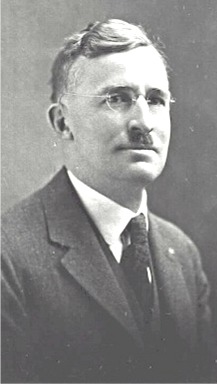
Frank Horton
Former U.S. Representative · Wyoming At-Large · 1939–1941 · Republican
Frank Horton represented Wyoming's At-Large in the United States House of Representatives (1939–1941) for the Republican party. The page below collects sourced biographical facts, term history, committee roles, and provenance for Horton.
Bioguide ID: H000798
Key facts
- Full name
- Frank Horton
- State
- Wyoming
- District
- At-Large
- Party
- Republican
- House service
- 1939–1941
- First House term
- 1939
- Status
- Left office
- Current term ends
- —
- Born
- 1882
- Bioguide ID
- H000798
- Committee assignments
- —
- Dataset version
- 1.20260605
Biographical narrative
897 words · sourced from the Wikipedia REST extract
Frank Horton was a notable figure in American politics, serving as a U.S. Representative for Wyoming during the late 1930s. A member of the Republican Party, Horton’s political career was marked by his commitment to public service and his involvement in state and national politics. His tenure in the U.S. House of Representatives was part of a broader career that included significant roles in state government and contributions to the Republican Party at both the state and national levels.
Early life and career
Frank Ogilvie Horton was born on October 18, 1882, in Muscatine, Iowa. He received his early education in the public school system before advancing his studies at Morgan Park Military Academy in Illinois, where he graduated in 1899. Following this, Horton attended the University of Chicago, earning his degree in 1903. His educational background provided him with a foundation that would later support his political ambitions.
In 1898, during the Spanish–American War, Horton served as a private in Company C of the Fiftieth Iowa Regiment. This military service not only contributed to his personal development but also instilled in him a sense of duty and commitment to his country. After the war, he relocated to Saddlestring, Wyoming, in 1905, where he engaged in livestock raising. This experience in agriculture and ranching would later inform his perspectives on rural issues and policies during his political career.
Horton’s entry into politics began at the state level. He served in the Wyoming House of Representatives from 1921 to 1923, where he began to establish himself as a leader in his community. Following his tenure in the House, he was elected to the Wyoming State Senate, serving from 1923 until 1931. During his time in the Senate, he held the position of president in 1931, further solidifying his influence within the state’s political landscape. His experience in state government provided him with valuable insights into legislative processes and the needs of his constituents.
In addition to his legislative roles, Horton was active in the Republican Party, serving as a delegate to the Republican National Conventions in both 1928 and 1936. His involvement in these conventions highlighted his commitment to the party and its principles. Furthermore, he was appointed as a Republican National committeeman from 1937 until 1948, a role that allowed him to play a significant part in shaping party policies and strategies at the national level.
House tenure
Horton’s congressional career began when he was elected as a Republican to the Seventy-sixth Congress, representing Wyoming's at-large congressional district. His term in the U.S. House of Representatives commenced on January 3, 1939, and concluded on January 3, 1941. During this period, Horton participated in the legislative process at a time when the nation was navigating the complexities of the Great Depression and the looming threat of global conflict.
As a member of the House, Horton was involved in various discussions and decisions that impacted both his constituents in Wyoming and the broader American public. His background in agriculture and ranching likely influenced his legislative priorities, as rural issues were paramount in Wyoming and other similar states. Although specific details of the legislation he supported or opposed are not documented, his role as a representative would have required him to engage with a range of issues pertinent to his district.
Despite his efforts, Horton was not successful in his bid for re-election to the Seventy-seventh Congress in 1940. After leaving office, he returned to Saddlestring, where he resumed his previous pursuits as the owner and operator of the HF Bar Ranch. This transition from public service back to private life reflects a common trajectory for many politicians who seek to balance their public duties with personal and professional commitments.
Legislative focus and committees
While specific details regarding the committees on which Horton served during his time in the House are not provided, it is reasonable to infer that his background in agriculture and his experience in state government would have guided his legislative focus. Representatives often align their priorities with the needs and interests of their constituents, and Horton’s rural roots likely influenced his approach to policy-making.
During his time in Congress, Horton would have been part of a larger legislative body that was addressing critical issues of the day, including economic recovery efforts, social welfare programs, and national defense, as the world was on the brink of World War II. The political climate of the late 1930s was characterized by significant changes, and Horton’s contributions to the discussions and decisions made during this time would have been shaped by his experiences and the challenges facing his constituents.
Horton’s involvement in the Republican Party, both at the state and national levels, also suggests that he was engaged in broader party strategies and initiatives. His role as a national committeeman would have provided him with insights into the party’s direction and priorities, which could have influenced his legislative actions while in office.
After his congressional career, Horton continued to be active in the Republican Party and remained engaged in community affairs until his passing. He died on August 17, 1948, in Sheridan, Wyoming. His contributions to Wyoming’s political landscape and his service in the U.S. House of Representatives remain a part of the state’s history. He was interred in Willowgrove Cemetery in Buffalo, Wyoming, marking the end of a life dedicated to public service and community engagement.
Notable legislation
Sponsored and co-sponsored legislation for Frank Horton is pending operator curation. The biographical narrative above carries the same provenance trail until per-bill rows are written.
Sources
- [1]https://en.wikipedia.org/wiki/Frank_O._HortonWikipedia · retrieved 2026-06-05
Notable quotes
Sourced quotes for Frank Horton are pending operator curation. Narrative-scope provenance remains attached below.
Sources
- [1]https://en.wikipedia.org/wiki/Frank_O._HortonWikipedia · retrieved 2026-06-05
Key positions
Curated policy positions for Frank Horton are pending operator review. The biographical narrative above carries the same provenance trail until per-topic positions are written.
Sources
- [1]https://en.wikipedia.org/wiki/Frank_O._HortonWikipedia · retrieved 2026-06-05
Terms served
- 1939–1941U.S. House · Term 1 · Republican
Sources & provenance
Every attributable claim above carries a per-section [N] marker that resolves to the corresponding URL below. Each entry records the upstream provider, the canonical URL, and the timestamp at which the source was retrieved by the ingest pipeline.
Key facts
- https://bioguide.congress.gov/search/bio/H000798bioguide · retrieved 2026-06-05
- https://www.govtrack.us/congress/members/405647govtrack · retrieved 2026-06-05
Biographical narrative
- https://en.wikipedia.org/wiki/Frank_O._Hortonwikipedia · retrieved 2026-06-05
Find your representative
Every U.S. state elects representatives by district. Browse Wyoming’s delegation, the full former-representative roster, or explore the role and term length.
Related on The Candidate
- Preceded by Paul GreeverEarlier holder of the Wyoming At-Large House seat · Democratic.Open
- Succeeded by John McIntyreLater holder of the Wyoming At-Large House seat · Democratic.Open
- Barbara CubinFormer U.S. Representative · Wyoming At-Large · RepublicanOpen
- Charles WinterFormer U.S. Representative · Wyoming At-Large · RepublicanOpen
- Edwin ThomsonFormer U.S. Representative · Wyoming At-Large · RepublicanOpen
- Franklin MondellFormer U.S. Representative · Wyoming At-Large · RepublicanOpen