
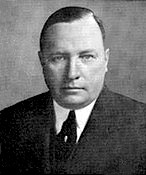
Historical · U.S. House · Wyoming · At-Large
Paul Greever
Former U.S. Representative · Wyoming At-Large · 1935–1939 · Democratic
Paul Greever represented Wyoming's At-Large in the United States House of Representatives (1935–1939) for the Democratic party. The page below collects sourced biographical facts, term history, committee roles, and provenance for Greever.
Bioguide ID: G000440
Key facts
- Full name
- Paul Greever
- State
- Wyoming
- District
- At-Large
- Party
- Democratic
- House service
- 1935–1939
- First House term
- 1935
- Status
- Left office
- Current term ends
- —
- Born
- 1891
- Bioguide ID
- G000440
- Committee assignments
- —
- Dataset version
- 1.20260605
Biographical narrative
933 words · sourced from the Wikipedia REST extract
Paul Greever was a notable figure in American politics, serving as a U.S. Representative from Wyoming. A member of the Democratic Party, he held office during a transformative period in U.S. history, marked by the Great Depression and significant social and economic changes. Greever's political career spanned two terms in the U.S. House of Representatives, during which he contributed to the legislative process and engaged with the pressing issues of his time. His life and career reflect a commitment to public service and a deep connection to the state of Wyoming.
Early life and career
Paul Greever was born on September 28, 1891, in Lansing, Kansas. His early education took place in local public and high schools, where he began to develop the foundational skills that would later serve him in his professional and political endeavors. After completing high school, Greever pursued higher education at the University of Kansas in Lawrence, where he enrolled in the law department. He graduated in 1917, earning his law degree and preparing to enter the legal profession.
Shortly after his graduation, Greever's life took a significant turn as he enlisted in the military during World War I. He served as a First Lieutenant in the Three Hundred and Fourteenth Trench Mortar Battery, part of the 89th Division, from April 1917 until March 1919. His military service not only contributed to the war effort but also shaped his character and leadership abilities, which would later influence his political career.
Following his military service, Greever was admitted to the bar in 1917 and began practicing law. He initially established his legal career in Pine Bluffs, Wyoming, before moving to Cody, Wyoming, in 1921. His work in law provided him with valuable experience and insights into the legal and political systems, which would prove beneficial in his future roles.
In addition to his legal practice, Greever became involved in local governance. He served as the mayor of Cody from 1930 to 1932, where he gained firsthand experience in public administration and community leadership. His tenure as mayor allowed him to address local issues and engage with constituents, further solidifying his commitment to public service. Greever also served as a trustee of the University of Wyoming from 1933 to 1934, contributing to the governance of higher education in the state. His involvement in both local government and education demonstrated his dedication to the welfare of his community and the state of Wyoming.
House tenure
Greever's political career took a significant step forward when he was elected to the U.S. House of Representatives. He was a member of the Democratic Party and served in the Seventy-fourth and Seventy-fifth Congresses, with his congressional tenure beginning on January 3, 1935, and concluding on January 3, 1939. During this period, Greever represented Wyoming's at-large congressional district, a role that required him to address the diverse needs and concerns of his constituents across the state.
Throughout his time in Congress, Greever was involved in various legislative initiatives and discussions that were critical to the nation during the 1930s. This era was characterized by the Great Depression, which necessitated a focus on economic recovery and social welfare programs. As a member of the House, Greever had the opportunity to engage with significant legislation aimed at addressing the challenges faced by Americans during this tumultuous time.
Despite his efforts and contributions, Greever faced electoral challenges. He was an unsuccessful candidate for reelection in 1938, which marked the end of his congressional career. After leaving office, he returned to his legal practice, continuing to serve the community in Wyoming through his work as an attorney.
Legislative focus and committees
During his tenure in the U.S. House of Representatives, Paul Greever's legislative focus was shaped by the pressing issues of the time, including economic recovery, social welfare, and infrastructure development. The Great Depression had a profound impact on the nation, and Greever's work in Congress reflected an awareness of the needs of his constituents and the broader American populace.
As a member of the Democratic Party, Greever aligned himself with the New Deal policies introduced by President Franklin D. Roosevelt. These policies aimed to provide relief to those suffering from the economic downturn, stimulate job creation, and implement reforms to prevent future economic crises. Greever's involvement in these initiatives demonstrated his commitment to addressing the hardships faced by many Americans during this period.
In addition to his focus on economic issues, Greever's legislative work likely included engagement with committees that addressed various aspects of governance and public policy. While specific committee assignments during his tenure are not detailed, it is common for members of Congress to serve on committees that align with their interests and the needs of their constituents. Such committees play a crucial role in shaping legislation, conducting oversight, and facilitating discussions on key issues.
After his congressional service, Greever returned to the practice of law, where he continued to contribute to his community. His legal expertise and experience in public service allowed him to remain engaged with the issues affecting Wyoming and its residents.
Paul Greever's life came to an untimely end on February 16, 1943, when he accidentally shot himself while cleaning a shotgun. His death occurred in Cody, Wyoming, where he had spent much of his professional life. He was interred at Riverside Cemetery, leaving behind a legacy of public service and commitment to the people of Wyoming. Greever's career as a U.S. Representative reflects a period of significant change in American history, and his contributions to the legislative process during his time in office remain a part of Wyoming's political heritage.
Notable legislation
Sponsored and co-sponsored legislation for Paul Greever is pending operator curation. The biographical narrative above carries the same provenance trail until per-bill rows are written.
Sources
- [1]https://en.wikipedia.org/wiki/Paul_R._GreeverWikipedia · retrieved 2026-06-05
Notable quotes
Sourced quotes for Paul Greever are pending operator curation. Narrative-scope provenance remains attached below.
Sources
- [1]https://en.wikipedia.org/wiki/Paul_R._GreeverWikipedia · retrieved 2026-06-05
Key positions
Curated policy positions for Paul Greever are pending operator review. The biographical narrative above carries the same provenance trail until per-topic positions are written.
Sources
- [1]https://en.wikipedia.org/wiki/Paul_R._GreeverWikipedia · retrieved 2026-06-05
Terms served
- 1935–1937U.S. House · Term 1 · Democratic
- 1937–1939U.S. House · Term 2 · Democratic
Sources & provenance
Every attributable claim above carries a per-section [N] marker that resolves to the corresponding URL below. Each entry records the upstream provider, the canonical URL, and the timestamp at which the source was retrieved by the ingest pipeline.
Key facts
- https://bioguide.congress.gov/search/bio/G000440bioguide · retrieved 2026-06-05
- https://www.govtrack.us/congress/members/404787govtrack · retrieved 2026-06-05
Biographical narrative
- https://en.wikipedia.org/wiki/Paul_R._Greeverwikipedia · retrieved 2026-06-05
Find your representative
Every U.S. state elects representatives by district. Browse Wyoming’s delegation, the full former-representative roster, or explore the role and term length.
Related on The Candidate
- Preceded by Vincent CarterEarlier holder of the Wyoming At-Large House seat · Republican.Open
- Succeeded by Frank HortonLater holder of the Wyoming At-Large House seat · Republican.Open
- Barbara CubinFormer U.S. Representative · Wyoming At-Large · RepublicanOpen
- Charles WinterFormer U.S. Representative · Wyoming At-Large · RepublicanOpen
- Edwin ThomsonFormer U.S. Representative · Wyoming At-Large · RepublicanOpen
- Democratic PartyFederal candidates and office holders on the Democratic line.Open