
Historical · U.S. Senate · Arkansas
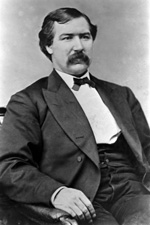
Alexander McDonald
Former U.S. Senator from Arkansas · 1868–1871 · Republican · Class 2
Alexander McDonald represented Arkansas in the United States Senate (1868–1871) for the Republican party. The page below collects sourced biographical facts, term history, committee roles, and provenance for McDonald.
Bioguide ID: M000408
Key facts
- Full name
- Alexander McDonald
- State
- Arkansas
- Party
- Republican
- Senate class
- Class II
- Senate service
- 1868–1871
- First Senate term
- 1868
- Status
- Left office
- Current term ends
- —
- Born
- 1832
- Bioguide ID
- M000408
- Committee assignments
- —
- Dataset version
- 1.20260602
Biographical narrative
883 words · sourced from the Wikipedia REST extract
Alexander McDonald was a Republican politician who served as a U.S. Senator from Arkansas during the Reconstruction era from 1868 to 1871. His political career unfolded in a period marked by significant national transformation following the Civil War, and he played a role in the legislative processes of that time. McDonald’s life encompassed various professional pursuits, including military service, banking, and railroad development, reflecting the diverse interests and challenges of the post-war United States.
Early life and career
Born on April 10, 1832, near Lock Haven in Clinton County, Pennsylvania, Alexander McDonald grew up in a region that would shape his early education and values. He attended Dickinson Seminary in Williamsport and later Lewisburg University, both institutions located in Pennsylvania. These formative years provided him with a foundation in education that would serve him throughout his life.
In 1857, seeking new opportunities, McDonald relocated to Kansas. His move coincided with a tumultuous period in American history, as the region was embroiled in conflicts related to the expansion of slavery and the ensuing tensions leading to the Civil War. In Kansas, McDonald became involved in business ventures, which likely contributed to his understanding of economic and political matters.
With the outbreak of the Civil War, McDonald enlisted in the Union Army, serving his country during a pivotal conflict that would determine the future of the nation. His military service concluded in 1863, after which he moved to Little Rock, Arkansas. In Little Rock, he transitioned into the banking sector, where he utilized his skills and experiences to contribute to the economic development of the area.
McDonald’s political career began to take shape when he participated in the state’s constitutional convention. This convention was crucial for Arkansas as it sought to redefine its governance and legal framework following the Civil War. His involvement in this process positioned him as a significant figure in the state’s political landscape, especially during the period of readmission to the Union.
In 1868, following Arkansas's readmission, McDonald was elected to the United States Senate by the Arkansas General Assembly. His election marked the beginning of his official political career at the national level, where he would serve as a representative of Arkansas during a time of reconstruction and rebuilding.
Senate tenure
Alexander McDonald’s tenure in the U.S. Senate began in 1868 and lasted until 1871. During this period, he was part of a Senate that was grappling with the challenges of post-Civil War America, including issues related to civil rights, economic recovery, and the reintegration of Southern states into the Union. His role as a senator was significant as he contributed to the legislative discussions and decisions that shaped the future of the nation during these transformative years.
While specific details regarding the legislation he supported or opposed during his time in the Senate are not documented, it is known that he served as a member of the Senate Class 2. This classification indicates that he was part of a group of senators whose terms were staggered to ensure continuity within the Senate. McDonald’s service coincided with a critical period in American history, characterized by efforts to rebuild the South and address the rights of newly freed African Americans.
Despite his involvement in the Senate, McDonald faced challenges in securing a longer political career. He was defeated in his bid for reelection in 1870, which ended his time in the Senate in March 1871. His single term in office reflects the volatility of political careers during the Reconstruction era, where shifting allegiances and public sentiment could significantly impact electoral outcomes.
Legislative focus and committees
While specific details about the committees McDonald served on during his Senate tenure are not available, it is reasonable to infer that, given the context of his time in office, his legislative focus may have included issues pertinent to the Reconstruction efforts, economic development, and infrastructure improvements. Senators during this period often engaged with matters related to civil rights, economic policies, and the reintegration of Southern states into the Union, which were critical to the nation’s recovery after the Civil War.
Following his departure from the Senate, McDonald continued to be active in public service and business. He was commissioned by President Chester A. Arthur in 1885 to examine conditions along portions of the Northern Pacific Railroad, indicating his ongoing interest in transportation and infrastructure development. This role highlights his engagement with issues that were vital to the economic growth of the United States during the late 19th century.
In the years following his Senate career, McDonald relocated to New York City in 1900, where he continued to pursue interests related to railroads and business. His later life reflects a continued commitment to the development of infrastructure, which was essential for the economic expansion of the country during that era.
Alexander McDonald passed away on December 13, 1903, in Norwood, New York. His remains were returned to Lock Haven, Pennsylvania, for burial, marking the end of a life that spanned significant historical events in the United States. His former residence in Little Rock, the McDonald–Wait–Newton House, remains a historical site, recognized for its significance and listed on the National Register of Historic Places, serving as a reminder of his contributions to the state and the nation during a pivotal time in American history.
Notable legislation
Sponsored and co-sponsored legislation for Alexander McDonald is pending operator curation. The biographical narrative above carries the same provenance trail until per-bill rows are written.
Sources
- [1]https://en.wikipedia.org/wiki/Alexander_McDonald_(American_politician)Wikipedia · retrieved 2026-06-02
Notable quotes
Sourced quotes for Alexander McDonald are pending operator curation. Narrative-scope provenance remains attached below.
Sources
- [1]https://en.wikipedia.org/wiki/Alexander_McDonald_(American_politician)Wikipedia · retrieved 2026-06-02
Key positions
Curated policy positions for Alexander McDonald are pending operator review. The biographical narrative above carries the same provenance trail until per-topic positions are written.
Sources
- [1]https://en.wikipedia.org/wiki/Alexander_McDonald_(American_politician)Wikipedia · retrieved 2026-06-02
Terms served
- 1868–1871U.S. Senate · Term 1 · Republican · Class II
Sources & provenance
Every attributable claim above carries a per-section [N] marker that resolves to the corresponding URL below. Each entry records the upstream provider, the canonical URL, and the timestamp at which the source was retrieved by the ingest pipeline.
Key facts
- https://bioguide.congress.gov/search/bio/M000408bioguide · retrieved 2026-06-02
- https://www.govtrack.us/congress/members/407408govtrack · retrieved 2026-06-02
Biographical narrative
- https://en.wikipedia.org/wiki/Alexander_McDonald_(American_politician)wikipedia · retrieved 2026-06-02
Find your senator
Every U.S. state elects two senators. Browse Arkansas’s delegation, the full former-senator roster, or explore the role and term length.
Related on The Candidate
- Preceded by William SebastianEarlier holder of the Arkansas Class II Senate seat · Democratic.Open
- Succeeded by Powell ClaytonLater holder of the Arkansas Class II Senate seat · Republican.Open
- Ambrose SevierFormer U.S. Senator from Arkansas · DemocraticOpen
- Augustus GarlandFormer U.S. Senator from Arkansas · DemocraticOpen
- Benjamin RiceFormer U.S. Senator from Arkansas · RepublicanOpen
- Blanche LincolnFormer U.S. Senator from Arkansas · DemocraticOpen