
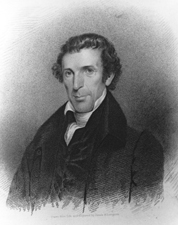
Historical · U.S. Senate · Kentucky
William Barry
Former U.S. Senator from Kentucky · 1814–1817 · Republican · Class 2
William Barry represented Kentucky in the United States Senate (1814–1817) for the Republican party. The page below collects sourced biographical facts, term history, committee roles, and provenance for Barry.
Bioguide ID: B000192
Key facts
- Full name
- William Barry
- State
- Kentucky
- Party
- Republican
- Senate class
- Class II
- Senate service
- 1814–1817
- First Senate term
- 1814
- Status
- Left office
- Current term ends
- —
- Born
- 1784
- Bioguide ID
- B000192
- Committee assignments
- —
- Dataset version
- 1.20260602
Biographical narrative
915 words · sourced from the Wikipedia REST extract
William Barry was a prominent American statesman and jurist who served as a U.S. Senator from Kentucky and held various significant positions in state and federal government. His political career spanned several decades, during which he was involved in legislative efforts, education reform, and the administration of postal services. Barry's tenure in the Senate was marked by his commitment to public education and debt relief, as well as his role in the administration of President Andrew Jackson.
Early life and career
William Barry was born on February 5, 1784, near Lunenburg, Virginia. He was the son of John Barry, a veteran of the American Revolutionary War, and Susannah Dozier Barry. In 1796, when he was twelve years old, his family moved to Fayette County, Kentucky. Barry's early education took place in common schools, and he furthered his studies at Pisgah Academy and Kentucky Academy in Woodford County. He attended Transylvania University in Lexington and graduated from the College of William & Mary in Williamsburg, Virginia, in 1803. Following his graduation, Barry studied law and was admitted to the bar in 1805, beginning his legal practice in Jessamine County, Kentucky, before moving to Lexington.
Barry's political career began in 1807 when he was elected to the Kentucky House of Representatives. He served in this capacity until 1810, when he transitioned to the U.S. House of Representatives, where he served for a brief period until 1811. His political involvement continued as he participated in the War of 1812, contributing to the national effort during a critical time in American history. After his military service, Barry was elected as a U.S. Senator from Kentucky, serving from 1815 until 1816. Following his Senate term, he returned to state politics, where he was elected to the Kentucky Senate, serving from 1817 to 1821.
Senate tenure
William Barry's Senate tenure began in 1815 and lasted until 1816. During this period, he was involved in various legislative discussions and initiatives that reflected the needs and interests of his constituents in Kentucky. His time in the Senate was relatively short, but it laid the groundwork for his subsequent political activities and leadership roles within the state.
After his Senate term, Barry continued to engage in Kentucky politics. He was elected as the sixth Lieutenant Governor of Kentucky, serving from 1820 to 1824. In this role, he worked alongside the governor to address state issues and implement policies that would benefit the citizens of Kentucky. Following his tenure as Lieutenant Governor, he served as Secretary of State of Kentucky from 1824 to 1825. Barry's legal background and political experience culminated in his appointment as Chief Judge of the Kentucky Court of Appeals for the 1825 term, a position that placed him at the forefront of the state's judicial system during a tumultuous period known as the Old Court - New Court controversy.
In 1828, Barry sought higher office by running for Governor of Kentucky. Although he did not win the election, his candidacy demonstrated his continued commitment to public service and his desire to influence state governance.
Legislative focus and committees
Throughout his political career, William Barry was particularly focused on issues related to public education and economic relief. During his time in the Kentucky Senate, he advocated for a plan to subsidize public education across the state. Barry reached out to former President James Madison for support, emphasizing the importance of providing citizens with access to information and education. Madison's enthusiastic response highlighted the significance of an informed populace in a democratic society.
Barry was also a leading figure in the debt relief movement during the Panic of 1819, a financial crisis that affected many Kentuckians. He became an advocate for legislation aimed at providing relief to those burdened by debt. His efforts were instrumental in the success of the debt relief party during the elections between 1820 and 1824, although the subsequent legal challenges to the relief laws posed significant obstacles. As a practicing lawyer, Barry defended these laws in court, although they were ultimately overturned by the Kentucky Court of Appeals in 1823.
In addition to his legislative work, Barry's influence extended to the federal level when he was appointed as U.S. Postmaster General in the administration of President Andrew Jackson. Serving from 1829 to 1835, he oversaw the nation's postal system and implemented policies that shaped mail delivery during a transformative period in American history. Notably, Barry took a controversial stance by prohibiting the mailing of abolitionist literature, reflecting the contentious social issues of the time.
Barry's role in Jackson's Cabinet was marked by his loyalty, as he was the only member not to resign during the Petticoat Affair, a political scandal involving the social ostracism of Margaret O'Neill Eaton, the wife of Secretary of War John H. Eaton. Barry's support for the Eatons aligned him with Jackson's perspective on the matter, further solidifying his position within the administration.
William Barry's life and career were characterized by a commitment to public service, legal advocacy, and educational reform. His contributions to Kentucky's political landscape and his involvement in federal governance left a lasting impact on the state and the nation. After his death on August 30, 1835, while en route to his appointment as ambassador to Spain, Barry was interred in Liverpool, England, before being reinterred in Frankfort Cemetery, Kentucky, in 1854. His legacy is honored in various locations named after him, including Barry County in Michigan and Missouri, as well as Barrytown and Barryville in New York.
Notable legislation
Sponsored and co-sponsored legislation for William Barry is pending operator curation. The biographical narrative above carries the same provenance trail until per-bill rows are written.
Sources
- [1]https://en.wikipedia.org/wiki/William_T._BarryWikipedia · retrieved 2026-06-02
Notable quotes
Sourced quotes for William Barry are pending operator curation. Narrative-scope provenance remains attached below.
Sources
- [1]https://en.wikipedia.org/wiki/William_T._BarryWikipedia · retrieved 2026-06-02
Key positions
Curated policy positions for William Barry are pending operator review. The biographical narrative above carries the same provenance trail until per-topic positions are written.
Sources
- [1]https://en.wikipedia.org/wiki/William_T._BarryWikipedia · retrieved 2026-06-02
Terms served
- 1809–1811U.S. House · District 5 · Term 1 · Republican
- 1814–1817U.S. Senate · Term 2 · Republican · Class II
Sources & provenance
Every attributable claim above carries a per-section [N] marker that resolves to the corresponding URL below. Each entry records the upstream provider, the canonical URL, and the timestamp at which the source was retrieved by the ingest pipeline.
Key facts
- https://bioguide.congress.gov/search/bio/B000192bioguide · retrieved 2026-06-02
- https://www.govtrack.us/congress/members/401191govtrack · retrieved 2026-06-02
Biographical narrative
- https://en.wikipedia.org/wiki/William_T._Barrywikipedia · retrieved 2026-06-02
Find your senator
Every U.S. state elects two senators. Browse Kentucky’s delegation, the full former-senator roster, or explore the role and term length.
Related on The Candidate
- Preceded by Buckner ThrustonEarlier holder of the Kentucky Class II Senate seat · Republican.Open
- Succeeded by Richard JohnsonLater holder of the Kentucky Class II Senate seat · Jackson.Open
- Alben BarkleyFormer U.S. Senator from Kentucky · DemocraticOpen
- Archibald DixonFormer U.S. Senator from Kentucky · WhigOpen
- Augustus StanleyFormer U.S. Senator from Kentucky · DemocraticOpen
- Ben WilliamsonFormer U.S. Senator from Kentucky · DemocraticOpen