
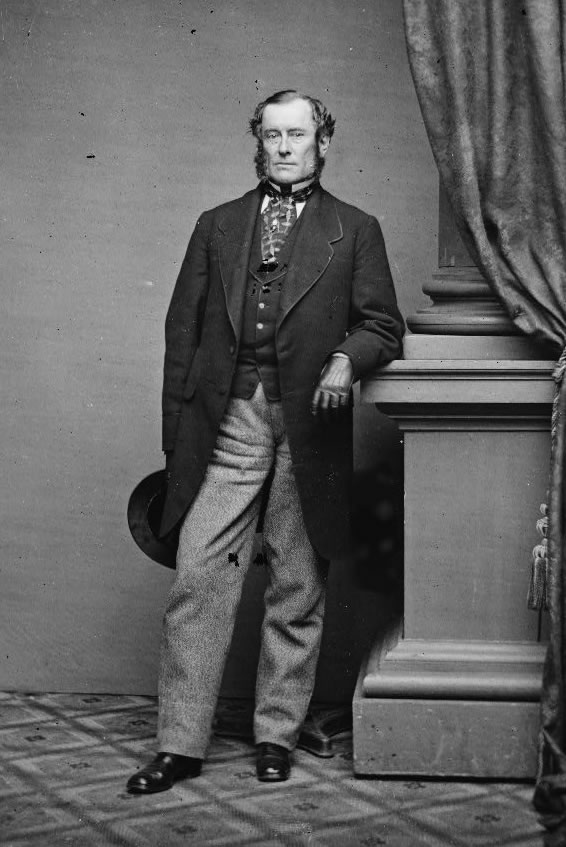
Historical · U.S. Senate · Maryland
Anthony Kennedy
Former U.S. Senator from Maryland · 1857–1863 · Unionist · Class 1
Anthony Kennedy represented Maryland in the United States Senate (1857–1863) for the Unionist party. The page below collects sourced biographical facts, term history, committee roles, and provenance for Kennedy.
Bioguide ID: K000103
Key facts
- Full name
- Anthony Kennedy
- State
- Maryland
- Party
- Unionist
- Senate class
- Class I
- Senate service
- 1857–1863
- First Senate term
- 1857
- Status
- Left office
- Current term ends
- —
- Born
- 1810
- Bioguide ID
- K000103
- Committee assignments
- —
- Dataset version
- 1.20260602
Biographical narrative
825 words · sourced from the Wikipedia REST extract
Anthony Kennedy was a United States Senator from Maryland, representing the Unionist Party from 1857 until 1863. Born on December 21, 1810, in Baltimore, Maryland, he had a diverse career that included roles in law, agriculture, and politics. Kennedy's political journey culminated in his election to the Senate, where he served during a tumultuous period in American history, marked by the lead-up to the Civil War. He was also the brother of John P. Kennedy, who served as the Secretary of the Navy.
Early life and career
Anthony Kennedy was born to John Kennedy, a merchant, and Anne Clayton Kennedy in Baltimore. His family background provided him with a stable upbringing, and in 1821, he was sent to Charles Town, Virginia, which is now part of West Virginia, to further his education. There, he attended the Jefferson Academy, where he received a foundational education that would serve him well in his future endeavors.
After completing his education, Kennedy pursued a career in law while also engaging in agricultural activities. His early political career began when he was elected to the Virginia House of Delegates, where he served from 1839 to 1843. This experience in local governance helped him develop a deeper understanding of the political landscape of the time. Following his tenure in the House of Delegates, he served as a magistrate on the bench of the Jefferson County Court for a decade, further solidifying his legal and political credentials.
In 1844, Kennedy sought a seat in the United States Congress as a Whig candidate but was unsuccessful in his bid. He declined an offer from President Millard Fillmore in 1850 to serve as consul to Havana, Cuba, indicating his preference to remain engaged in domestic affairs. After returning to Baltimore in 1851, he continued his political involvement and was elected to the Maryland House of Delegates in 1856, reflecting his growing influence in state politics.
Senate tenure
Kennedy's political career reached a significant milestone when he was elected to the United States Senate in 1857 as a member of the American Party. His election came at a time when the nation was grappling with deep divisions over issues such as slavery and states' rights, which would eventually lead to the Civil War. During his time in the Senate, Kennedy served in a challenging political environment, where debates were often heated and contentious.
His term in the Senate lasted until March 3, 1863, marking a period of significant national strife. While specific details about his legislative activities during this time are not extensively documented, Kennedy's role as a senator would have involved addressing the pressing issues of the day, including the growing sectional conflict between the North and South. After completing his term, he did not seek re-election and instead transitioned away from active political life.
Following his Senate tenure, Kennedy participated as a delegate in the Maryland state constitutional convention in 1867. This role allowed him to contribute to the shaping of Maryland's governance during a critical period of reconstruction and adjustment following the Civil War. After this engagement, he largely retired from public life, stepping back from the political spotlight.
Legislative focus and committees
While specific details regarding Kennedy's legislative focus and committee assignments during his Senate term are not provided, it is important to contextualize his service within the broader political landscape of the time. As a member of the American Party, Kennedy would have been aligned with a platform that sought to address the contentious issues of the era, particularly those related to slavery and immigration. The American Party, also known as the Know-Nothing Party, was characterized by its opposition to the expansion of slavery and its nativist sentiments.
Kennedy's background in law and his experience in local and state governance likely informed his perspectives on various legislative matters. His tenure in the Senate coincided with significant national debates, including those surrounding the impending Civil War, which would have influenced his legislative priorities and actions. However, without specific records of his committee assignments or legislative initiatives, it is challenging to delineate his exact contributions in detail.
After leaving the Senate, Kennedy's involvement in politics continued at the state level, particularly through his participation in the constitutional convention. This engagement reflects a commitment to public service and an interest in the evolving governance of Maryland during a transformative period in American history.
Kennedy's life and career were marked by a dedication to public service, legal practice, and agricultural pursuits. He married Sarah Stephena Dandridge in 1832, and they had three children. His family life was intertwined with his public persona, and he lived on a farm near Ellicott City, Maryland. Kennedy passed away on July 31, 1892, in Annapolis, Maryland, and was interred in Greenmount Cemetery in Baltimore. His legacy includes not only his political contributions but also his familial connections, notably through his son Stephen, who continued the family lineage and contributed to the community in various ways.
Notable legislation
Sponsored and co-sponsored legislation for Anthony Kennedy is pending operator curation. The biographical narrative above carries the same provenance trail until per-bill rows are written.
Sources
- [1]https://en.wikipedia.org/wiki/Anthony_Kennedy_(Maryland_politician)Wikipedia · retrieved 2026-06-02
Notable quotes
Sourced quotes for Anthony Kennedy are pending operator curation. Narrative-scope provenance remains attached below.
Sources
- [1]https://en.wikipedia.org/wiki/Anthony_Kennedy_(Maryland_politician)Wikipedia · retrieved 2026-06-02
Key positions
Curated policy positions for Anthony Kennedy are pending operator review. The biographical narrative above carries the same provenance trail until per-topic positions are written.
Sources
- [1]https://en.wikipedia.org/wiki/Anthony_Kennedy_(Maryland_politician)Wikipedia · retrieved 2026-06-02
Terms served
- 1857–1863U.S. Senate · Term 1 · Unionist · Class I
Sources & provenance
Every attributable claim above carries a per-section [N] marker that resolves to the corresponding URL below. Each entry records the upstream provider, the canonical URL, and the timestamp at which the source was retrieved by the ingest pipeline.
Key facts
- https://bioguide.congress.gov/search/bio/K000103bioguide · retrieved 2026-06-02
- https://www.govtrack.us/congress/members/406271govtrack · retrieved 2026-06-02
Biographical narrative
- https://en.wikipedia.org/wiki/Anthony_Kennedy_(Maryland_politician)wikipedia · retrieved 2026-06-02
Find your senator
Every U.S. state elects two senators. Browse Maryland’s delegation, the full former-senator roster, or explore the role and term length.
Related on The Candidate
- Preceded by Thomas PrattEarlier holder of the Maryland Class I Senate seat · Ind. Republican-Democrat.Open
- Succeeded by William HamiltonLater holder of the Maryland Class I Senate seat · Democratic.Open
- Alexander HansonFormer U.S. Senator from Maryland · FederalistOpen
- Arthur GormanFormer U.S. Senator from Maryland · DemocraticOpen
- Barbara MikulskiFormer U.S. Senator from Maryland · DemocraticOpen
- Benjamin CardinFormer U.S. Senator from Maryland · DemocraticOpen