
Historical · U.S. Senate · Maryland
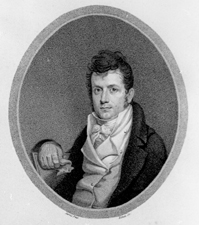
Alexander Hanson
Former U.S. Senator from Maryland · 1816–1819 · Federalist · Class 1
Alexander Hanson represented Maryland in the United States Senate (1816–1819) for the Federalist party. The page below collects sourced biographical facts, term history, committee roles, and provenance for Hanson.
Bioguide ID: H000176
Key facts
- Full name
- Alexander Hanson
- State
- Maryland
- Party
- Federalist
- Senate class
- Class I
- Senate service
- 1816–1819
- First Senate term
- 1816
- Status
- Left office
- Current term ends
- —
- Born
- 1786
- Bioguide ID
- H000176
- Committee assignments
- —
- Dataset version
- 1.20260602
Biographical narrative
889 words · sourced from the Wikipedia REST extract
Alexander Hanson was a prominent American lawyer, publisher, and politician who served as a U.S. Senator from Maryland as a member of the Federalist Party. His political career included representation in both the U.S. House of Representatives and the Senate, with his Senate tenure concluding in 1819. Born in 1786 in Annapolis, Maryland, Hanson was part of a notable family with deep roots in American history, including connections to significant figures in the early republic. His life was marked by his involvement in the media, particularly through his publication of a Federalist newspaper, which played a role in the political discourse of his time.
Early life and career
Alexander Contee Hanson was born on February 27, 1786, in Annapolis, Maryland. He was the second son of Alexander Contee Hanson, Sr. and Rebecca Howard. His family lineage included notable figures; his grandfather, John Hanson, was a delegate to the Continental Congress and served as the ninth President of the Continental Congress. This familial background provided Hanson with a strong connection to the political landscape of early America.
Hanson's early education took place in local private schools, culminating in his graduation from St. John's College in Annapolis in 1802. Following his academic pursuits, he studied law, was admitted to the bar, and began his legal practice in Annapolis. His political career began to take shape when he was elected as a delegate to the Maryland State Convention in 1788, where he participated in discussions regarding the ratification of the United States Constitution.
In addition to his legal career, Hanson was involved in journalism. In 1808, he founded the Federal Republican and Commercial Gazette in Baltimore, which became known for its staunch Federalist views. The publication was characterized as one of the most extreme Federalist newspapers of its time. However, Hanson's editorial stance led to significant conflict during the War of 1812. In June 1812, a mob, angered by his articles criticizing the administration, attacked and destroyed his office. Following this incident, Hanson continued to publish the newspaper from a different location, where he and his allies defended themselves against further mob violence. This tumultuous period highlighted the intense political divisions of the era and Hanson's commitment to his beliefs, despite the personal risks involved.
Senate tenure
Hanson's political career advanced when he was elected as a Federalist to represent Maryland's third district in the U.S. House of Representatives. He served in the Thirteenth and Fourteenth Congresses from March 4, 1813, until his resignation in 1816. During his time in the House, he was involved in the legislative processes of the early 1810s, a period marked by the War of 1812 and its implications for American governance and society.
After his tenure in the House, Hanson sought to continue his public service. He was elected to the U.S. Senate to fill the vacancy left by the resignation of Robert Goodloe Harper. His Senate term began on December 20, 1816, and he served until his death on April 23, 1819. During his time in the Senate, Hanson was part of a legislative body that was navigating the complexities of post-war America, including issues related to national security, economic policy, and the evolving political landscape.
Hanson's Senate career was cut short by his untimely death, which occurred at his estate, known as "Belmont," located near Elkridge, Maryland. His passing marked the end of a significant chapter in his life, as he had not fully recovered from injuries sustained during the violent confrontations related to his newspaper.
Legislative focus and committees
Throughout his political career, Alexander Hanson was primarily aligned with the Federalist Party, which was characterized by its support for a strong central government, commercial interests, and a cautious approach to foreign relations. His legislative focus reflected the priorities of the Federalist platform, particularly during a time when the nation was grappling with the consequences of the War of 1812.
While specific details regarding the committees he served on during his Senate tenure are not documented, it can be inferred that, as a member of the Senate, he would have engaged in discussions and decisions pertinent to national defense, economic policy, and the administration of government. His previous experience in the House of Representatives likely informed his contributions to the Senate, as he navigated the challenges of a nation in transition.
In addition to his legislative work, Hanson was recognized for his contributions to historical scholarship, becoming a member of the American Antiquarian Society in 1815. This affiliation underscored his interest in the preservation and study of American history, aligning with the Federalist emphasis on the importance of a well-informed citizenry.
Hanson's legacy extends beyond his political career; he is remembered as a figure who navigated the tumultuous political landscape of early 19th-century America. His life and work reflect the complexities of a nation in its formative years, marked by conflict, debate, and the ongoing development of its democratic institutions. His descendants continued to carry his legacy, with several grandchildren who would go on to have their own lives and contributions to society.
In summary, Alexander Hanson was a significant figure in early American politics, whose career spanned critical developments in the nation’s history. His experiences as a lawyer, publisher, and politician illustrate the interconnectedness of media and politics in shaping public discourse during a formative period in the United States.
Notable legislation
Sponsored and co-sponsored legislation for Alexander Hanson is pending operator curation. The biographical narrative above carries the same provenance trail until per-bill rows are written.
Sources
- [1]https://en.wikipedia.org/wiki/Alexander_C._HansonWikipedia · retrieved 2026-06-02
Notable quotes
Sourced quotes for Alexander Hanson are pending operator curation. Narrative-scope provenance remains attached below.
Sources
- [1]https://en.wikipedia.org/wiki/Alexander_C._HansonWikipedia · retrieved 2026-06-02
Key positions
Curated policy positions for Alexander Hanson are pending operator review. The biographical narrative above carries the same provenance trail until per-topic positions are written.
Sources
- [1]https://en.wikipedia.org/wiki/Alexander_C._HansonWikipedia · retrieved 2026-06-02
Terms served
- 1813–1815U.S. House · District 3 · Term 1 · Federalist
- 1815–1816U.S. House · District 3 · Term 2 · Federalist
- 1816–1819U.S. Senate · Term 3 · Federalist · Class I
Sources & provenance
Every attributable claim above carries a per-section [N] marker that resolves to the corresponding URL below. Each entry records the upstream provider, the canonical URL, and the timestamp at which the source was retrieved by the ingest pipeline.
Key facts
- https://bioguide.congress.gov/search/bio/H000176bioguide · retrieved 2026-06-02
- https://www.govtrack.us/congress/members/405057govtrack · retrieved 2026-06-02
Biographical narrative
- https://en.wikipedia.org/wiki/Alexander_C._Hansonwikipedia · retrieved 2026-06-02
Find your senator
Every U.S. state elects two senators. Browse Maryland’s delegation, the full former-senator roster, or explore the role and term length.
Related on The Candidate
- Preceded by John HowardEarlier holder of the Maryland Class I Senate seat · Federalist.Open
- Succeeded by William PinkneyLater holder of the Maryland Class I Senate seat · Republican.Open
- Anthony KennedyFormer U.S. Senator from Maryland · UnionistOpen
- Arthur GormanFormer U.S. Senator from Maryland · DemocraticOpen
- Barbara MikulskiFormer U.S. Senator from Maryland · DemocraticOpen
- Benjamin CardinFormer U.S. Senator from Maryland · DemocraticOpen