
Historical · U.S. Senate · North Dakota
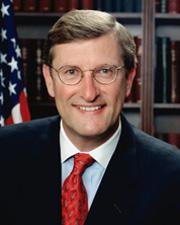
Kent Conrad
Former U.S. Senator from North Dakota · 1987–2013 · Democratic · Class 1
Kent Conrad represented North Dakota in the United States Senate (1987–2013) for the Democratic party. The page below collects sourced biographical facts, term history, committee roles, and provenance for Conrad.
Bioguide ID: C000705
Key facts
- Full name
- Kent Conrad
- State
- North Dakota
- Party
- Democratic
- Senate class
- Class I
- Senate service
- 1987–2013
- First Senate term
- 1987
- Status
- Left office
- Current term ends
- —
- Born
- 1948
- Bioguide ID
- C000705
- Committee assignments
- —
- Dataset version
- 1.20260601-3
Biographical narrative
923 words · sourced from the Wikipedia REST extract
Gaylord Kent Conrad is a former United States senator from North Dakota, affiliated with the Democratic Party. He served in the Senate from 1987 until 2013, holding the distinction of being a prominent figure in budgetary matters and a member of various influential committees. Throughout his political career, Conrad was known for his analytical approach to fiscal policies and his involvement in significant legislative discussions, particularly concerning healthcare and national security.
Early life and career
Kent Conrad was born on March 12, 1948, in Bismarck, North Dakota. He was raised by his grandparents after being orphaned at a young age. His early education took place in Bismarck, where he attended Roosevelt Elementary and Hughes Junior High. He later completed his high school education at Wheelus Air Base high school in Tripoli, Libya. Following his high school graduation, Conrad pursued higher education at Stanford University, where he laid the foundation for his future career. He subsequently earned a Master of Business Administration (M.B.A.) from The George Washington University School of Business.
Conrad's professional journey began in public service, where he worked as an assistant to the North Dakota State Tax Commissioner, Byron Dorgan. This role marked the beginning of his political engagement. In 1976, he made his first attempt at elected office by running for the North Dakota Auditor's office, though he was unsuccessful. However, in 1980, he succeeded Dorgan as the Tax Commissioner of North Dakota, a position he held until 1986. During his tenure, he gained valuable experience in fiscal management and state governance, which would later inform his work in the U.S. Senate.
In 1986, Kent Conrad transitioned to national politics by running for a seat in the U.S. Senate. His campaign was successful, leading to his election and subsequent swearing-in as a senator in 1987. Over the course of his five terms in the Senate, Conrad established himself as a key player in budgetary and fiscal discussions, earning recognition for his expertise in these areas.
Senate tenure
Conrad's Senate career began in 1987 and continued until January 3, 2013. Throughout his time in office, he served on several important committees, which shaped his legislative focus and influence. Notably, he was a long-time member and chairman of the Senate Budget Committee, where he played a critical role in discussions surrounding federal budgeting and fiscal responsibility. His leadership on this committee spanned over a decade, during which he contributed to significant budgetary reforms and policy discussions.
In addition to his role on the Budget Committee, Conrad served on the Committee on Agriculture, Nutrition, and Forestry, where he addressed issues pertinent to North Dakota's agricultural community. He was also involved in the Committee on Finance, which dealt with taxation and economic policies, and the Committee on Indian Affairs, reflecting his commitment to addressing the needs of Native American communities. His assignments on various subcommittees further underscored his diverse interests and expertise, including energy, taxation, and economic growth.
Conrad's Senate tenure was marked by his commitment to addressing the nation's budgetary challenges. He was known for his analytical approach, often utilizing visual aids to communicate complex fiscal issues effectively. This method earned him the nickname "Godfather of Charts," highlighting his ability to present data in an accessible manner.
In January 2011, Conrad announced his decision to retire from politics and not seek reelection in 2012. He cited a desire to focus on solving the nation's budgetary issues rather than being distracted by a campaign. His departure from the Senate marked the end of a significant chapter in North Dakota's political history, with fellow Democrat Heidi Heitkamp succeeding him.
Legislative focus and committees
Throughout his Senate career, Kent Conrad's legislative focus encompassed a range of issues, particularly in the areas of fiscal policy, healthcare, and social issues. He was recognized for his deep understanding of budgetary matters and was often described as a "deficit hawk," advocating for a balanced federal budget while still supporting farm subsidies. His fiscal policies reflected a commitment to lower taxes for the middle class while proposing increased taxes for higher-income individuals.
Conrad's involvement in healthcare reform was particularly notable during the 2009 negotiations surrounding the Affordable Care Act. He opposed the inclusion of a public option in the healthcare reform discussions, which led to tensions with some labor organizations. His stance on healthcare was indicative of his broader political philosophy, which often aligned him with more conservative positions within the Democratic Party.
In addition to healthcare, Conrad's social policy positions were complex. He consistently voted in favor of banning partial-birth abortions and opposed public funding for abortions, although he did support lifting the ban on abortions at military bases. His record on LGBTQ+ rights was mixed; while he personally opposed same-sex marriage, he voted against a constitutional ban on it and supported legislation aimed at preventing discrimination based on sexual orientation.
Conrad's foreign policy positions included a notable opposition to military interventions, as evidenced by his votes against the use of military force in Iraq in both 1991 and 2002. He initially supported the USA PATRIOT Act but later expressed concerns about its implications for civil liberties.
After leaving the Senate, Conrad continued to engage in public policy discussions. He co-chairs the Bipartisan Policy Center's Commission on Retirement Security and Personal Savings and is involved with the ReFormers Caucus of Issue One, reflecting his ongoing commitment to addressing critical national issues. Additionally, he serves on the board of directors of the Committee for a Responsible Federal Budget, further emphasizing his focus on fiscal responsibility and budgetary reform.
Notable legislation
Sponsored and co-sponsored legislation for Kent Conrad is pending operator curation. The biographical narrative above carries the same provenance trail until per-bill rows are written.
Sources
- [1]https://en.wikipedia.org/wiki/Kent_ConradWikipedia · retrieved 2026-06-01
Notable quotes
Sourced quotes for Kent Conrad are pending operator curation. Narrative-scope provenance remains attached below.
Sources
- [1]https://en.wikipedia.org/wiki/Kent_ConradWikipedia · retrieved 2026-06-01
Key positions
Curated policy positions for Kent Conrad are pending operator review. The biographical narrative above carries the same provenance trail until per-topic positions are written.
Sources
- [1]https://en.wikipedia.org/wiki/Kent_ConradWikipedia · retrieved 2026-06-01
Terms served
- 1987–1992U.S. Senate · Term 1 · Democratic · Class III
- 1992–1995U.S. Senate · Term 2 · Democratic · Class I
- 1995–2001U.S. Senate · Term 3 · Democratic · Class I
- 2001–2007U.S. Senate · Term 4 · Democratic · Class I
- 2007–2013U.S. Senate · Term 5 · Democratic · Class I
Sources & provenance
Every attributable claim above carries a per-section [N] marker that resolves to the corresponding URL below. Each entry records the upstream provider, the canonical URL, and the timestamp at which the source was retrieved by the ingest pipeline.
Key facts
- https://bioguide.congress.gov/search/bio/C000705bioguide · retrieved 2026-06-01
- http://conrad.senate.govsenate.gov · retrieved 2026-06-01
Biographical narrative
- https://en.wikipedia.org/wiki/Kent_Conradwikipedia · retrieved 2026-06-01
Find your senator
Every U.S. state elects two senators. Browse North Dakota’s delegation, the full former-senator roster, or explore the role and term length.
Related on The Candidate
- Preceded by Clarence BrunsdaleEarlier holder of the North Dakota Class I Senate seat · Republican.Open
- Succeeded by Heidi HeitkampLater holder of the North Dakota Class I Senate seat · Democratic.Open
- Asle GronnaFormer U.S. Senator from North Dakota · RepublicanOpen
- Byron DorganFormer U.S. Senator from North Dakota · DemocraticOpen
- Edwin LaddFormer U.S. Senator from North Dakota · RepublicanOpen
- Democratic PartyFederal candidates and office holders on the Democratic line.Open