
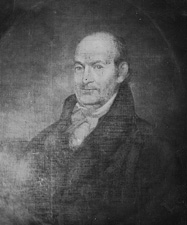
Historical · U.S. Senate · New Jersey
John Condit
Former U.S. Senator from New Jersey · 1803–1817 · Republican · Class 2
John Condit represented New Jersey in the United States Senate (1803–1817) for the Republican party. The page below collects sourced biographical facts, term history, committee roles, and provenance for Condit.
Bioguide ID: C000671
Key facts
- Full name
- John Condit
- State
- New Jersey
- Party
- Republican
- Senate class
- Class II
- Senate service
- 1803–1817
- First Senate term
- 1803
- Status
- Left office
- Current term ends
- —
- Born
- 1755
- Bioguide ID
- C000671
- Committee assignments
- —
- Dataset version
- 1.20260602
Biographical narrative
935 words · sourced from the Wikipedia REST extract
John Condit was a prominent political figure in early American history, serving as a U.S. Senator from New Jersey and a member of the House of Representatives. A member of the Democratic-Republican Party, Condit played a significant role in the political landscape of the early 19th century. His career spanned multiple terms in Congress and included various leadership roles, reflecting his influence during a formative period in the United States. Condit was also known for his contributions to his local community and his service as a surgeon during the American Revolutionary War.
Early life and career
John Condit was born on July 8, 1755, in Orange, which was then part of the Province of New Jersey. His early education took place in local public schools, where he received a foundational education that would serve him throughout his life. Following his schooling, Condit pursued a career in medicine, studying to become a physician. His medical training would later prove invaluable, as he served as a surgeon during the American Revolutionary War. This experience not only contributed to his personal development but also positioned him as a respected figure in his community.
In addition to his medical career, Condit was actively involved in educational initiatives. He became one of the founders and a trustee of the Orange Academy in 1785, demonstrating his commitment to education and the development of future generations. His involvement in the academy highlighted his belief in the importance of education in shaping a democratic society.
Condit's political career began in earnest when he was elected to the New Jersey General Assembly, where he served from 1788 to 1789. His tenure in the assembly marked the beginning of his long-standing engagement in public service. Following this role, he was elected to the New Jersey Legislative Council, serving from 1790 to 1797. These early political experiences laid the groundwork for his future roles in the U.S. Congress, as they provided him with insights into governance and the legislative process.
Senate tenure
John Condit's tenure in the U.S. Senate began in 1803 when he was appointed to fill a vacancy caused by the failure of the New Jersey legislature to elect a senator. He officially took office on September 1, 1803, representing the Democratic-Republican Party. His initial appointment marked the start of a significant period in his political career, as he would serve in the Senate for multiple terms.
Condit's first full Senate term began after he was elected on November 3, 1803, to complete the term of his predecessor. He served in the Senate until March 3, 1809. During this time, he participated in various legislative discussions and contributed to the shaping of policies that would impact the nation. His role in the Senate was characterized by his alignment with the Democratic-Republican Party, which was known for advocating for agrarian interests and a limited federal government.
After his first term, Condit was again appointed to the Senate to fill another vacancy, this time caused by the resignation of Aaron Kitchell. He was elected on November 2, 1809, to complete this new term, serving from March 21, 1809, until March 3, 1817. Throughout his Senate career, Condit was involved in the legislative process during a time of significant change in the United States, including issues related to westward expansion, trade, and national defense.
Condit's political career included a total of six congressional terms, with three of those being served in the Senate. His experience in both the House of Representatives and the Senate provided him with a comprehensive understanding of federal governance and legislative affairs. After his time in the Senate, he continued to engage in public service, demonstrating his ongoing commitment to the nation.
Legislative focus and committees
During his time in the Senate, John Condit was involved in various legislative matters, although specific details about his committee assignments and the bills he supported are not extensively documented. As a member of the Democratic-Republican Party, he generally aligned with the party's principles, which included a focus on agrarian interests and a cautious approach to federal power. This alignment influenced his legislative priorities and the issues he championed during his time in office.
Condit's contributions to the Senate were part of a broader context of political developments in the early 19th century. The nation was grappling with significant issues, including the implications of the Louisiana Purchase, the War of 1812, and debates over the role of the federal government. Senators during this period were often tasked with addressing the needs of their constituents while navigating the complexities of national governance.
In addition to his legislative work, Condit was known for his public service beyond the Senate. After his Senate career, he was elected to the Sixteenth Congress, serving from March 4, 1819, until November 4, 1819. He resigned from this position to accept a role in the Treasury Department, where he served as the assistant collector of the port of New York from 1819 to 1830. This position allowed him to continue his involvement in public service while contributing to the financial management of one of the nation's busiest ports.
John Condit's legacy is marked by his contributions to the early political landscape of the United States. He passed away on May 4, 1834, in Orange Township, New Jersey, and was interred in the Old Graveyard in Essex County. His career reflects the complexities of early American governance and the evolving role of elected officials in shaping the nation. As a former senator and representative, Condit's life and work remain a part of the historical narrative of New Jersey and the United States.
Notable legislation
Sponsored and co-sponsored legislation for John Condit is pending operator curation. The biographical narrative above carries the same provenance trail until per-bill rows are written.
Sources
- [1]https://en.wikipedia.org/wiki/John_ConditWikipedia · retrieved 2026-06-02
Notable quotes
Sourced quotes for John Condit are pending operator curation. Narrative-scope provenance remains attached below.
Sources
- [1]https://en.wikipedia.org/wiki/John_ConditWikipedia · retrieved 2026-06-02
Key positions
Curated policy positions for John Condit are pending operator review. The biographical narrative above carries the same provenance trail until per-topic positions are written.
Sources
- [1]https://en.wikipedia.org/wiki/John_ConditWikipedia · retrieved 2026-06-02
Terms served
- 1799–1801U.S. House · District 1 · Term 1 · Republican
- 1801–1803U.S. House · District -1 · Term 2 · Republican
- 1803–1809U.S. Senate · Term 3 · Republican · Class I
- 1809–1811U.S. Senate · Term 4 · Republican · Class II
- 1811–1817U.S. Senate · Term 5 · Republican · Class II
- 1819–1821U.S. House · District -1 · Term 6 · Republican
Sources & provenance
Every attributable claim above carries a per-section [N] marker that resolves to the corresponding URL below. Each entry records the upstream provider, the canonical URL, and the timestamp at which the source was retrieved by the ingest pipeline.
Key facts
- https://bioguide.congress.gov/search/bio/C000671bioguide · retrieved 2026-06-02
- https://www.govtrack.us/congress/members/402797govtrack · retrieved 2026-06-02
Biographical narrative
- https://en.wikipedia.org/wiki/John_Conditwikipedia · retrieved 2026-06-02
Find your senator
Every U.S. state elects two senators. Browse New Jersey’s delegation, the full former-senator roster, or explore the role and term length.
Related on The Candidate
- Preceded by Richard StocktonEarlier holder of the New Jersey Class II Senate seat · Federalist.Open
- Succeeded by Theodore FrelinghuysenLater holder of the New Jersey Class II Senate seat · Anti-Jacksonian.Open
- Aaron KitchellFormer U.S. Senator from New Jersey · RepublicanOpen
- Aaron OgdenFormer U.S. Senator from New Jersey · FederalistOpen
- Albert HawkesFormer U.S. Senator from New Jersey · RepublicanOpen
- Alexander CattellFormer U.S. Senator from New Jersey · RepublicanOpen