
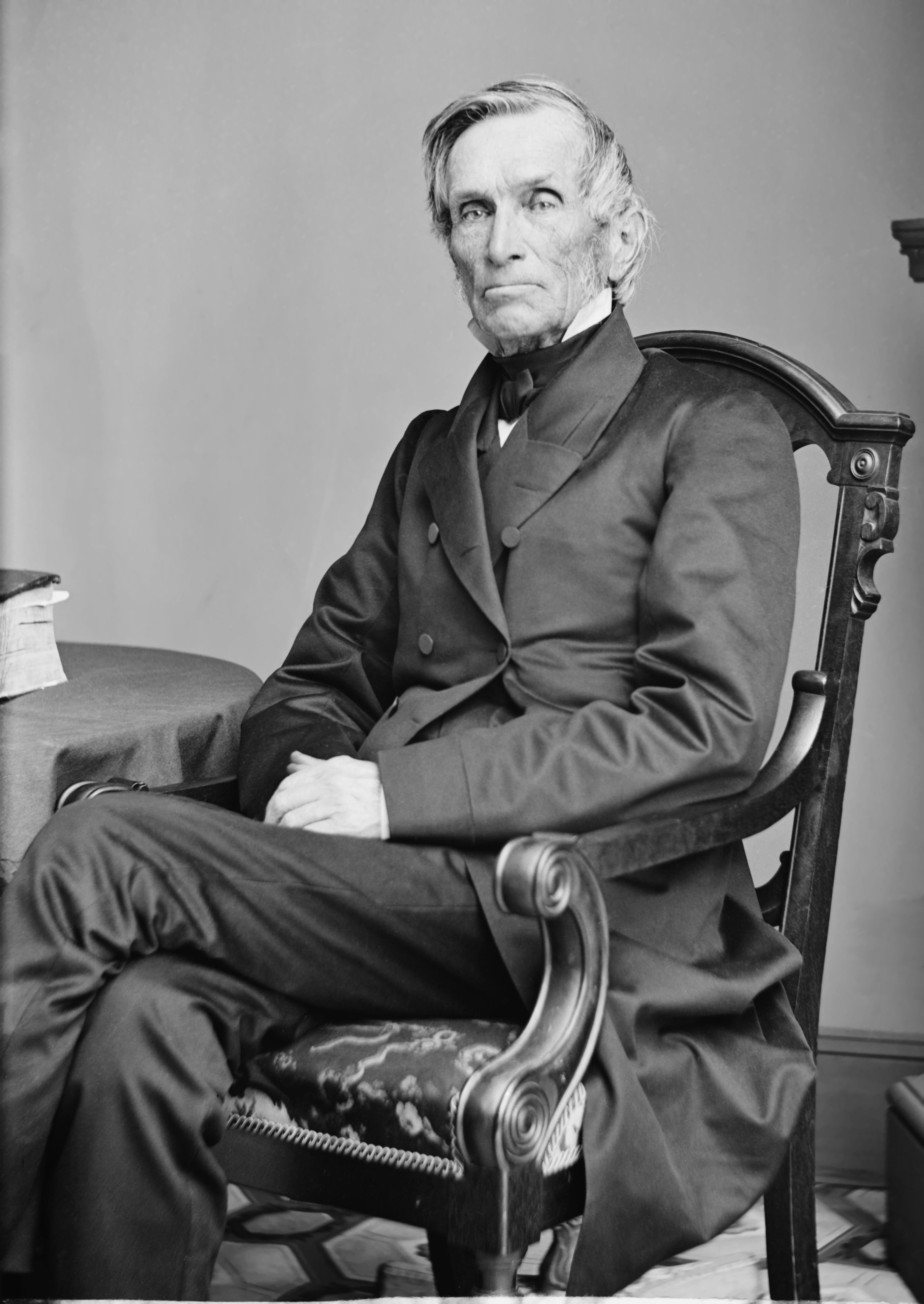
Historical · U.S. Senate · New Jersey
Theodore Frelinghuysen
Former U.S. Senator from New Jersey · 1829–1835 · Anti-Jacksonian · Class 2
Theodore Frelinghuysen represented New Jersey in the United States Senate (1829–1835) for the Anti-Jacksonian party. The page below collects sourced biographical facts, term history, committee roles, and provenance for Frelinghuysen.
Bioguide ID: F000373
Key facts
- Full name
- Theodore Frelinghuysen
- State
- New Jersey
- Party
- Anti-Jacksonian
- Senate class
- Class II
- Senate service
- 1829–1835
- First Senate term
- 1829
- Status
- Left office
- Current term ends
- —
- Born
- 1787
- Bioguide ID
- F000373
- Committee assignments
- —
- Dataset version
- 1.20260602
Biographical narrative
849 words · sourced from the Wikipedia REST extract
Theodore Frelinghuysen was an American politician and lawyer who served as a U.S. Senator from New Jersey from 1829 to 1835. A member of the Anti-Jacksonian Party, he was known for his strong opposition to President Andrew Jackson's policies, particularly the Indian Removal Act. Frelinghuysen's political career also included roles as New Jersey's Attorney General and as the Mayor of Newark. In addition to his political endeavors, he held significant positions in academia and various organizations, including serving as the president of New York University and Rutgers College.
Early life and career
Theodore Frelinghuysen was born on March 28, 1787, in Franklin Township, Somerset County, New Jersey. He was the son of Frederick Frelinghuysen and Gertrude Schenck. His family had a notable lineage; his great-grandfather, Theodorus Jacobus Frelinghuysen, was a prominent minister and theologian associated with the Dutch Reformed Church and played a significant role in the founding of Queen's College, now known as Rutgers University. Theodore Frelinghuysen had several siblings, including Catharine, John, Maria, and Frederick, the latter of whom was also a lawyer.
Frelinghuysen graduated from the College of New Jersey, now Princeton University, in 1804. He pursued a legal career, studying law under his brother John and Richard Stockton. He was admitted to the bar as an attorney in 1808 and as a counselor in 1811. Following his admission, he established a law practice in Newark, New Jersey. His legal career coincided with the War of 1812, during which he served as a captain of a volunteer company.
In 1817, Frelinghuysen was appointed as the Attorney General of New Jersey, a position he held until 1829. He declined an opportunity to serve on the New Jersey Supreme Court, opting instead to enter the political arena. His legal background and experience in state politics paved the way for his election to the United States Senate.
Frelinghuysen's personal life included a marriage to Charlotte Mercer in 1809, although she passed away the same year without leaving any children. Following the death of his brother Frederick in 1820, Theodore adopted his nephew, Frederick Theodore Frelinghuysen, who would later serve as Secretary of State. In 1857, Theodore remarried to Harriet Pumpelly.
Senate tenure
Theodore Frelinghuysen began his term in the U.S. Senate on March 4, 1829, representing New Jersey. He was a member of the Anti-Jacksonian Party, which opposed the policies of President Andrew Jackson, particularly those related to Indian affairs. Frelinghuysen became a prominent voice against the Indian Removal Act of 1830, which aimed to relocate Native American tribes from their ancestral lands in the southeastern United States to designated territories west of the Mississippi River.
Frelinghuysen delivered a notable speech against the Indian Removal Act, which extended over three days and lasted approximately six hours. In his address, he expressed concerns about the moral and ethical implications of the policy, warning of the potential consequences of encroaching upon the rights of Native Americans. Despite his efforts and the support he received from various quarters, the act ultimately passed, reflecting the prevailing attitudes of the time.
Frelinghuysen's Senate career lasted until March 3, 1835, during which he was involved in various legislative discussions and debates. After leaving the Senate, he continued his public service by serving as the Mayor of Newark from 1837 to 1838.
Legislative focus and committees
During his time in the Senate, Frelinghuysen was primarily recognized for his opposition to the Indian Removal Act and his advocacy for the rights of Native Americans. His stance on this issue was rooted in his moral convictions and his background as a member of the Protestant faith, which influenced his views on justice and ethics. His opposition to the Removal Act, however, drew criticism from supporters of President Jackson, who accused him of intertwining his religious beliefs with political matters.
In addition to his legislative work, Frelinghuysen was active in various organizations and held significant positions in educational institutions. He served as the second president of New York University from 1839 to 1850 and later as the seventh president of Rutgers College from 1850 until his death in 1862. His leadership in these institutions reflected his commitment to education and his belief in the importance of academic advancement.
Frelinghuysen was also involved in several religious and social organizations. He served as president of the American Board of Commissioners for Foreign Missions and the American Bible Society, as well as the American Tract Society. His involvement in these organizations often aligned with his advocacy for moral and ethical issues, although his views on certain topics, such as colonization, were controversial. He supported the idea of deporting free people of color from the United States, expressing views that reflected the racial attitudes of his time.
Frelinghuysen's legacy includes his contributions to both politics and education, as well as his complex views on social issues. He passed away on April 12, 1862, in New Brunswick, New Jersey, and was buried at the First Reformed Church Cemetery. His life and career continue to be studied as part of the broader narrative of American political history during the early 19th century.
Notable legislation
Sponsored and co-sponsored legislation for Theodore Frelinghuysen is pending operator curation. The biographical narrative above carries the same provenance trail until per-bill rows are written.
Sources
- [1]https://en.wikipedia.org/wiki/Theodore_FrelinghuysenWikipedia · retrieved 2026-06-02
Notable quotes
Sourced quotes for Theodore Frelinghuysen are pending operator curation. Narrative-scope provenance remains attached below.
Sources
- [1]https://en.wikipedia.org/wiki/Theodore_FrelinghuysenWikipedia · retrieved 2026-06-02
Key positions
Curated policy positions for Theodore Frelinghuysen are pending operator review. The biographical narrative above carries the same provenance trail until per-topic positions are written.
Sources
- [1]https://en.wikipedia.org/wiki/Theodore_FrelinghuysenWikipedia · retrieved 2026-06-02
Terms served
- 1829–1835U.S. Senate · Term 1 · Anti-Jacksonian · Class II
Sources & provenance
Every attributable claim above carries a per-section [N] marker that resolves to the corresponding URL below. Each entry records the upstream provider, the canonical URL, and the timestamp at which the source was retrieved by the ingest pipeline.
Key facts
- https://bioguide.congress.gov/search/bio/F000373bioguide · retrieved 2026-06-02
- https://www.govtrack.us/congress/members/404318govtrack · retrieved 2026-06-02
Biographical narrative
- https://en.wikipedia.org/wiki/Theodore_Frelinghuysenwikipedia · retrieved 2026-06-02
Find your senator
Every U.S. state elects two senators. Browse New Jersey’s delegation, the full former-senator roster, or explore the role and term length.
Related on The Candidate
- Preceded by John ConditEarlier holder of the New Jersey Class II Senate seat · Republican.Open
- Succeeded by Garret WallLater holder of the New Jersey Class II Senate seat · Democratic.Open
- Aaron KitchellFormer U.S. Senator from New Jersey · RepublicanOpen
- Aaron OgdenFormer U.S. Senator from New Jersey · FederalistOpen
- Albert HawkesFormer U.S. Senator from New Jersey · RepublicanOpen
- Alexander CattellFormer U.S. Senator from New Jersey · RepublicanOpen