
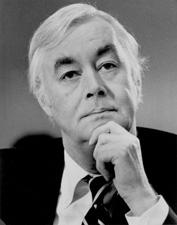
Historical · U.S. Senate · New York
Daniel Moynihan
Former U.S. Senator from New York · 1977–2001 · Democratic · Class 1
Daniel Moynihan represented New York in the United States Senate (1977–2001) for the Democratic party. The page below collects sourced biographical facts, term history, committee roles, and provenance for Moynihan.
Bioguide ID: M001054
Key facts
- Full name
- Daniel Moynihan
- State
- New York
- Party
- Democratic
- Senate class
- Class I
- Senate service
- 1977–2001
- First Senate term
- 1977
- Status
- Left office
- Current term ends
- —
- Born
- 1927
- Bioguide ID
- M001054
- Committee assignments
- —
- Dataset version
- 1.20260602
Biographical narrative
932 words · sourced from the Wikipedia REST extract
Daniel Patrick Moynihan was a prominent American politician who served as a United States Senator from New York. A member of the Democratic Party, he held office from 1977 until the conclusion of his last term in 2001. Over the course of his political career, Moynihan became known for his influential role in shaping public policy and his engagement in various social issues. His tenure in the Senate was marked by a commitment to addressing complex societal challenges and advocating for a range of legislative initiatives.
Early life and career
Daniel Patrick Moynihan was born on March 16, 1927. His early life was characterized by a strong sense of public service, which would later define his political career. He grew up in a working-class family, and his upbringing instilled in him the values of hard work and civic responsibility. Moynihan's educational journey began at the City College of New York, where he pursued his undergraduate studies. His academic interests and commitment to public affairs led him to further his education at the Fletcher School of Law and Diplomacy at Tufts University, where he earned a master's degree.
Before entering the Senate, Moynihan had a diverse career in public service and academia. He worked in various capacities within the federal government, including positions in the Department of Labor and the Office of Management and Budget. His early experiences in these roles provided him with a solid foundation in policy analysis and public administration. In addition to his government work, Moynihan was also an academic, holding teaching positions at several prestigious institutions. His scholarly contributions focused on social policy, urban affairs, and the complexities of American society.
Moynihan's political career began to take shape when he was appointed as the U.S. Ambassador to India in the late 1960s. This role allowed him to gain valuable international experience and insight into foreign relations. Following his tenure as ambassador, he returned to the United States and continued to engage in public service, ultimately leading to his election to the Senate.
Senate tenure
Daniel Patrick Moynihan was elected to the United States Senate in 1976, officially beginning his term in January 1977. He represented New York in the Senate as a member of the Democratic Party and was part of Senate Class 1. Over the course of his four terms in office, Moynihan established himself as a significant figure in American politics. His legislative career was characterized by a focus on a wide range of issues, including social welfare, education, and urban development.
During his time in the Senate, Moynihan was known for his ability to build bipartisan coalitions and work across party lines. He played a crucial role in various legislative initiatives, often advocating for policies that addressed the needs of disadvantaged communities. His expertise in social policy and urban affairs informed his approach to legislation, and he frequently emphasized the importance of research and data in shaping effective public policy.
Moynihan's tenure in the Senate was marked by his involvement in significant national debates. He was an advocate for social programs aimed at alleviating poverty and improving education, and he often spoke out on issues related to civil rights and social justice. His ability to articulate complex ideas in a clear and accessible manner contributed to his reputation as a thoughtful and influential legislator.
Moynihan's Senate career concluded on January 3, 2001, after serving four consecutive terms. His departure from the Senate marked the end of a significant chapter in his life, but his impact on American politics and public policy continued to be felt long after he left office.
Legislative focus and committees
Throughout his Senate career, Daniel Patrick Moynihan was known for his focus on a variety of legislative issues that reflected his commitment to social justice and public welfare. His work encompassed a broad spectrum of topics, including education, health care, and urban policy. Moynihan's approach to legislation was characterized by a belief in the importance of empirical research and data-driven decision-making, which he often integrated into his policy proposals.
Moynihan served on several key committees during his time in the Senate, which allowed him to influence a wide range of legislative matters. His committee assignments included the Senate Finance Committee, where he played a role in shaping policies related to taxation and social security. He also served on the Senate Committee on the Environment and Public Works, where he addressed issues related to infrastructure and environmental protection.
In addition to his committee work, Moynihan was known for his advocacy of education reform. He believed in the transformative power of education and worked to promote policies that would enhance access to quality education for all Americans. His commitment to education was evident in his support for initiatives aimed at improving public schools and expanding educational opportunities for disadvantaged populations.
Moynihan's legislative focus also extended to health care, where he sought to address the challenges facing the American health care system. He was an advocate for policies that aimed to improve access to health care services and reduce disparities in health outcomes. His work in this area reflected his broader commitment to social equity and the well-being of all citizens.
Throughout his Senate tenure, Moynihan's contributions to public policy were recognized by his peers and the broader political community. His ability to engage in thoughtful discourse and his dedication to addressing complex societal issues left a lasting legacy in American politics. Even after his departure from the Senate, his work continued to influence discussions on social policy and public welfare, underscoring the significance of his contributions to the legislative process.
Notable legislation
Sponsored and co-sponsored legislation for Daniel Moynihan is pending operator curation. The biographical narrative above carries the same provenance trail until per-bill rows are written.
Sources
- [1]https://en.wikipedia.org/wiki/Daniel_Patrick_MoynihanWikipedia · retrieved 2026-06-02
Notable quotes
Sourced quotes for Daniel Moynihan are pending operator curation. Narrative-scope provenance remains attached below.
Sources
- [1]https://en.wikipedia.org/wiki/Daniel_Patrick_MoynihanWikipedia · retrieved 2026-06-02
Key positions
Curated policy positions for Daniel Moynihan are pending operator review. The biographical narrative above carries the same provenance trail until per-topic positions are written.
Sources
- [1]https://en.wikipedia.org/wiki/Daniel_Patrick_MoynihanWikipedia · retrieved 2026-06-02
Terms served
- 1977–1983U.S. Senate · Term 1 · Democratic · Class I
- 1983–1989U.S. Senate · Term 2 · Democratic · Class I
- 1989–1995U.S. Senate · Term 3 · Democratic · Class I
- 1995–2001U.S. Senate · Term 4 · Democratic · Class I
Sources & provenance
Every attributable claim above carries a per-section [N] marker that resolves to the corresponding URL below. Each entry records the upstream provider, the canonical URL, and the timestamp at which the source was retrieved by the ingest pipeline.
Key facts
- https://bioguide.congress.gov/search/bio/M001054bioguide · retrieved 2026-06-02
- https://www.govtrack.us/congress/members/400563govtrack · retrieved 2026-06-02
Biographical narrative
- https://en.wikipedia.org/wiki/Daniel_Patrick_Moynihanwikipedia · retrieved 2026-06-02
Find your senator
Every U.S. state elects two senators. Browse New York’s delegation, the full former-senator roster, or explore the role and term length.
Related on The Candidate
- Preceded by James BuckleyEarlier holder of the New York Class I Senate seat · Conservative.Open
- Succeeded by Hillary ClintonLater holder of the New York Class I Senate seat · Democratic.Open
- Aaron BurrFormer U.S. Senator from New York · RepublicanOpen
- Alfonse D’AmatoFormer U.S. Senator from New York · RepublicanOpen
- Charles DudleyFormer U.S. Senator from New York · JacksonOpen
- Charles GoodellFormer U.S. Senator from New York · RepublicanOpen