
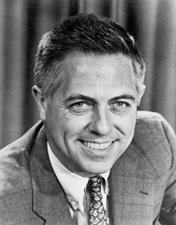
Historical · U.S. Senate · New York
James Buckley
Former U.S. Senator from New York · 1971–1977 · Conservative · Class 1
James Buckley represented New York in the United States Senate (1971–1977) for the Conservative party. The page below collects sourced biographical facts, term history, committee roles, and provenance for Buckley.
Bioguide ID: B001026
Key facts
- Full name
- James Buckley
- State
- New York
- Party
- Conservative
- Senate class
- Class I
- Senate service
- 1971–1977
- First Senate term
- 1971
- Status
- Left office
- Current term ends
- —
- Born
- 1923
- Bioguide ID
- B001026
- Committee assignments
- —
- Dataset version
- 1.20260602
Biographical narrative
924 words · sourced from the Wikipedia REST extract
James L. Buckley is a former United States Senator who represented New York as a member of the Conservative Party. His Senate career began in 1971 and concluded on January 3, 1977. Buckley is notable for being a member of a political party that is less common in the contemporary landscape of American politics, and he served in the Senate during a time of significant political and social change in the United States.
Early life and career
James L. Buckley was born on March 9, 1923. His early life and formative years laid the groundwork for his future political career. While specific details about his upbringing are not extensively documented, it is known that he was raised in a context that would later influence his political ideology. Buckley’s educational background and early career choices contributed to his understanding of the political landscape and the issues that would define his time in office.
Before entering politics, Buckley engaged in various professional endeavors. His career path included experiences that would enhance his capabilities as a public servant. These experiences, while not detailed in the available information, likely provided him with insights into the workings of government and the needs of constituents. His professional background would serve him well as he transitioned into the political arena.
Buckley’s entry into politics marked a significant shift in his career trajectory. He became involved with the Conservative Party, a political faction that emerged in the mid-20th century as an alternative to the more established Republican and Democratic parties. This affiliation would shape his political philosophy and approach to governance, emphasizing conservative principles and values.
Senate tenure
James L. Buckley was elected to the United States Senate in 1970, marking the beginning of his term in January 1971. His election was notable not only for his party affiliation but also for the political climate of the time. The early 1970s were characterized by a tumultuous political environment, with issues such as the Vietnam War, civil rights, and economic challenges dominating the national discourse. Buckley’s tenure in the Senate occurred during a period of significant legislative activity and public engagement.
As a member of the Senate, Buckley served in Class 1, which is one of the three classes of Senate seats that are staggered for election purposes. His time in office lasted until January 3, 1977, when he concluded his service. During his six years in the Senate, Buckley participated in various legislative initiatives and debates that reflected the priorities and concerns of his constituents and the nation at large.
While specific details regarding the legislation he supported or opposed are not provided, it is understood that Buckley’s role as a senator involved engaging with complex issues and contributing to the legislative process. His participation in Senate proceedings would have required collaboration with colleagues across party lines, as well as advocacy for the interests of New York residents.
Buckley’s political career was marked by the challenges of representing a diverse and populous state like New York. The state’s political landscape is often characterized by a mix of urban and rural interests, which can lead to varying priorities among constituents. Navigating these complexities would have been a significant aspect of his role as a senator.
Legislative focus and committees
During his time in the Senate, James L. Buckley focused on a range of legislative issues that aligned with his conservative principles. While specific legislative achievements are not detailed in the available information, it is common for senators to engage with topics such as taxation, government spending, social policy, and national security. Buckley’s conservative ideology likely influenced his approach to these issues, advocating for limited government intervention and fiscal responsibility.
In addition to his legislative focus, Buckley’s committee assignments would have played a crucial role in shaping his contributions to the Senate. Senators typically serve on various committees that oversee specific areas of policy, allowing them to influence legislation and provide oversight on government functions. While the specific committees Buckley served on are not mentioned, it is reasonable to assume that his assignments aligned with his political beliefs and the interests of his constituents.
The political landscape during Buckley’s tenure was marked by significant events that influenced legislative priorities. The aftermath of the Vietnam War, the Watergate scandal, and the evolving civil rights movement all presented challenges and opportunities for lawmakers. Buckley’s responses to these events would have reflected his conservative stance and the values of the Conservative Party.
Buckley’s legislative focus and committee work would have required him to engage with a variety of stakeholders, including fellow senators, constituents, and interest groups. Building coalitions and negotiating with others would have been essential skills for a senator navigating the complexities of governance during a time of change.
After concluding his Senate term in 1977, Buckley’s political career transitioned, but his legacy as a member of the Conservative Party and his contributions to the Senate remain part of the historical narrative of American politics. His tenure is a reflection of the diverse political landscape of the United States, showcasing the role of third parties and the impact of individual legislators on national policy.
In summary, James L. Buckley’s career as a U.S. Senator from New York is characterized by his affiliation with the Conservative Party, his engagement in significant legislative issues, and his navigation of the complexities of representing a diverse state. His time in office occurred during a pivotal period in American history, and his contributions to the Senate are part of the broader story of American governance and political evolution.
Notable legislation
Sponsored and co-sponsored legislation for James Buckley is pending operator curation. The biographical narrative above carries the same provenance trail until per-bill rows are written.
Sources
- [1]https://en.wikipedia.org/wiki/James_L._BuckleyWikipedia · retrieved 2026-06-02
Notable quotes
Sourced quotes for James Buckley are pending operator curation. Narrative-scope provenance remains attached below.
Sources
- [1]https://en.wikipedia.org/wiki/James_L._BuckleyWikipedia · retrieved 2026-06-02
Key positions
Curated policy positions for James Buckley are pending operator review. The biographical narrative above carries the same provenance trail until per-topic positions are written.
Sources
- [1]https://en.wikipedia.org/wiki/James_L._BuckleyWikipedia · retrieved 2026-06-02
Terms served
- 1971–1977U.S. Senate · Term 1 · Conservative · Class I
Sources & provenance
Every attributable claim above carries a per-section [N] marker that resolves to the corresponding URL below. Each entry records the upstream provider, the canonical URL, and the timestamp at which the source was retrieved by the ingest pipeline.
Key facts
- https://bioguide.congress.gov/search/bio/B001026bioguide · retrieved 2026-06-02
- https://www.govtrack.us/congress/members/401976govtrack · retrieved 2026-06-02
Biographical narrative
- https://en.wikipedia.org/wiki/James_L._Buckleywikipedia · retrieved 2026-06-02
Find your senator
Every U.S. state elects two senators. Browse New York’s delegation, the full former-senator roster, or explore the role and term length.
Related on The Candidate
- Preceded by Charles GoodellEarlier holder of the New York Class I Senate seat · Republican.Open
- Succeeded by Daniel MoynihanLater holder of the New York Class I Senate seat · Democratic.Open
- Aaron BurrFormer U.S. Senator from New York · RepublicanOpen
- Alfonse D’AmatoFormer U.S. Senator from New York · RepublicanOpen
- Charles DudleyFormer U.S. Senator from New York · JacksonOpen
- Senators from New YorkEvery former U.S. Senator who has represented New York.Open