
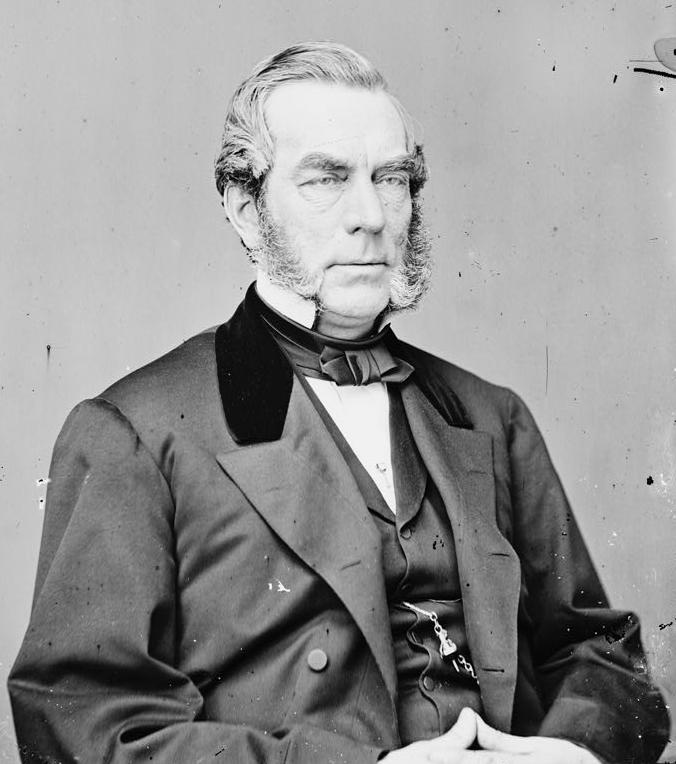
Historical · U.S. Senate · New York
Edwin Morgan
Former U.S. Senator from New York · 1863–1869 · Republican · Class 1
Edwin Morgan represented New York in the United States Senate (1863–1869) for the Republican party. The page below collects sourced biographical facts, term history, committee roles, and provenance for Morgan.
Bioguide ID: M000949
Key facts
- Full name
- Edwin Morgan
- State
- New York
- Party
- Republican
- Senate class
- Class I
- Senate service
- 1863–1869
- First Senate term
- 1863
- Status
- Left office
- Current term ends
- —
- Born
- 1811
- Bioguide ID
- M000949
- Committee assignments
- —
- Dataset version
- 1.20260602
Biographical narrative
937 words · sourced from the Wikipedia REST extract
Edwin Morgan was a prominent American politician and military leader who served as a United States Senator from New York and as the 21st Governor of New York. A member of the Republican Party, he was influential in the political landscape of the mid-19th century, particularly during the American Civil War. Morgan's career spanned various roles, including significant contributions to the founding of the Republican Party and his leadership in military and civil affairs. He was born in 1811 and passed away in 1883, leaving a legacy marked by his public service and commitment to various social causes.
Early life and career
Edwin Morgan was born on February 8, 1811, in Washington, Massachusetts, to Jasper and Catherine (Copp) Morgan. His family later relocated to Windsor, Connecticut, where he received his early education. Morgan continued his studies at Bacon Academy in Colchester, Connecticut. He was related to several notable figures, including Morgan G. Bulkeley, who served as Governor of Connecticut, and Congressmen Edwin B. Morgan and Christopher Morgan.
Morgan began his professional journey in the grocery business in Hartford, Connecticut, where he partnered with his uncle. His early political involvement began when he was elected to the city council in Hartford. In 1836, he moved to New York City, where he established himself as a successful wholesaler, broker, and banker. By 1843, he had organized E.D. Morgan & Company, an import house that became a significant player in the financial market, particularly in selling Missouri securities. The firm was instrumental in the sale of a substantial amount of bonds issued by the State of Missouri during that period.
Morgan's political career began to take shape in 1849 when he was elected to the New York City Board of Assistant Aldermen. He gained recognition as chairman of the Sanitary Committee during the cholera epidemic of 1848, demonstrating his commitment to public health and safety. His political influence continued to grow as he served in the New York State Senate from 1850 to 1853 and held the position of State Commissioner of Immigration.
As a member of the Whig Party initially, Morgan became a key figure in the formation of the Republican Party in New York. His leadership abilities were recognized when he served as chairman of the Republican National Committee from 1856 to 1864 and again from 1872 to 1876. His involvement in the Republican Party was marked by his support for the party's progressive platform, which included reforms in education, prison systems, and women's suffrage.
Senate tenure
In 1863, during the tumultuous period of the American Civil War, Morgan was elected to the United States Senate, representing New York. He served in the Senate until 1869, completing one full term. His election to the Senate came after a distinguished period as Governor of New York, where he had already established a reputation for his leadership and commitment to the Union cause. As a senator, Morgan was involved in various legislative matters, although specific details of his contributions during his Senate tenure are not extensively documented.
Morgan's time in the Senate coincided with significant national challenges, including the ongoing Civil War. His prior experience as a military leader, having been appointed a major general of volunteers and commanding the Department of New York, likely influenced his perspectives on military and national defense issues. However, his political career in the Senate came to an end when he sought re-nomination in 1869 but was not selected by the Republican caucus, which instead nominated former Governor Reuben E. Fenton.
After his Senate term, Morgan remained active in politics, running for governor again in 1876 but facing defeat against Democrat Lucius Robinson. His political aspirations continued to be a part of his identity, and he was nominated by President Chester A. Arthur in 1881 for the position of Secretary of the Treasury. Although confirmed by the Senate, Morgan declined the nomination, citing concerns related to his age and health.
Legislative focus and committees
During his time in the Senate, Edwin Morgan's legislative focus reflected his broader political interests and commitments. While specific legislative initiatives and committee assignments are not detailed in the available records, his background in governance and military leadership likely informed his approach to issues of national importance, particularly those related to the Civil War and its aftermath.
Morgan's earlier political career had already established him as a proponent of various reforms, including education and social justice. His views on women's suffrage and prison reform were part of the progressive agenda he supported throughout his career. As a senator, he would have had the opportunity to advocate for these issues on a national stage, aligning with the Republican Party's platform during a time of significant social change.
In addition to his legislative work, Morgan's role as chairman of the Republican National Committee positioned him as a key figure in shaping party strategy and policy during critical elections. His leadership in the party helped to solidify the Republican Party's influence in American politics during the 1860s.
Morgan's contributions to the Republican Party and his service in the Senate were part of a broader commitment to public service that characterized his life. His legacy includes not only his political achievements but also his involvement in charitable causes, particularly his support for educational institutions such as the Union Theological Seminary.
Edwin Morgan passed away on February 14, 1883, in New York City. He was buried at Cedar Hill Cemetery in Hartford, Connecticut. His life and career reflect the complexities of American politics during a transformative period in the nation's history, marked by civil conflict and the ongoing struggle for social reform.
Notable legislation
Sponsored and co-sponsored legislation for Edwin Morgan is pending operator curation. The biographical narrative above carries the same provenance trail until per-bill rows are written.
Sources
- [1]https://en.wikipedia.org/wiki/Edwin_D._MorganWikipedia · retrieved 2026-06-02
Notable quotes
Sourced quotes for Edwin Morgan are pending operator curation. Narrative-scope provenance remains attached below.
Sources
- [1]https://en.wikipedia.org/wiki/Edwin_D._MorganWikipedia · retrieved 2026-06-02
Key positions
Curated policy positions for Edwin Morgan are pending operator review. The biographical narrative above carries the same provenance trail until per-topic positions are written.
Sources
- [1]https://en.wikipedia.org/wiki/Edwin_D._MorganWikipedia · retrieved 2026-06-02
Terms served
- 1863–1869U.S. Senate · Term 1 · Republican · Class I
Sources & provenance
Every attributable claim above carries a per-section [N] marker that resolves to the corresponding URL below. Each entry records the upstream provider, the canonical URL, and the timestamp at which the source was retrieved by the ingest pipeline.
Key facts
- https://bioguide.congress.gov/search/bio/M000949bioguide · retrieved 2026-06-02
- https://www.govtrack.us/congress/members/407917govtrack · retrieved 2026-06-02
Biographical narrative
- https://en.wikipedia.org/wiki/Edwin_D._Morganwikipedia · retrieved 2026-06-02
Find your senator
Every U.S. state elects two senators. Browse New York’s delegation, the full former-senator roster, or explore the role and term length.
Related on The Candidate
- Preceded by Preston KingEarlier holder of the New York Class I Senate seat · Republican.Open
- Succeeded by Reuben FentonLater holder of the New York Class I Senate seat · Liberal Republican.Open
- Aaron BurrFormer U.S. Senator from New York · RepublicanOpen
- Alfonse D’AmatoFormer U.S. Senator from New York · RepublicanOpen
- Charles DudleyFormer U.S. Senator from New York · JacksonOpen
- Charles GoodellFormer U.S. Senator from New York · RepublicanOpen