
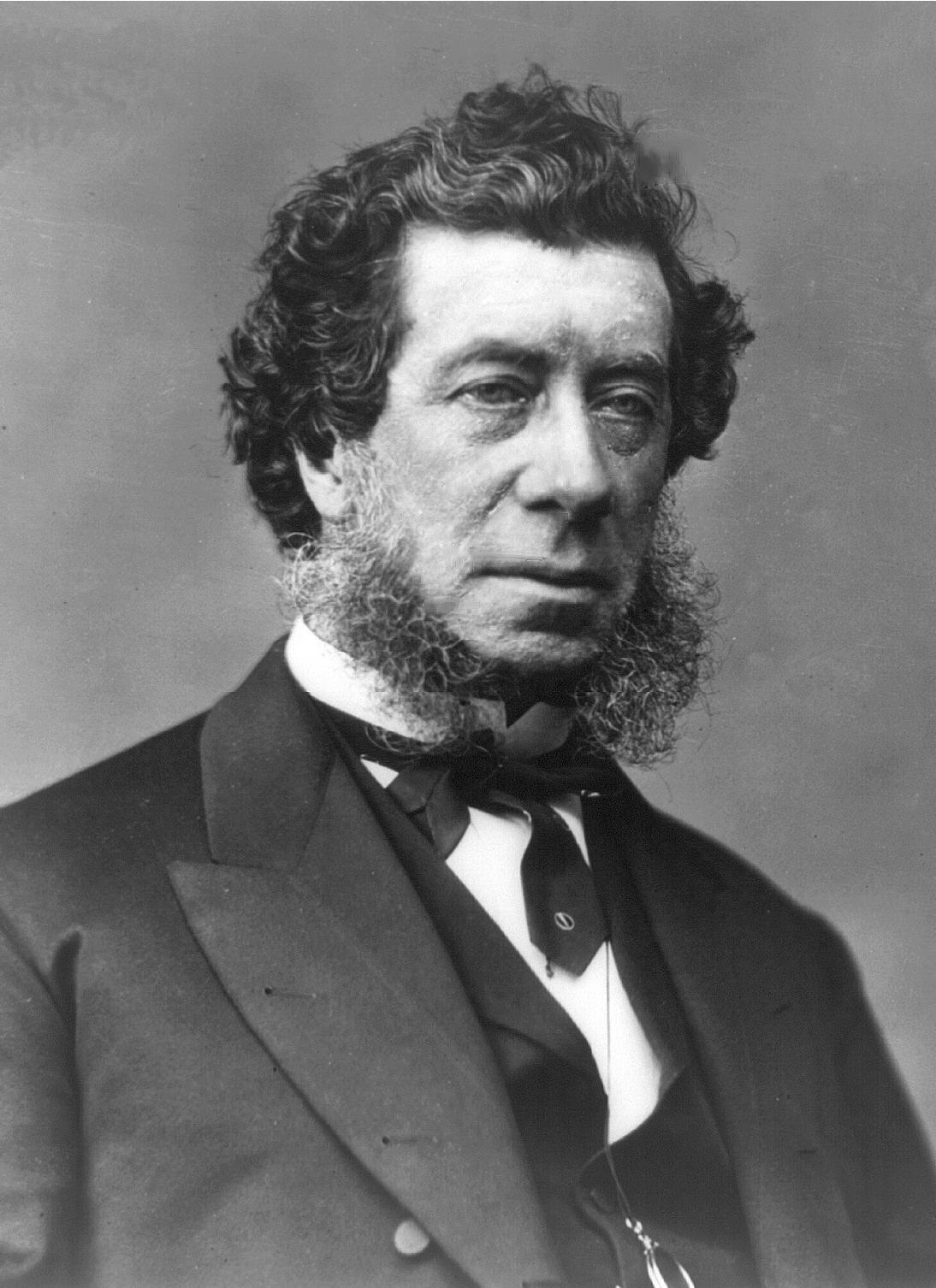
Historical · U.S. Senate · New York
Hamilton Fish
Former U.S. Senator from New York · 1851–1857 · Ind. Republican-Democrat · Class 1
Hamilton Fish represented New York in the United States Senate (1851–1857) for the Ind. Republican-Democrat party. The page below collects sourced biographical facts, term history, committee roles, and provenance for Fish.
Bioguide ID: F000140
Key facts
- Full name
- Hamilton Fish
- State
- New York
- Party
- Ind. Republican-Democrat
- Senate class
- Class I
- Senate service
- 1851–1857
- First Senate term
- 1851
- Status
- Left office
- Current term ends
- —
- Born
- 1808
- Bioguide ID
- F000140
- Committee assignments
- —
- Dataset version
- 1.20260602
Biographical narrative
975 words · sourced from the Wikipedia REST extract
Hamilton Fish was an American statesman who served as a U.S. Senator from New York from 1851 to 1857. He was a member of the Ind. Republican-Democrat party and held significant positions in both state and federal government, including serving as the sixteenth governor of New York and later as the 26th U.S. Secretary of State under President Ulysses S. Grant. Fish's political career was marked by his involvement in key legislative issues of his time, particularly those related to foreign relations and civil service reform. His tenure in the Senate was characterized by a moderate stance on contentious issues, including slavery, and he gained valuable experience that would later inform his actions as Secretary of State.
Early life and career
Hamilton Fish was born on August 3, 1808, in what is now known as the Hamilton Fish House in Greenwich Village, New York City. He was the son of Nicholas Fish, a prominent Federalist politician and a notable figure in the American Revolutionary War, and Elizabeth Stuyvesant, who was a descendant of Peter Stuyvesant, the last Dutch Director-General of the New Netherland colony. Fish's family background was one of prominence and wealth, which provided him with a solid foundation for his future endeavors.
Fish received his early education at a private school, M. Bancel, and went on to graduate from Columbia College in 1827 with high honors. His time at Columbia not only equipped him with a strong academic background but also enabled him to become fluent in French, a skill that would prove beneficial during his later diplomatic career. After completing his degree, he studied law for three years in the office of Peter A. Jay and was admitted to the New York bar in 1830. He briefly practiced law with William Beach Lawrence.
Politically influenced by his father, Fish initially aligned himself with the Whig Party. His early political career included serving as a commissioner of deeds for New York City and County from 1831 to 1833. He attempted to secure a seat in the New York State Assembly as a Whig candidate in 1834 but was unsuccessful. Following his marriage to Julia Kean in 1836, Fish returned to politics, and in 1843, he was elected to the U.S. House of Representatives, where he served until 1845. His political aspirations continued as he ran for lieutenant governor of New York in 1846 but lost to a Democratic Anti-Rent Party candidate. However, he was elected to the position when it became vacant in 1847 and subsequently won the governorship of New York in 1848, serving a single term.
In 1851, Fish transitioned to the U.S. Senate, representing New York. His Senate career was marked by his service on the Committee on Foreign Relations, where he gained valuable experience that would shape his future contributions to U.S. foreign policy. Throughout his political career, Fish maintained a moderate position on the contentious issue of slavery, opposing the Kansas-Nebraska Act and the expansion of slavery into new territories.
Senate tenure
Hamilton Fish's tenure in the U.S. Senate began in 1851 and lasted until 1857. During this period, he was a member of the Senate Class 1, representing New York. His time in the Senate was characterized by a focus on foreign relations, which would later become a hallmark of his political legacy. Fish's moderate views on slavery and his opposition to the expansion of the institution reflected the complex political landscape of the time.
As a senator, Fish was involved in various legislative discussions and debates, particularly those related to foreign policy. His experience on the Committee on Foreign Relations allowed him to engage with pressing international issues, setting the stage for his later role as Secretary of State. Fish's Senate career was relatively brief, as he served only one term before leaving office in March 1857. However, the insights and experiences he gained during this time would prove invaluable in his subsequent political appointments.
After leaving the Senate, Fish returned to his law practice but remained engaged in political and civic matters. His support for Abraham Lincoln during the 1860 presidential election and his involvement in fundraising for the Union during the Civil War demonstrated his ongoing commitment to public service. Fish's political career experienced a resurgence when he was appointed Secretary of State by President Ulysses S. Grant in 1869, marking a significant turning point in his professional life.
Legislative focus and committees
During his time in the Senate, Hamilton Fish was primarily focused on foreign relations, a theme that would dominate his later work as Secretary of State. His position on the Committee on Foreign Relations allowed him to engage with critical issues affecting the United States and its interactions with other nations. Fish's moderate stance on slavery and his opposition to the Kansas-Nebraska Act reflected the political tensions of the era, as the nation grappled with the implications of slavery's expansion.
Fish's legislative focus included navigating complex diplomatic challenges, which would later define his tenure as Secretary of State. His experience in the Senate provided him with a foundational understanding of international relations, which he would apply in addressing issues such as the Alabama Claims against the United Kingdom and the Virginius incident involving Spain. Fish's commitment to diplomatic resolution over military conflict was evident in his advocacy for international arbitration, a concept that he helped to develop during his time in office.
Although Fish's Senate career was relatively short, it laid the groundwork for his later accomplishments in higher office. His ability to navigate the intricacies of foreign policy and his moderate approach to contentious domestic issues positioned him as a significant figure in American politics. After leaving the Senate, Fish continued to be involved in public service, ultimately returning to the national stage as Secretary of State, where he would further solidify his legacy in American history.
Notable legislation
Sponsored and co-sponsored legislation for Hamilton Fish is pending operator curation. The biographical narrative above carries the same provenance trail until per-bill rows are written.
Sources
- [1]https://en.wikipedia.org/wiki/Hamilton_FishWikipedia · retrieved 2026-06-02
Notable quotes
Sourced quotes for Hamilton Fish are pending operator curation. Narrative-scope provenance remains attached below.
Sources
- [1]https://en.wikipedia.org/wiki/Hamilton_FishWikipedia · retrieved 2026-06-02
Key positions
Curated policy positions for Hamilton Fish are pending operator review. The biographical narrative above carries the same provenance trail until per-topic positions are written.
Sources
- [1]https://en.wikipedia.org/wiki/Hamilton_FishWikipedia · retrieved 2026-06-02
Terms served
- 1843–1845U.S. House · District 6 · Term 1 · Whig
- 1851–1857U.S. Senate · Term 2 · Ind. Republican-Democrat · Class I
Sources & provenance
Every attributable claim above carries a per-section [N] marker that resolves to the corresponding URL below. Each entry records the upstream provider, the canonical URL, and the timestamp at which the source was retrieved by the ingest pipeline.
Key facts
- https://bioguide.congress.gov/search/bio/F000140bioguide · retrieved 2026-06-02
- https://www.govtrack.us/congress/members/404094govtrack · retrieved 2026-06-02
Biographical narrative
- https://en.wikipedia.org/wiki/Hamilton_Fishwikipedia · retrieved 2026-06-02
Find your senator
Every U.S. state elects two senators. Browse New York’s delegation, the full former-senator roster, or explore the role and term length.
Related on The Candidate
- Preceded by Daniel DickinsonEarlier holder of the New York Class I Senate seat · Democratic.Open
- Succeeded by Preston KingLater holder of the New York Class I Senate seat · Republican.Open
- Aaron BurrFormer U.S. Senator from New York · RepublicanOpen
- Alfonse D’AmatoFormer U.S. Senator from New York · RepublicanOpen
- Charles DudleyFormer U.S. Senator from New York · JacksonOpen
- Charles GoodellFormer U.S. Senator from New York · RepublicanOpen