
Historical · U.S. Senate · Pennsylvania
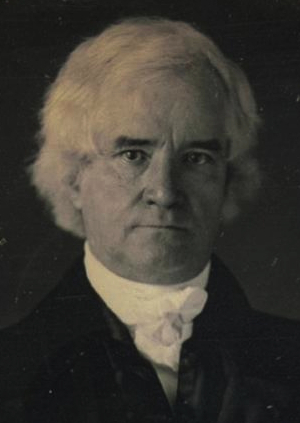
George Dallas
Former U.S. Senator from Pennsylvania · 1831–1833 · Jackson · Class 1
George Dallas represented Pennsylvania in the United States Senate (1831–1833) for the Jackson party. The page below collects sourced biographical facts, term history, committee roles, and provenance for Dallas.
Bioguide ID: D000011
Key facts
- Full name
- George Dallas
- State
- Pennsylvania
- Party
- Jackson
- Senate class
- Class I
- Senate service
- 1831–1833
- First Senate term
- 1831
- Status
- Left office
- Current term ends
- —
- Born
- 1792
- Bioguide ID
- D000011
- Committee assignments
- —
- Dataset version
- 1.20260602
Biographical narrative
848 words · sourced from the Wikipedia REST extract
George Dallas was a prominent American politician and diplomat in the 19th century, best known for his service as a U.S. Senator from Pennsylvania and as the 11th Vice President of the United States. Born on July 10, 1792, in Philadelphia, Dallas was the son of Alexander James Dallas, a notable figure who served as U.S. Treasury Secretary. His political career spanned various roles, including mayor of Philadelphia and U.S. Minister to the United Kingdom, reflecting his significant involvement in the political landscape of his time. Dallas's tenure in the Senate was brief, yet it marked the beginning of a long and varied public service career.
Early life and career
George Dallas was born into a politically active family in Philadelphia. His father, Alexander James Dallas, was of Scottish descent and served as Secretary of the Treasury under President James Madison. His mother, Arabella Maria Smith, was English. Dallas was the second of six children, and his upbringing in a well-to-do family allowed him access to a quality education. He attended Quaker-run preparatory schools before enrolling at the College of New Jersey, now known as Princeton University, where he graduated with highest honors in 1810. During his time at Princeton, he was involved in various student activities, including the American Whig–Cliosophic Society.
After graduating, Dallas initially pursued a career in law, studying under his father's guidance and gaining admission to the bar in 1813. However, his early legal career was overshadowed by a desire to serve in the military during the War of 1812, a plan he ultimately abandoned due to his father's objections. Instead, he accepted a position as private secretary to Albert Gallatin, who was appointed to negotiate peace with Great Britain. This role took Dallas to Russia and later to London, where he worked on diplomatic efforts related to the war.
Following the war, Dallas returned to the United States and took on various roles in the public sector. He was appointed as the remitter of the treasury by President Madison, a position that allowed him to gain valuable political experience. He later served as counsel to the Second Bank of the United States and became the deputy attorney general of Philadelphia, a role he held until 1820. His legal and political career began to take shape during this period, setting the stage for his future endeavors.
Senate tenure
Dallas's political career advanced significantly when he was elected as a U.S. Senator from Pennsylvania in December 1831. He won a competitive election in the state legislature to fill the unexpired term of Isaac D. Barnard, who had resigned. Dallas's Senate term lasted from December 13, 1831, to March 3, 1833. During his brief time in the Senate, he served as chairman of the Committee on Naval Affairs, where he was involved in discussions and decisions related to naval policy and funding.
Despite his active role in the Senate, Dallas did not seek re-election at the end of his term. His decision to step away from the Senate was influenced by various factors, including the political dynamics of the time and his aspirations for future roles in public service. Following his Senate tenure, Dallas continued to engage in politics and diplomacy, further shaping his legacy in American history.
Legislative focus and committees
During his time in the Senate, Dallas's legislative focus primarily revolved around naval affairs, reflecting his position as chairman of the Committee on Naval Affairs. This committee was responsible for overseeing matters related to the U.S. Navy, including budget allocations, shipbuilding, and naval strategy. Dallas's involvement in this committee allowed him to contribute to discussions on national defense and maritime policy, which were crucial issues during the early 19th century.
Dallas's political ideology was influenced by his leadership role within the Family Party faction of the Pennsylvania Democratic Party. This faction advocated for a strong national government that would implement protective tariffs and promote internal improvements to facilitate commerce. His alignment with these principles likely informed his work in the Senate, as he sought to support policies that would enhance the nation's economic and military capabilities.
Although Dallas's Senate career was relatively short, it was a significant stepping stone in his broader political journey. After leaving the Senate, he continued to serve in various capacities, including as U.S. Minister to Russia and later as U.S. Minister to the United Kingdom. His experiences in these roles further enriched his understanding of international relations and domestic policy, contributing to his reputation as a seasoned diplomat and politician.
In summary, George Dallas's tenure as a U.S. Senator was marked by his commitment to naval affairs and his alignment with the Democratic Party's vision for a strong national government. His brief time in the Senate was part of a larger career that included significant roles in both domestic and international politics, ultimately leading to his election as Vice President of the United States. Dallas's legacy is characterized by his contributions to the political landscape of his time, as well as his involvement in key diplomatic efforts that shaped U.S. foreign policy in the 19th century.
Notable legislation
Sponsored and co-sponsored legislation for George Dallas is pending operator curation. The biographical narrative above carries the same provenance trail until per-bill rows are written.
Sources
- [1]https://en.wikipedia.org/wiki/George_M._DallasWikipedia · retrieved 2026-06-02
Notable quotes
Sourced quotes for George Dallas are pending operator curation. Narrative-scope provenance remains attached below.
Sources
- [1]https://en.wikipedia.org/wiki/George_M._DallasWikipedia · retrieved 2026-06-02
Key positions
Curated policy positions for George Dallas are pending operator review. The biographical narrative above carries the same provenance trail until per-topic positions are written.
Sources
- [1]https://en.wikipedia.org/wiki/George_M._DallasWikipedia · retrieved 2026-06-02
Terms served
- 1831–1833U.S. Senate · Term 1 · Jackson · Class I
Sources & provenance
Every attributable claim above carries a per-section [N] marker that resolves to the corresponding URL below. Each entry records the upstream provider, the canonical URL, and the timestamp at which the source was retrieved by the ingest pipeline.
Key facts
- https://bioguide.congress.gov/search/bio/D000011bioguide · retrieved 2026-06-02
- https://www.govtrack.us/congress/members/403154govtrack · retrieved 2026-06-02
Biographical narrative
- https://en.wikipedia.org/wiki/George_M._Dallaswikipedia · retrieved 2026-06-02
Find your senator
Every U.S. state elects two senators. Browse Pennsylvania’s delegation, the full former-senator roster, or explore the role and term length.
Related on The Candidate
- Preceded by Isaac BarnardEarlier holder of the Pennsylvania Class I Senate seat · Jackson.Open
- Succeeded by Samuel McKeanLater holder of the Pennsylvania Class I Senate seat · Democratic.Open
- Abner LacockFormer U.S. Senator from Pennsylvania · RepublicanOpen
- Andrew GreggFormer U.S. Senator from Pennsylvania · RepublicanOpen
- Arlen SpecterFormer U.S. Senator from Pennsylvania · DemocraticOpen
- Bob Casey Jr.Former U.S. Senator from Pennsylvania · DemocraticOpen