
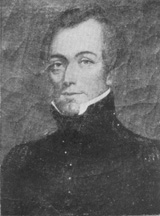
Historical · U.S. Senate · Pennsylvania
Isaac Barnard
Former U.S. Senator from Pennsylvania · 1827–1831 · Jackson · Class 1
Isaac Barnard represented Pennsylvania in the United States Senate (1827–1831) for the Jackson party. The page below collects sourced biographical facts, term history, committee roles, and provenance for Barnard.
Bioguide ID: B000154
Key facts
- Full name
- Isaac Barnard
- State
- Pennsylvania
- Party
- Jackson
- Senate class
- Class I
- Senate service
- 1827–1831
- First Senate term
- 1827
- Status
- Left office
- Current term ends
- —
- Born
- 1791
- Bioguide ID
- B000154
- Committee assignments
- —
- Dataset version
- 1.20260602
Biographical narrative
999 words · sourced from the Wikipedia REST extract
Isaac Barnard was a prominent American politician, lawyer, and military leader who served as a United States Senator from Pennsylvania from 1827 to 1831. A member of the Jacksonian party, Barnard's political career was marked by his involvement in state and national affairs, as well as his military service during the War of 1812. His tenure in the Senate was characterized by his leadership roles and contributions to military-related legislation, reflecting his background as a militia officer.
Early life and career
Isaac Barnard was born on July 18, 1791, in Aston Township, Pennsylvania, to James and Susanna Dutton Barnard. His family has historical roots tracing back to Normandy, France, with the surname Barnard derived from the town of Roche-Bernard. Barnard's great-grandfather, Richard, emigrated to Chester County, Pennsylvania, prior to 1686, establishing a legacy that would influence Barnard's later life and career.
Barnard's early education took place in various public schools, and he spent his formative years in Philadelphia before relocating to Chester, Pennsylvania, in 1811. His academic pursuits were complemented by a growing interest in law and public service. At the age of 20, Barnard received a commission as a Captain in the Fourteenth Regiment of the United States Infantry. He opened a recruitment station in West Chester, Pennsylvania, where he began his military career.
During the War of 1812, Barnard distinguished himself in several key battles, including engagements at Baltimore, Sackett's Creek, and the Canadian Frontier. His service was marked by notable actions at Fort George, where he was promoted from captain to major for his meritorious conduct. He also participated in significant battles such as Crysler's Farm and Plattsburgh. Following the war, Barnard continued his military involvement, eventually rising to the rank of Major General in the Pennsylvania State Militia.
After the conclusion of his military service, Barnard resumed his legal studies and was admitted to the bar on May 1, 1816. He began practicing law in West Chester, where he quickly established himself in the legal community. His public service continued as he served as the deputy attorney general for Chester County from 1817 to 1821. Additionally, he held the position of Assistant Burgess in the borough government of West Chester during the years 1821, 1824, and 1825. Barnard's commitment to public service was further demonstrated by his role as a major-general of the militia, although he declined an opportunity to become a judge in Chester County.
Barnard's political career began to take shape when he was elected to the Pennsylvania State Senate for the 4th district, where he served from 1821 to 1826. During his time in the state legislature, he played a significant role in securing funding for a memorial commemorating the Battle of Paoli, reflecting his dedication to honoring military history and veterans.
Senate tenure
Isaac Barnard's tenure in the United States Senate began on March 4, 1827, after he was elected as a Jacksonian. He represented Pennsylvania in the Senate Class 1 and served until December 31, 1831. During his time in the Senate, Barnard was involved in various legislative activities, particularly focusing on military affairs, which aligned with his background as a military officer.
Throughout the 21st and 22nd United States Congresses, Barnard held the position of chairman of the Committee on Militia. In this role, he was responsible for overseeing legislation related to military matters, reflecting his expertise and experience in the field. His leadership on this committee allowed him to influence discussions and decisions regarding military readiness and the welfare of soldiers.
In 1829, Barnard sought the nomination for Governor of Pennsylvania but faced a closely contested election, ultimately falling short in his bid. His political integrity was recognized by contemporaries, including James Buchanan, who described him as a principled individual who would not be easily swayed by political pressures. Despite his efforts to advance his political career, Barnard's time in the Senate was cut short due to health issues. He resigned from his position on December 6, 1831, and was succeeded by George M. Dallas, who would later become Vice President of the United States.
Legislative focus and committees
During his Senate tenure, Isaac Barnard's legislative focus primarily revolved around military affairs, a reflection of his extensive background in the military. As chairman of the Committee on Militia, he was involved in shaping policies and legislation that impacted the readiness and organization of the military forces. His experience as a Major General in the Pennsylvania State Militia provided him with insights that were valuable in discussions surrounding military preparedness and veteran affairs.
Barnard's commitment to military issues was evident in his advocacy for legislation that supported the needs of soldiers and their families. His work on the committee allowed him to address concerns related to military funding, training, and resources, ensuring that the armed forces were adequately equipped to fulfill their duties. His contributions during this period were significant in the context of the evolving military landscape of the United States.
Despite his relatively brief time in the Senate, Barnard's involvement in military-related legislation left a lasting impact. His resignation in 1831 due to ill health marked the end of his formal political career, but his legacy continued through his contributions to public service and military advocacy. Following his departure from the Senate, there were calls in the press for him to be appointed to a position in the United States Cabinet, indicating the respect he garnered during his political career.
Isaac Barnard passed away on February 28, 1834, in West Chester, Pennsylvania. He was initially interred at the Friends Burying Ground on North High Street, but after twenty years, his remains were relocated to Oaklands Cemetery. His contributions to Pennsylvania and the nation were recognized posthumously, with a street in West Chester named in his honor and a monument erected in his memory at Oaklands Cemetery in 1854. Barnard's life and career reflect a dedication to public service, military leadership, and the advancement of legislative initiatives that supported the armed forces and their veterans.
Notable legislation
Sponsored and co-sponsored legislation for Isaac Barnard is pending operator curation. The biographical narrative above carries the same provenance trail until per-bill rows are written.
Sources
- [1]https://en.wikipedia.org/wiki/Isaac_D._BarnardWikipedia · retrieved 2026-06-02
Notable quotes
Sourced quotes for Isaac Barnard are pending operator curation. Narrative-scope provenance remains attached below.
Sources
- [1]https://en.wikipedia.org/wiki/Isaac_D._BarnardWikipedia · retrieved 2026-06-02
Key positions
Curated policy positions for Isaac Barnard are pending operator review. The biographical narrative above carries the same provenance trail until per-topic positions are written.
Sources
- [1]https://en.wikipedia.org/wiki/Isaac_D._BarnardWikipedia · retrieved 2026-06-02
Terms served
- 1827–1831U.S. Senate · Term 1 · Jackson · Class I
Sources & provenance
Every attributable claim above carries a per-section [N] marker that resolves to the corresponding URL below. Each entry records the upstream provider, the canonical URL, and the timestamp at which the source was retrieved by the ingest pipeline.
Key facts
- https://bioguide.congress.gov/search/bio/B000154bioguide · retrieved 2026-06-02
- https://www.govtrack.us/congress/members/401156govtrack · retrieved 2026-06-02
Biographical narrative
- https://en.wikipedia.org/wiki/Isaac_D._Barnardwikipedia · retrieved 2026-06-02
Find your senator
Every U.S. state elects two senators. Browse Pennsylvania’s delegation, the full former-senator roster, or explore the role and term length.
Related on The Candidate
- Preceded by William FindlayEarlier holder of the Pennsylvania Class I Senate seat · Jackson.Open
- Succeeded by George DallasLater holder of the Pennsylvania Class I Senate seat · Jackson.Open
- Abner LacockFormer U.S. Senator from Pennsylvania · RepublicanOpen
- Andrew GreggFormer U.S. Senator from Pennsylvania · RepublicanOpen
- Arlen SpecterFormer U.S. Senator from Pennsylvania · DemocraticOpen
- Bob Casey Jr.Former U.S. Senator from Pennsylvania · DemocraticOpen